

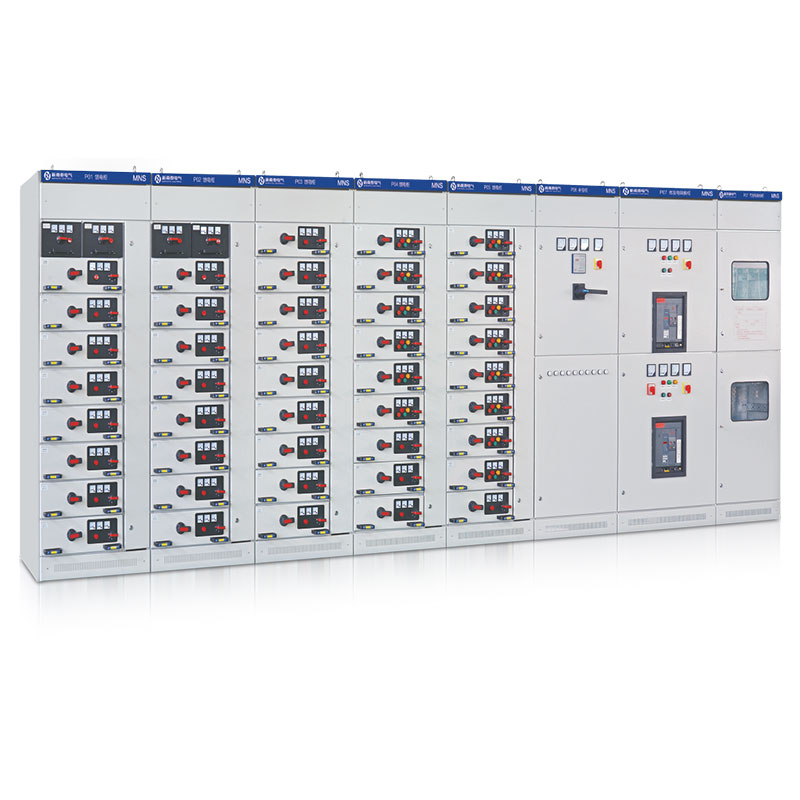


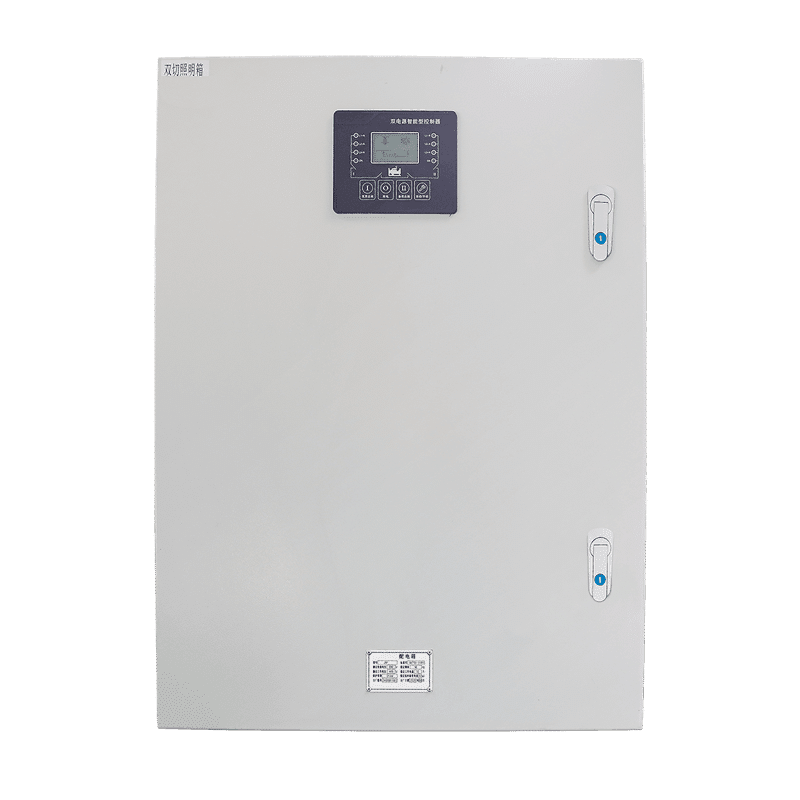


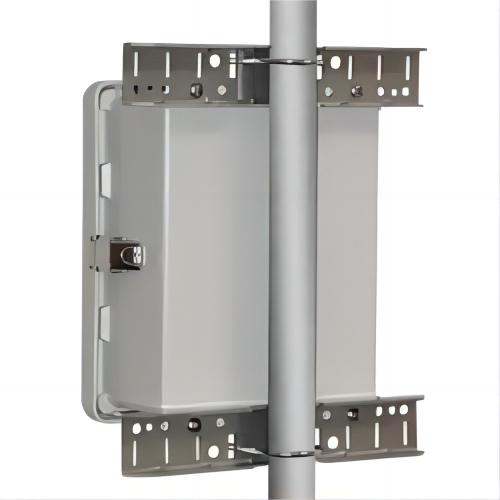


The search term electrical switchgear suppliers returns an ambiguous market. Behind nearly identical websites sit three very different businesses: factories that design and build the assemblies, trading companies that resell factory output, and system integrators that engineer complete packages around bought-in gear. Buying through the wrong layer for your project’s needs is the most common — and most expensive — sourcing error in this category, because it decides who is actually accountable when a type-test question, a delivery slip, or a warranty claim appears.
We build switchgear and control assemblies at the factory level and also supply through channel partners, so this guide is written from inside that structure: what each supplier type can and cannot give you, and how to identify which one you are talking to within two emails.
The three supplier types, honestly compared
| Dimension | Factory / manufacturer | Trading company | System integrator |
|---|---|---|---|
| Price on standard items | Best ex-works basis | +5–15% margin, but consolidates small orders | Highest, includes engineering |
| Custom engineering (non-standard ratings, unusual Form of segregation) | Core capability | Depends entirely on the factory behind them | Core capability, but they subcontract the build |
| Type-test and certification ownership | Holds the design verification files | Holds PDFs; verification requires going back to the factory | Usually relies on OEM files |
| After-sales and spare parts | Direct, factory warranty | Adds a communication layer | Strong on controls/software, variable on switchgear hardware |
| Best fit | Volume orders, custom LV/MV assemblies, OEM programs | Mixed-catalog procurement, small urgent orders | Projects where controls, SCADA, and switchgear must integrate |
The practical rule: the more non-standard your electrical duty, the closer to the factory you need to be. A repeat-order LV distribution board is safely bought through any reputable channel; a 24 kV metal-clad lineup with an arc-class requirement and a specific protection scheme is not.
How to identify who you are actually talking to
- Ask for the factory address and the production plan visit. A manufacturer answers with a date and a workshop floor plan; a middleman answers with reasons why a visit is not necessary. (This remains true during travel-restricted periods — video factory audits with live camera walkthroughs are now routine for our export orders.)
- Request a design verification question that cannot be answered from a brochure: e.g., “What is the peak withstand factor used in your 50 kA/1 s busbar calculation, and how is the dynamic support spacing derived?” The speed and specificity of the answer reveals whether engineering sits in the building.
- Check certificate scopes, not certificate logos. An ISO 9001 certificate scoped to “trading of electrical equipment” is honest — about being a trader. UL, IEC 61439, and IEC 62271 type-test documents name the manufacturing entity; verify the name matches your counterparty or that you have the contractual chain to that factory.
- Look at the documentation they volunteer. Manufacturers send GA drawings, BOMs, and test protocols early because it costs them nothing; intermediaries gate this material because it exposes their factory.
What a competent supplier does with your enquiry
Regardless of type, judge the response on these behaviors:
- They convert your input data into an engineering scope. Utility fault level (or the MVA and impedance to calculate it), load schedule, ambient conditions (temperature, altitude above 2,000 m, corrosive or dust class), and applicable standards (IEC 61439 / IEC 62271 / ANSI C37 series / UL) should be requested before a firm price.
- They flag application errors instead of quoting them. If you ask for a 25 kA board on a network with 31 kA available, a responsible supplier stops the quotation. One who quotes and quietly nameplates 25 kA has created your future incident.
- They quote with a BOM breakdown. Breaker brand and model, busbar cross-section and plating, enclosure material and thickness, and the testing scope included. Without this, cross-supplier price comparison is meaningless.
- They state the test regime in writing: routine tests per panel (dielectric, functional, wiring verification) plus design-type evidence, and whether third-party witnessing (SGS, TÜV, BV, or your consultant) is offered for FAT.
Delivery and commercial protections for cross-border orders
- Lead-time structure: LV assemblies 2–6 weeks typical; custom MV lineups 8–16 weeks. Ask what portion is design freeze versus production versus test-bench queue — the test bench is the hidden constraint in MV production.
- Payment structure: milestone payments tied to drawings approval, pre-FAT, and shipment are standard and protect both sides. Full prepayment on custom switchgear is a red flag at any supplier tier.
- Export packaging: sea-freight-worthy crates, desiccant, shock/tilt indicators for MV gear, and photo documentation before container loading should be offered without being asked.
- Incoterms and after-sales routing: agree in advance who performs site commissioning and how warranty claims route (through the supplier to the factory, or direct). For channel-bought gear, get the factory service contact named in the contract.
Scale and schedule decide the layer. A 500-panel multi-site rollout under IEC 61439-2 for an IEC-market program is factory-direct territory: the design verification files, per-panel routine test records, and the busbar engineering behind a 50 kA/1 s claim must be held by the entity you contract with, not forwarded as PDFs from an unnamed floor. When the delivery is back-planned from energization dates site by site, the question to put to any candidate supplier is not “can you build 500 boards” but “which production slot holds my Phase 3 sites, and what contract line protects it if a breaker frame slips a quarter.” Suppliers who answer with capacity numbers instead of slot commitments have told you how the order will actually run.
Questions to put on the table early
- Which factory will physically build this order, and can I audit it?
- Who holds the type-test reports covering my ratings — and will you provide copies with report numbers?
- What happens to my delivery if your breaker supplier slips a quarter?
- If a relay misoperates in year three, who diagnoses it — you, the factory, or a third party?
- Is the quotation’s rating margin consistent (busbar, breakers, and construction), or is one component carrying the whole short-circuit claim?
FAQ
Are trading-company markups ever worth paying?
Yes, when you buy mixed catalogs in small lots (breakers, enclosures, components alongside one custom panel), when you need consolidated export handling, or when the trader provides genuine market-specific documentation support. For engineered switchgear volumes, the factory-direct advantages compound.
How do I confirm which layer I am talking to within two emails?
Ask for the factory address with a visit or live video audit date, and pose one design question no brochure answers — such as how the peak-withstand busbar support spacing was derived. Speed and specificity of the reply reveal where engineering sits.
At 500 panels with back-planned site dates, what should the contract protect?
Per-phase delivery slots tied to your energization milestones, the design verification chain naming the building factory, and a written breaker-allocation contingency. Those three lines carry more schedule risk at this volume than price terms do.
One supplier for switchgear plus a contractor for installation — where do problems appear?
At the interfaces: bus duct connections, control wiring boundaries, relay setting responsibility, and SAT scope. Put those four items in writing before order placement, naming who verifies what.
Related reading
- switchboard vs switchgear — the assembly-type distinction behind supplier categories.
- switchgear assemblies — what a vertically integrated manufacturer builds in-house.
- choosing the right switchgear — matching supplier type to voltage class and project duty.
Engineering note: ElectricalCabinet.net manufactures and supplies LV/MV switchgear and control assemblies from our factory, working with both direct customers and channel partners. This article is a sourcing framework; project-specific selection, ratings, and compliance remain subject to qualified engineering review.
 EN
EN