

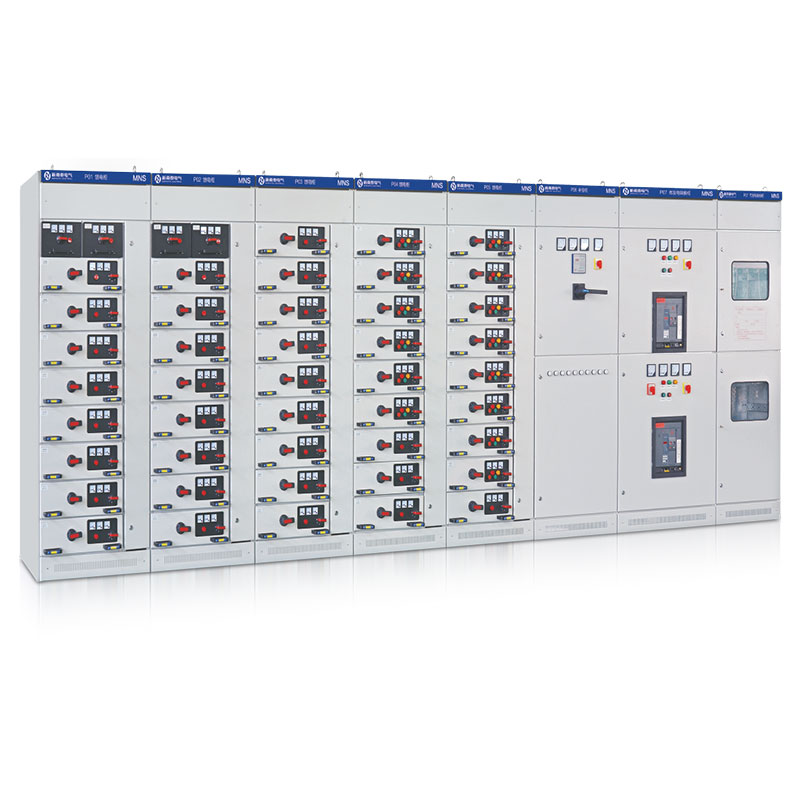


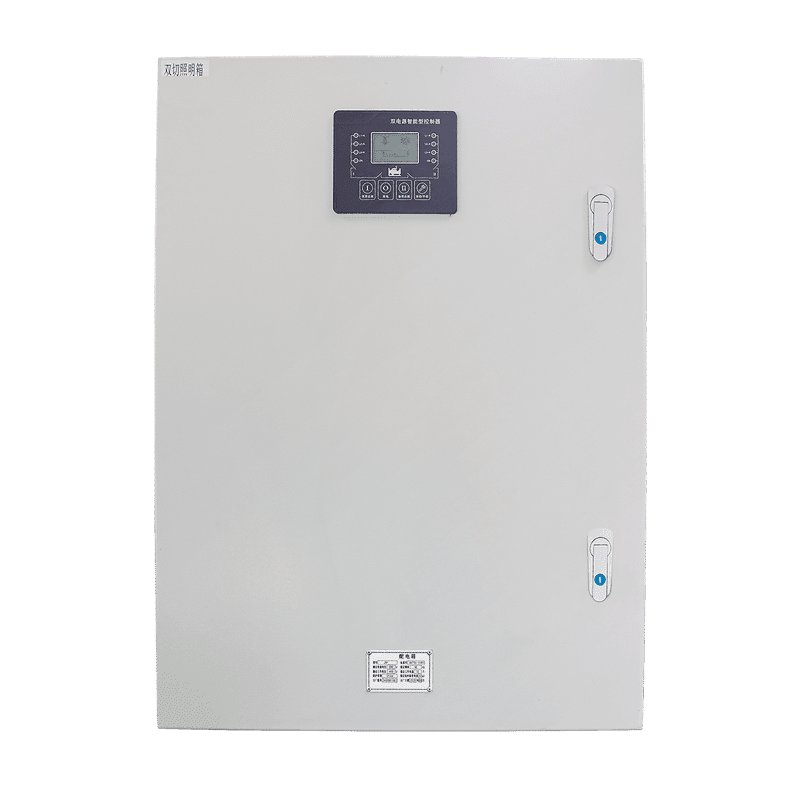




Medium voltage switchgear (roughly 1 kV to 38 kV class) is the least forgiving category in electrical procurement: the equipment concentrates fault energy that must be interrupted, contained, and — in modern specifications — survive an internal arc without venting onto operators. The market spans global majors, regional champions, and export manufacturers whose quality ranges from excellent to nameplate-fictional. Selecting among medium voltage switchgear manufacturers is therefore mostly a qualification exercise in standards literacy and verification discipline.
We manufacture MV assemblies alongside our LV lines. This guide lays out what a specifier or buyer should demand — and accept nothing less than evidence.
Voltage class and the two standards worlds
Confirm both the class and the construction standard family before anything else:
| Parameter | IEC world | ANSI/IEEE world (North America) |
|---|---|---|
| Common classes | 7.2 / 12 / 24 / 36 kV | 5 / 15 / 27 / 38 kV class |
| Construction standard | IEC 62271-200 (AC metal-enclosed switchgear and controlgear) | IEEE C37.20.2 (metal-clad), C37.20.3 (interrupter), C37.20.7 (arc testing guide) |
| Interrupting media | Air, SF6, vacuum (vacuum dominates modern LV-side breaking) | Vacuum predominantly |
| Insulation philosophy | Rated withstand levels (power-frequency and lightning impulse BIL) per IEC 62271-1 | BIL classes (e.g., 60/110/125/150/200 kV by class), plus 60 Hz withstand |
Metal-clad vs metal-enclosed is a distinction with safety and maintenance consequences: metal-clad (IEEE C37.20.2) requires grounded metal barriers on all primary sections, automatic shutters, and withdrawable breakers — a construction philosophy, not a marketing phrase. Verify which construction the quotation actually offers.
The rating set that defines the equipment
- Continuous current: 630 / 1,250 / 2,000 / 3,150 A typical for distribution-class gear.
- Short-circuit breaking/current: 16–40 kA class; peak withstand factor 2.5 (IEC, 50 Hz) or 2.6 (60 Hz) times RMS.
- BIL (basic impulse insulation level): lightning impulse withstand — the insulation coordination anchor for the substation.
- Internal arc classification (IAC): per IEC 62271-200 Annex A, with accessibility type (e.g., AFLR — front, lateral, rear) and arc duration class (0.3 s / 0.5 s / 1 s). Utility and many industrial specifications now demand it.
- Duty and endurance classes: circuit breaker mechanical endurance (e.g., 10,000 operations classes), capacitor bank switching classes where applicable.
Qualification: what evidence to require
- Type-test reports from accredited laboratories — KEMA (KEMA-CESI), ASTA, CPRI, or CNAS-accredited national labs — covering: dielectric (power frequency + lightning impulse), short-time and peak withstand, temperature rise, internal arc (if claimed), IP verification, and mechanical endurance for the switching devices. Reports carry numbers; laboratories confirm them. This verification step exists because fabricated reports circulate.
- Design relevance. The tested configuration must bracket your order — ratings, bus configuration, and construction variant. A type test on a top-rated variant does not automatically verify a differently constructed derivative unless the manufacturer presents the derivation.
- Routine test records per panel shipped: power-frequency withstand on primary circuits, auxiliary circuit dielectric, mechanical operation, resistance measurement (μΩ across joints), and verification against the design file. MV gear without per-panel routine records is a story, not a product.
- Component provenance: vacuum interrupters and mechanisms from established suppliers, with batch traceability; protection relays (numerical platforms per your utility or plant standard) configured by engineers who can show the setting calculations.
- Production capability: MV test benches with adequate high-voltage sources are the bottleneck asset. Ask about test-bench capacity and scheduling — it is the real constraint behind MV lead times, and manufacturers who cannot articulate it are reselling someone else’s line.
Delivery, FAT, and installation realities
- Lead time: custom MV lineups typically 8–16 weeks from drawing approval; add time for witnessed type-relevant FAT and export packing. The drawing-approval milestone (arrangement, single-line, SLD relay settings, interlock logic) anchors the schedule — review it with your engineer within days, not weeks.
- FAT content for MV: withstand tests, breaker operation and interlock demonstration, bus resistance measurement, dimensional verification against the arrangement drawing, and full documentation review. Third-party witnessing (your consultant, SGS, TÜV, BV) is standard practice at this voltage level.
- Transport and site: MV sections are heavy, precision-aligned equipment — export crating with shock/tilt indicators, and site handling plans that respect the bus alignment. After delivery: check moisture indicators before energization and follow the manufacturer’s conditioning procedure for stored gear.
- Commissioning scope: relay setting installation, CT/VT ratio verification, primary injection or secondary injection testing, interlock proving — name the responsible party for each in the contract, because these boundaries are where schedule risk hides.
Site and market constraints belong in the enquiry, not the change orders. For an IEEE C37.20.2-market project sited above 2,000 m, two adjustments run through the whole specification: altitude derating of external insulation (and the corrected withstand values on the documentation), and cooling capacity at the thinner air — both must be stated by the manufacturer as verified design inputs, not field discoveries. Layer on the honest 8–16 week MV reality and the schedule logic writes itself: drawing approval inside two weeks, test-bench slot confirmed in writing at order placement, and witnessed FAT booked before production ends. A supplier who cannot show where your lineup sits in the current bench queue is asking you to bet the substation energization date on hope.
FAQ
Is internal arc classification (IAC) worth specifying?
For operator-accessed switchgear in utilities, infrastructure, and most modern industrial plants — yes. It adds cost (stronger flanges, pressure relief channels, validated venting paths) and demonstrably changes outcomes in fault events. Decide by installation location and operator exposure, not by default.
How do I evaluate an export MV manufacturer I have not heard of?
Same as any: type-test report verification with the issuing labs, routine test records, reference projects at comparable ratings, and a witnessed FAT. The majors sell distribution and service density; competent export manufacturers sell engineering value and schedule — both models work when the evidence holds.
What evidence changes when the site sits above 2,000 m?
Ask for the altitude derating statement: corrected external insulation withstand, any revised creepage distances, and cooling verification at reduced air density. A manufacturer who treats altitude as a footnote has not designed for it — references at comparable elevation are the check.
With an IEEE-market spec and an 8–16 week reality, how should the schedule be structured?
Back-plan from energization: drawings approved within days of receipt, the test-bench slot contractually named at order placement, FAT witnessed before release, and shipping with impact indicators. Every week lost before drawing approval is a week the bench queue will not give back.
Air-insulated, gas-insulated (SF6), or solid-insulated for a new build?
Application-dependent: air-insulated (AIS) dominates up to 36 kV for maintainability and cost; SF6-insulated (GIS) buys compactness for tight urban or harsh-environment sites at higher lifecycle and end-of-life handling considerations (SF6 is a regulated greenhouse gas — increasingly a sustainability-procurement question); solid-insulated occupies niches. Let the site conditions decide, and ask manufacturers to justify, not just sell.
Enquiry package
Send: single-line diagram, fault levels and X/R, load and transformer data, class and BIL requirement, arc classification requirement, accessibility and relaying standard, environment (altitude >1,000 m matters at MV, seismic where applicable), inspection regime, and milestones. The quality of the returned engineering questions is your first evaluation filter.
Related reading
- medium voltage switchgear guide — class structure and switching arrangements in detail.
- medium voltage switchgear — our MV switchgear product line.
- air-insulated vs gas-insulated switchgear — the insulation technology choice inside MV evaluation.
Engineering note: ElectricalCabinet.net manufactures LV and MV assemblies for export projects. This guide is a qualification framework; MV installation design, protection, and compliance are the domain of qualified electrical engineering review.
 EN