







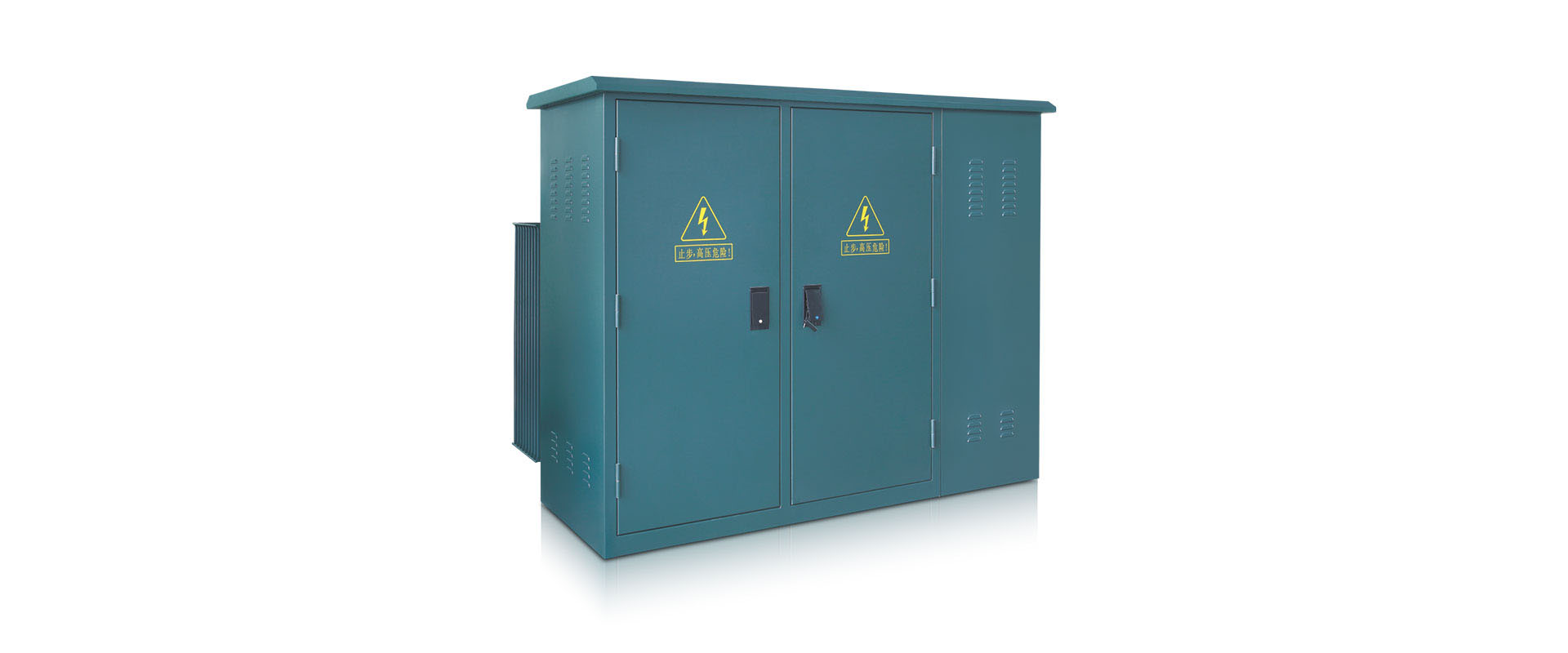
Pad-mounted transformers follow a recognized ladder of standard ratings, and the rating you choose drives almost every physical outcome of the project: the concrete pad dimensions, the crane lift mass, the cable and termination sizing, the fault level at your LV board, and the room (or yard) the unit needs to breathe in. This guide maps the standard pad-mounted transformer sizes, the single-phase and three-phase ladders, and how to move from a load estimate to a rating decision.
The three-phase rating ladder
Three-phase pad-mounts are produced across a standard series (North American practice; IEC-market units follow 315/400/630/800/1,000/1,250/1,600/2,000/2,500 kVA series in parallel):
| Rating (kVA) | Typical secondary current at 480 V, 3-phase | Typical duty |
|---|---|---|
| 45 / 75 | 54 / 90 A | Small commercial, multi-tenant |
| 112.5 / 150 | 135 / 181 A | Retail, small office, restaurants |
| 225 / 300 | 271 / 361 A | Mid commercial, light industrial |
| 500 | 601 A | Large commercial, industrial infeed |
| 750 / 1,000 | 903 / 1,203 A | Campus buildings, mid industrial |
| 1,500 / 2,000 | 1,804 / 2,406 A | Heavy industrial, data halls |
| 2,500 | 3,007 A | Top of the pad-mount format; beyond this, substation-format units take over |
Current values above follow I = kVA × 1,000 ÷ (√3 × 480 V) — recompute for your actual secondary voltage (e.g., 208 V values run 2.31× higher). Our kVA-to-amps guide covers the arithmetic and its limits.
Single-phase pad-mounts occupy the smaller end: commonly 25, 37.5, 50, 75, 100, and 167 kVA (with 75–100 kVA the volume sweet spot for residential underground service).
What physically scales with the rating
- Footprint and mass. A 75 kVA unit is a two-person-rigging problem; a 2,500 kVA unit is a crane set measured in tonnes. Pad dimensions, vehicle access, and lift planning are rating-driven outcomes — get dimensioned GA drawings from the manufacturer early, not after production.
- Termination style. Dead-front elbow terminations (loop or radial) and bushing-well counts scale with the incoming network design, not just kVA — but higher ratings demand heavier LV cable compartments and padlock/tamper provisions per utility practice.
- Fault level at the LV bus. Impedance (commonly ~5–7% on rating for this class; confirm the guaranteed value) sets the secondary fault current your LV switchgear must withstand — a 2,500 kVA unit at 5.75% impedance delivers a very different fault level than a 500 kVA at 5.9%.
- Cooling and clearances. ONAN oil/ester units need clearance to radiate; keep vegetation, fences, and walls out of the manufacturer’s stated clearance envelope, or you will discover the derating curve at the worst possible moment (peak summer, peak load).
Sizing method: from load estimate to rating
- Establish connected load and demand. Sum connected loads, apply demand factors per the applicable code and your actual usage knowledge (see our selection guides). The realistic demand, not the connected total, is the starting number.
- Project growth. Pad-mounts serve 25–40-year lives; size for the credible end-of-life load, not year one. Replacing an undersized pad-mount means an outage and a crane — slight oversizing is normal, deliberate practice.
- Check motor starting and harmonics. Large motor populations add starting duty; harmonic-rich loads may demand k-rated or derated designs. Neither moves the kVA nameplate directly, but both move the correct selection.
- Check voltage regulation. Higher-impedance units at high load swing regulate worse; if the load profile has violent swings, regulation margins belong in the evaluation.
- Round to the next standard rating — the ladder exists because it economizes manufacture; a bespoke 610 kVA unit buys you nothing over 750 kVA except cost.
Schedule pressure reshapes which ratings are real. On a fast-track North American commercial program needing roughly 50 units inside a compressed window, the standard ladder splits into two very different markets: the volume ratings (75–500 kVA three-phase, 75–100 kVA single-phase) exist in manufacturers’ stock programs and distributor inventory with DOE-compliant documentation ready, while the upper ladder (1,000–2,500 kVA, loop-feed, ester variants) is production-slot territory measured in weeks-to-months. Sizing discipline still runs the five steps — but the delivery date decides whether “round to the next standard rating” also means “round to the next available rating.” A demand calculation that lands at 480 kVA on a three-week site date is a 500 kVA stock-unit conversation, not a factory order.
Common sizing errors
- Sizing to connected load with no demand analysis — pays for capacity forever, uses it never.
- Forgetting the future second unit. If load growth is probable, plan the pad and LV board now for a second transformer or a larger single unit later; civil works are cheap to over-provision and expensive to redo.
- Ignoring altitude and ambient derating. Sites above 2,000 m or in hot climates run reduced capacity — the nameplate kVA assumes reference conditions.
- Choosing 2,500 kVA by default — at the top of the format, check whether two 1,250/1,500 kVA units (redundancy, maintainability, part-load efficiency) serve the project better than one large unit.
Data to request with any size enquiry
Guaranteed impedance and losses (with tolerance), BIL, sound level, dimensioned GA with mass and center of gravity, HV/LV termination arrangements, corrosion protection specification, and the efficiency certification (DOE 2016 for the US market; Ecodesign Tier 2 for Europe).
FAQ
What size pad-mount do I need for a typical commercial building?
A single mid-size office or retail building commonly lands in the 300–750 kVA band; multi-building campuses and heavy process loads run 1,000 kVA and above. The honest answer is a demand-load calculation — the five-step method above — rather than a rule of thumb.
Once demand lands on a rating, how do stock versus made-to-order units change the schedule?
The volume ratings (roughly 75–500 kVA three-phase) move through stock programs and distributor inventory in days; upper-ladder, loop-feed, amorphous, and ester variants are built to order in production slots measured in weeks. The rating choice and the site date decide together — checking availability before finalizing can save a month.
For a fast-track project needing ~50 North American units in weeks, which sizes are realistic ex-stock?
The ladder’s middle rungs: 75, 112.5, 150, 225, 300, and 500 kVA three-phase with common radial configurations and standard impedances. Anything needing specific loop-feed arrangements, ester fluid, or the 1,000 kVA-plus rungs should be ordered against a confirmed slot the day the demand calc closes.
Why is 112.5 kVA a rating? Where did it come from?
It is a legacy North American standard step in the rating series (a continuation of historical sizes), retained because switchgear, fuses, and utility practices standardized around it. It has no special electrical meaning.
Can I parallel two pad-mounts for more capacity?
Yes, with conditions: matched impedance, ratio, vector group, and a paralleling study — see our parallel operation guide. It is a legitimate capacity strategy and a redundancy strategy, but it is engineered, not improvised.
Does a bigger transformer use more energy at low load?
Core (no-load) loss scales somewhat with rating — a larger unit costs somewhat more to keep energized. This is exactly the trade amorphous-core designs target (typically 60–70% lower no-load loss), worth requesting on quoted sizes where the unit idles for long hours.
Related reading
- pad-mounted transformers — the product line these sizes map onto.
- box-type substation selection — the compact substation format built around similar ratings.
- kVA calculator — size the unit before matching dimensions.
Engineering note: this article is a ratings and sizing overview from ElectricalCabinet.net, a manufacturer of pad-mounted, pole-mounted, dry-type, and oil-immersed distribution transformers plus packaged substations and switchgear. Final sizing, impedance coordination, and civil design require qualified engineering review against applicable codes and the serving utility’s standards.
 EN