

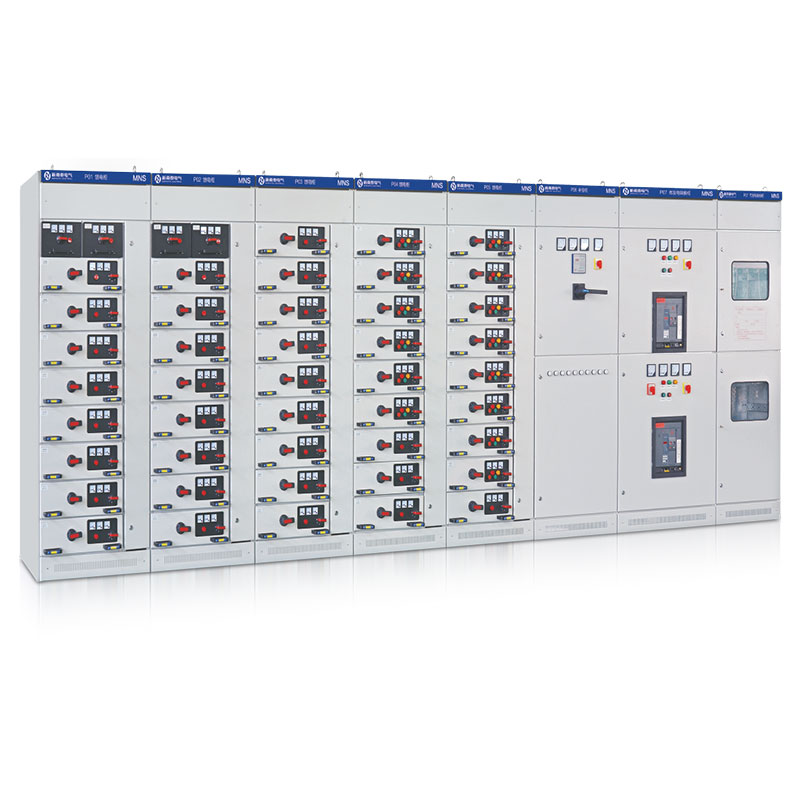


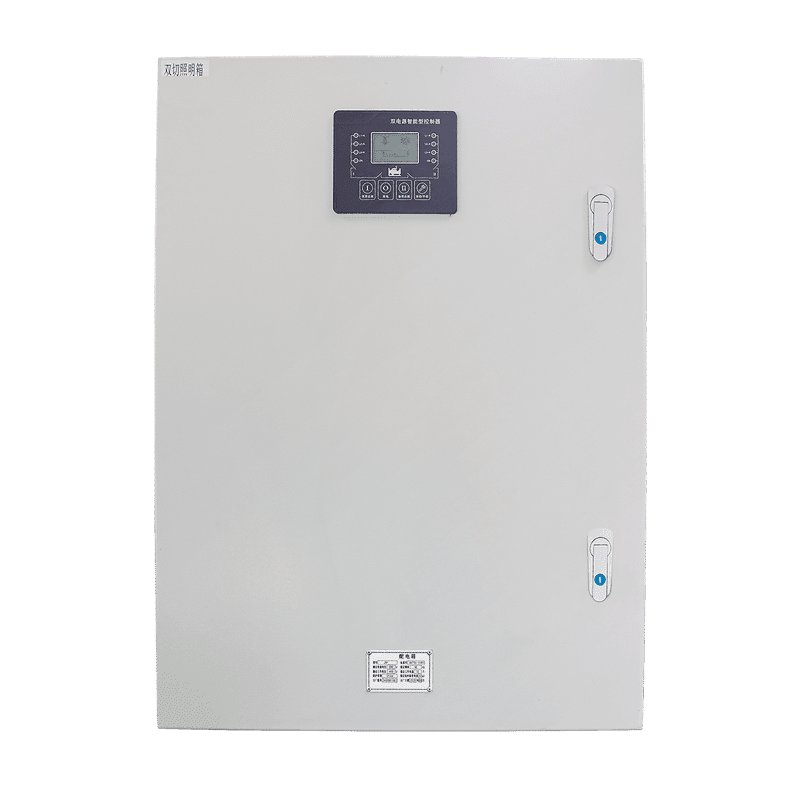




An industrial control panel is the working core of every automated line: power entry and distribution, motor starting, drive control, safety interlocks, and the PLC logic that binds them. When something downstream misbehaves — a drive tripping on undervoltage, an interlock that fails silent — the root cause is usually traceable to decisions made in the panel: component sizing, grounding topology, thermal design, or the adequacy of factory testing. Which makes the choice among industrial control panel manufacturers an engineering decision disguised as a purchasing one.
We manufacture industrial control panels for OEM machines and plant projects across UL and IEC markets. This is the framework we recommend buyers use — on us and on anyone else.
Scope: what counts as an industrial control panel
Definitions matter because they set the governing standard:
- US / NEC framework: an industrial control panel is governed by NEC Article 409 (with Articles 408 for distribution elements and 430 for motor circuits); listed panels are built to UL 508A. Machine-level wiring extends into NFPA 79 (Electrical Standard for Industrial Machinery).
- IEC framework: assemblies fall under IEC 61439-2, with machine-specific coordination in IEC 60204-1.
- Functional scope typically includes: incoming disconnect or breaker, power distribution to motor loads (contactors, overload relays, soft starters, VFDs), control power (24 V DC supplies), PLC/DCS I/O, safety relays and contactors, HMI mounting, and terminal interfaces to the field.
A manufacturer quoting without establishing which framework your installation falls under is quoting an ambiguous product.
The specification inputs that determine the panel
- Motor and load schedule: each driven load with horsepower/kW, voltage, duty, starting method (DOL, star-delta, soft start, VFD), and any regenerative or high-inertia cases.
- Control architecture: PLC platform (Rockwell, Siemens, Mitsubishi, or others per your standard), remote vs local I/O, network topology (EtherNet/IP, PROFINET, Modbus TCP), safety level (PL d / SIL 2 considerations under ISO 13849 / IEC 62061 where machinery directives apply).
- Available fault current at the panel supply — sets the assembly SCCR (UL) or withstand (IEC). State it in the enquiry; it is the single most common acceptance failure we see corrected late.
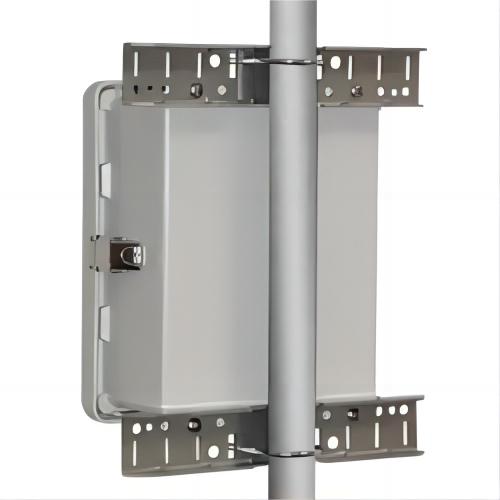
- Environment: ambient range, washdown/corrosion class (drives enclosure material and NEMA/IP rating), altitude, and vibration.
- Thermal budget: heat dissipated by drives and supplies (drive losses run roughly 2–4% of drive rating) versus enclosure cooling capacity — filter fans, A/C units, heat exchangers, or natural convection. Panels that cook their electronics were thermally under-engineered from the first quote.
- Interface definition: terminal counts, cable sizes, gland schedule, and whether the panel boundary stops at terminals (usual) or includes field cabling scope.
Evaluating industrial control panel manufacturers
Engineering absorption. Give two manufacturers the same single-line sketch and compare the questions that come back. Competent manufacturers probe fault levels, duty cycles, VFD cable lengths (long motor leads need dv/dt or sine filters), ambient derating, and safety circuit categories. Weak manufacturers confirm price and delivery.
Certification fit. UL 508A shop certification for US-bound panels (verify via UL Product iQ); IEC 61439-2 design verification for CE markets; hazloc categories only where certified. Certification is binary and checkable — there is no excuse for discovering its absence at receiving dock.
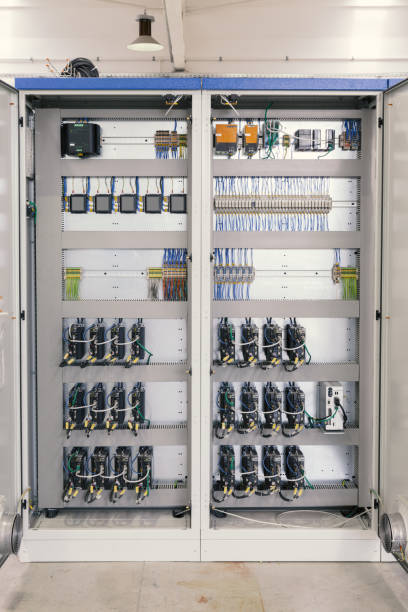
Workmanship standards. Review a comparable shipped panel (in person or live video): wire color conventions (black/red AC, blue DC, white-blue-stripe grounded DC, green/yellow exclusively for bonding), ferruled and dual-marked conductors, duct fill below ~70%, power/signal segregation, 360° shield terminations on EMC-critical circuits, and torque marks on power joints. These correlate directly with field reliability.
Test protocol. The professional minimum: 100% point-to-point continuity against drawings; insulation resistance test with recorded values; full functional simulation with forced inputs; VFD parameter verification against your application data; and a signed, dated test record per panel. For OEM programs, add an endurance-of-workmanship standard and sample audits.
Documentation and software handling. As-built schematics, BOM with part numbers, panel layout, test certificates, and — critically — agreement on PLC program ownership, commented source files, and parameter backups. The panels will outlive your project team; the documentation is what the next team inherits.
Specification inputs and where they bite if left vague
| Specification input | Where it bites if left vague |
|---|---|
| Motor/load schedule with starting method | Undersized contactors, wrong overload class |
| Available fault current (SCCR/withstand) | Rejection at receiving dock or plan review |
| Ambient and enclosure rating | Thermal derating discovered in the first summer |
| VFD motor-lead lengths | dv/dt stress and unexplained motor failures |
| Safety level (PL/SIL) | Retrofit of safety circuits after commissioning |
| Terminal and gland schedule | Marshalling errors corrected at site labor rates |
Commercial structure for OEM vs project buyers
- OEM (repeating panels): the value sits in design freeze, archived drawings/programs, controlled component substitution rules, and scheduled batch releases. Volume pricing follows stability, not just quantity. Typical OEM arrangements run monthly releases against a framework agreement.
- Project (one-off panels): expect NRE (engineering/drawings/test plan) separated from build cost; staged payments tied to drawing approval, FAT, and shipment; and explicit commissioning scope (who sets parameters, who runs SAT).
- Lead times: 2–4 weeks for standard-configured panels, 4–8 weeks for engineered custom panels from drawing approval; add 2–3 weeks for UL file reviews or witnessed FAT. Production output at mid-size manufacturers typically spans 100–400 cabinets monthly, gated by engineering hours and test-bench availability more than assembly labor.
Destination and volume reshape the OEM arrangement. A 3,000-panel program shipping to Gulf-market projects (SASO / G-mark documentation requirements on top of the base construction standards) is won or lost on lifecycle terms rather than unit price: the framework agreement should define how certification documentation packages are generated per shipment, how total owning cost moves when you upgrade thermal margin or component tier, and what the service-response commitment is across a region where commissioning support routes through partners. Price the panel over its support life — energy in the enclosure’s thermal design, spares logistics, documentation survival across team changes — and weigh suppliers on their answers to that arithmetic, not the first-article quote alone.
FAQ
How much panel spare capacity should a new machine build carry?
Field consensus: 10–20% spare I/O wired to terminals, spare DIN sections, and margin on distribution breakers. Cheap at build, expensive to retrofit, and it extends the machine’s useful life against scope creep.
VFD panels: what separates a good build from a bad one?
Three things: correct motor-lead treatment (reactors or filters where cable lengths demand), thermal engineering that accounts for drive losses at full load, and EMC discipline (shielded motor cable, 360° gland termination, segregated routing). Any manufacturer can bolt a drive to a backplane; those three details are the engineering.
How do I verify the thermal engineering before ordering?
Require the calculation with the quote: internal heat load in watts (drive and supply losses at rated load), cooling capacity of the proposed solution, and the resulting internal temperature versus component limits. A quote with no numbers is a quote with no thermal engineering.
How does that verification scale for a Gulf-market program at 3,000 units?
It becomes first-article work: validate the calculation on the initial build under witness, then bind it into the frozen design so later batches inherit it — with the SASO/G-mark documentation package generated per release rather than renegotiated. Lifecycle cost, not unit price, decides whether the program holds.
Should the panel manufacturer write my PLC program?
If the sequence is fully defined, letting them program integrates cleanly with their test bench — logic gets functionally tested before shipment. If the process is still evolving, keep software ownership in-house and give the manufacturer the I/O map; late-logic churn is the classic rework dispute.
Pre-order checklist
Framework (UL/IEC) established and certification verified; SCCR stated and marked; thermal calculation included with quote; test protocol in writing; documentation and software ownership defined; commissioning scope named; and milestone dates with the drawing-approval gate protected on your side too.
Related reading
- industrial control panel design standards — the UL/IEC framework panels are evaluated against.
- PLC control panel applications — application notes for the control core of these panels.
- electrical control panels — our industrial panel manufacturing scope.
Engineering note: ElectricalCabinet.net manufactures industrial control panels for OEM and plant customers. This guide is an evaluation framework, not a substitute for project-specific engineering review under the applicable installation codes.
 EN