

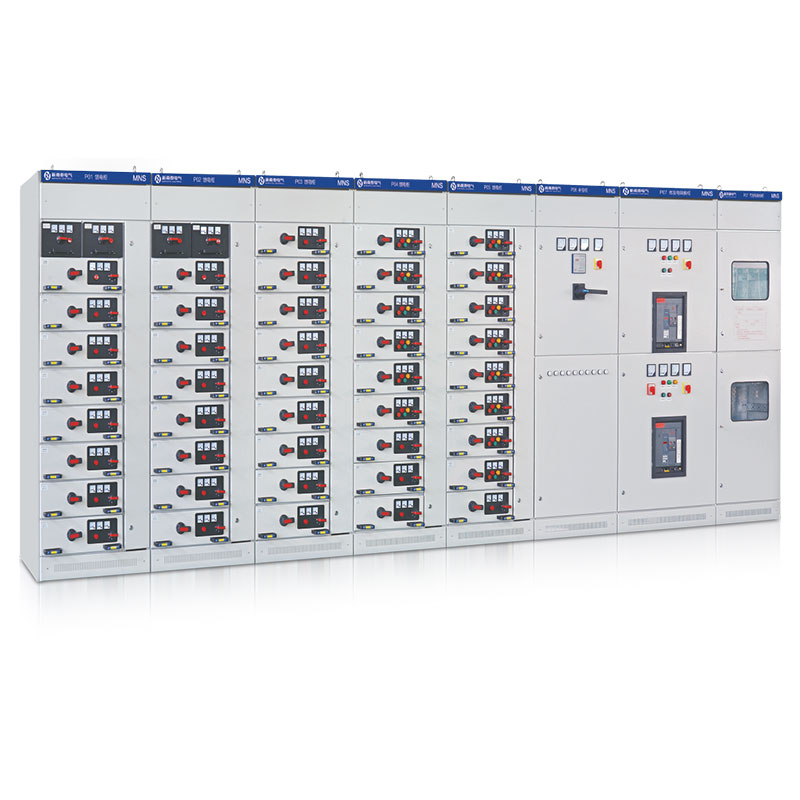


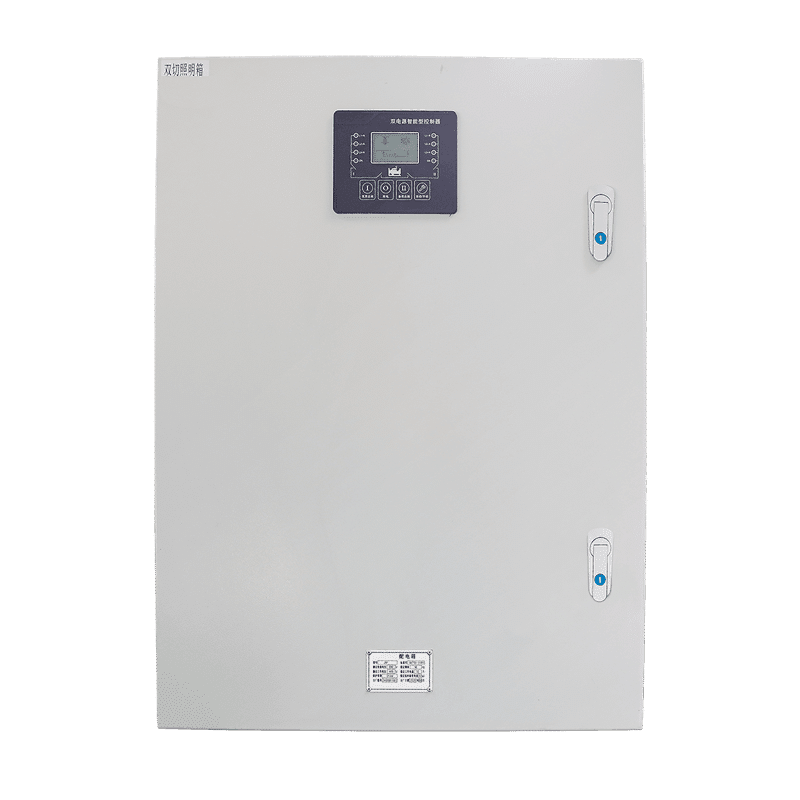


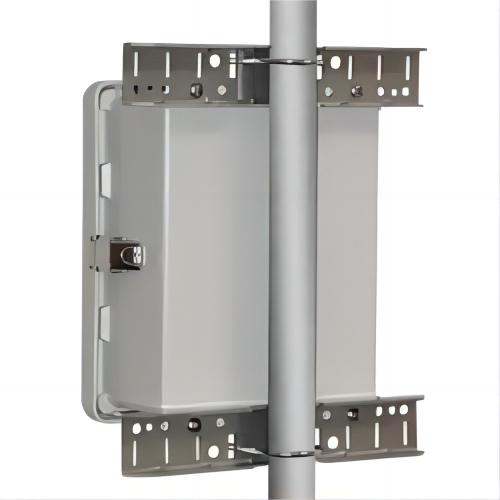


The PLC panel is where your control philosophy becomes copper and silicon: power supplies, the controller and its I/O, network infrastructure, safety circuits, and the terminal field that binds them to your process. Nearly every automation failure investigation eventually opens a panel door — and what the investigator finds there (or the records of what shipped from it) was decided by the PLC control panel manufacturer months earlier.
We build PLC panels for machine builders, water and process plants, and OEM programs. This guide is the evaluation framework we apply to our own work, written for the engineer or buyer selecting a manufacturer.
What defines PLC panel scope
A PLC control panel typically integrates:
- Control power: incoming disconnect/breaker, control transformer or 24 V DC power supply architecture (redundant supplies for critical loops), UPS sections where the process demands ride-through.
- The control platform: your PLC standard — Rockwell/Allen-Bradley, Siemens, Mitsubishi, Schneider, Omron, or others — with local and remote I/O, and network hardware (EtherNet/IP, PROFINET, Modbus TCP, or fieldbus segments).
- Motor and process interface: contactors and overloads for motor control, analog signal conditioning (isolators, barriers where hazardous areas apply), and terminal marshalling.
- Safety layer: safety relays and contactors rated for the required performance level (ISO 13849 PL d/e or IEC 62061 SIL), with wiring topology that matches the safety function design.
- Operator interface: HMI mounting, e-stop and pushbutton stations wired to defined terminals, and labeling systems that reproduce schematic designators.
The manufacturer’s job is executing this integration with correct component sizing, disciplined wiring, EMC-aware layout, and factory testing that catches faults while they are still cheap.
The capability questions that separate manufacturers
1. Platform fluency. Can they build to your PLC standard without re-inventing it? Ask for evidence: photos and drawings of recent panels on your platform, the software versions they handle, and how they manage firmware and module revisions. A manufacturer fluent in two platforms is more reliable on those two than a shop claiming fluency in six.
2. Component authentication. PLCs, drives, and safety components are among the most counterfeited industrial goods. Authorized-channel sourcing with batch traceability is the only acceptable answer to “where do your components come from.” During allocation cycles, ask what the substitution procedure is — controlled engineering review, or opportunistic buys from brokers (the answer matters for both authenticity and your spare-parts standardization).
3. EMC and layout discipline. Look for: power and signal segregation (separate ducts, crossings at right angles), shielded cables for analog and network runs with 360° termination at EMC gland plates or bonded clamps, clean power filtering where drives share the panel, and correct segregation of the 24 V DC common from the equipment ground if your design requires it. EMC problems in the field — drives resetting, analog signals drifting — trace back to these details.
4. Terminal strategy. The panel boundary is your field wiring interface: terminal counts and sizes matched to actual cable schedules, groupings by function (power, analog, digital, network), and gland plates pre-machined to your gland schedule. Marshalling errors discovered at site are field labor at site rates.
5. Test depth — the differentiator. The professional protocol: point-to-point continuity against drawings (100% of conductors), insulation resistance with recorded values, functional simulation with forced inputs observing every output through the PLC (not just lamp checks), network verification (addresses, segments, switches), and safety circuit verification against the safety function list. VFD-fed loads get rotation checks. The deliverable is a signed test record per serial number — ask to see a sample of a real one.
6. Software handling. Agree in writing: who programs, who owns the source, what is delivered (commented project files, not compiled binaries), how parameters and firmware are archived, and the handover test demonstrating the logic against your sequence. For OEM repeat programs, the manufacturer’s archive discipline is what makes reorder panel #47 identical to panel #1.
Evidence checklist: what to request and what it confirms
| Evidence you request | What it confirms | Red flag if absent |
|---|---|---|
| Photos and drawings of recent panels on your platform | Platform fluency without re-engineering | Generic stock photos with no designators |
| Component sourcing policy with batch traceability | Authentic parts and controlled substitution | Broker sourcing “when available” |
| A sample signed test record (per serial number) | Test depth: 100% continuity, functional simulation | A one-page certificate with no measured values |
| Software deliverables list | Archive discipline for reorders and maintenance | Compiled binaries only, no commented source |
| Thermal and EMC notes for your environment | Engineering matched to ambient and cable runs | Silence on heat load or shield termination |
Commercial and delivery structure
- Lead times: standard-configuration PLC panels 2–4 weeks; engineered panels 4–8 weeks from drawing approval; add review time when UL listing or witnessed FAT applies. The schedule gate is engineering hours and test-bench time, not panel assembly labor.
- NRE discipline: one-time engineering (schematics, layout, test plan, programming) is separated from build cost in a professional quote. For OEM volumes it amortizes toward zero; for one-offs it is the honest cost of correctness.
- OEM program structure: framework agreement, frozen BOM with controlled substitution rules, archived drawings and programs, scheduled batch releases, and a change-control process with version marks. Manufacturers who cannot describe their change-control process will eventually ship you an undocumented variant.
- Support after shipment: who answers commissioning questions in your time zone, and what the response commitment is for defects in the first year. Spare-parts policy for platform-specific components (power supplies, I/O cards) — your maintenance team will need this list on day one.
Constraints prune the candidate list fast. If your first order is only 50 PLC panels for a plant whose control rooms run hot — ambient well above the 40 °C reference condition inside cabinets loaded with supplies and network hardware — the thermal question moves to the front of the audit: enclosure sizing against the summed heat load, filter fans or cooling specified with margin, and derating statements for the electronics. Under a fixed budget, the money is best protected by cutting enclosure length or HMI options, never cooling capacity or component tier — a PLC panel that cooks its power supplies pays the budget back in unplanned downtime within the first summer. Fifty units is also the volume where the archive discipline you fund now (drawings, programs, frozen BOM) determines whether reorder 51 is a phone call or a re-engineering project.
FAQ
Should the panel manufacturer or my integrator write the PLC program?
If your sequence is fully specified, the manufacturer programming enables bench testing of real logic before shipment — the most economical path. If the process is evolving, keep software in-house and hand over an I/O map. In both cases, settle source-code ownership in the contract.
How do I specify spares provisioning on a PLC panel?
10–20% spare I/O wired to terminals, plus a critical-spares list covering the power supply, one of each I/O card type, fuses, and relays. For remote sites, weight the list toward anything with lead time.
What does that provisioning do to the unit price?
Spare I/O adds terminals and enclosure space; the critical-spares list is a one-time kit cost held at your site rather than per panel. The per-panel impact is typically a low single-digit percentage — small against the cost of one stopped line waiting on a power supply.
How does the answer change for a budget-capped first batch of 50 panels in a hot plant?
Protect the spares inside the panel (wired I/O points) and the thermal margin before anything else; defer the site spares kit to the second release if the cap forces a choice. A hot panel with no spare I/O is a stranded asset; a cool one with spares can grow with the process.
Redundant 24 V DC supplies — worth it?
For panels whose failure stops a process or violates safety monitoring: yes, with diode-or’ed outputs and monitoring contacts wired to the PLC. For basic machine control: capital sitting idle. Decide per panel function, not by habit.
Enquiry checklist
Send the motor/valve/actuator schedule, control architecture and platform standard, I/O list with analog/digital split, safety requirements (PL/SIL), network topology, environment and enclosure rating, available fault current (SCCR), terminal and gland expectations, software ownership terms, and target milestones. The manufacturer’s questions in return are your first quality signal.
Related reading
- PLC control panel applications — where these panels operate and what integration scope they carry.
- PLC control cabinets — our PLC cabinet product line and standard configurations.
- control panel wiring planning — the wiring and marshalling discipline the test record depends on.
Engineering note: ElectricalCabinet.net manufactures PLC control panels for OEM and project customers across major automation platforms. This guide is an evaluation framework; project-specific control design and safety validation require qualified engineering review.
 EN
EN