

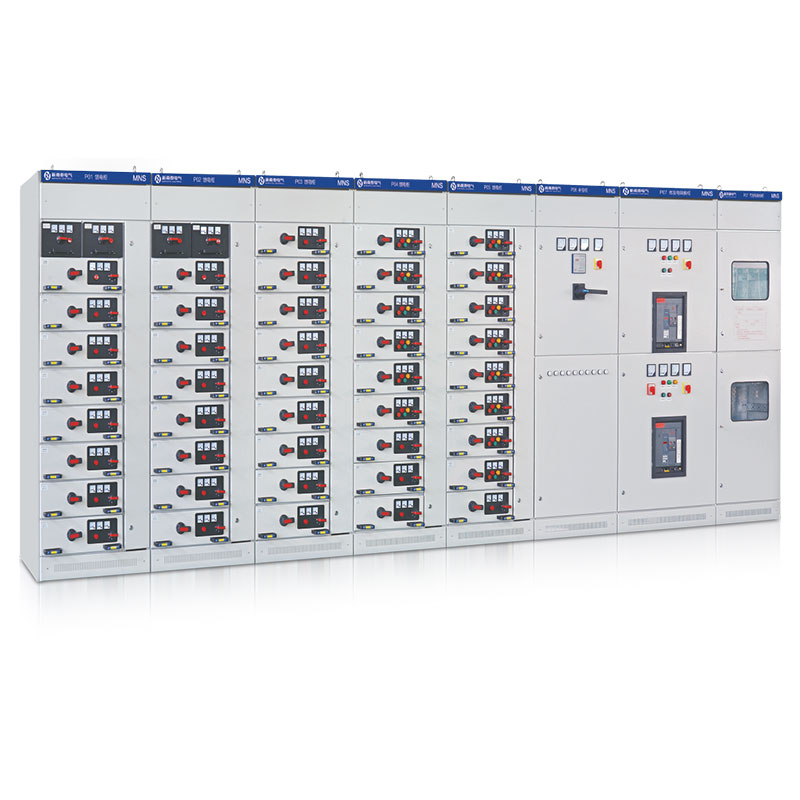






ANSI air-insulated switchgear means medium-voltage metal-clad and metal-enclosed equipment built to the North American IEEE/ANSI tradition rather than the IEC framework: the same physics — busbars, vacuum breakers, and cables insulated in air inside grounded metal enclosures — but different rating series, different vocabulary, different test codes, and different installation rules under the NEC. Specifying “ANSI switchgear” correctly means documenting system ratings, equipment scope, protection, enclosure, testing, and supplier evidence in the vocabulary the manufacturer and the authority having jurisdiction both use. This guide maps that vocabulary, contrasts it with IEC practice, and lists the checks that keep a cross-market project out of trouble. Final ratings, code, safety, installation, and testing requirements must be confirmed by qualified engineering for the project.
The ANSI medium-voltage class ladder
North American practice groups equipment into nominal voltage classes — commonly 5 kV, 15 kV, 27 kV, and 38 kV MGV classes — rather than the IEC series of 12, 24, and 40.5 kV highest-voltage ratings. A “15 kV class” board serves 13.8 kV, 13.2 kV, and 12.47 kV systems; 27 kV class covers 24.9 kV distribution; 38 kV class is the upper indoor AIS band. Within each class, insulation integrity is expressed as a basic impulse level (BIL) — for example 95 kV BIL is a familiar value in 15 kV class metal-clad gear — alongside power-frequency withstand. Frequency is 60 Hz across ANSI markets, which affects motor loads and transformer designs more than the switchgear itself, but must be stated on every nameplate.
ANSI metal-clad versus ANSI metal-enclosed
| Term | Defining standard | Construction meaning |
|---|---|---|
| Metal-clad switchgear | IEEE Std C37.20.2 | Grounded metal barriers between all compartments, automatic shutters over live parts, drawout vacuum breakers, insulated or bare bus in dedicated compartments — the reference construction for industrial MV |
| Metal-enclosed interrupter switchgear | IEEE Std C37.20.3 | Interrupter switches and fuses in metal enclosure with fewer compartmental requirements — lighter duty, lower cost |
| Metal-enclosed bus | IEEE Std C37.23 | Bus runs between equipment, isolated phase or non-segregated |
| (IEC comparison) metal-enclosed per IEC 62271-200 | IEC | Compartment classes (LSC), internal arc classification, and IEC rating series — not automatically interchangeable with ANSI ratings |
Define the system boundary
Separate the power equipment, control cabinet, field devices, protection, networks, installer scope, and maintenance responsibility before selecting a configuration or preparing drawings. ANSI practice adds specific boundary habits: electromechanical or digital relays supplied in the switchgear versus by the engineer of record; control power transformers and battery systems included or excluded; and whether the SCCR of the assembly is stated and documented for the fault level at the installation point.
Inputs to document
| Input | Why it matters in ANSI practice |
|---|---|
| Electrical and operating data | Voltage class, current, fault assumptions, operating modes, switching duty, feeder information, and protection interfaces — ratings must map to ANSI/IEEE preferred series with interrupting ratings evidenced. |
| Cabinet and installation | Compartments, mounting, cable entry, clearances, heat, environment, access, labels, grounding, and service sequence — installation clearances follow NEC working-space rules. |
| Control and documentation | I/O, terminals, symbols, wire numbers, alarms, revisions, drawings, BOM, settings, test points, and software or data handover — ANSI drawing sets follow IEEE device numbers (50/51, 27/59, 87, and so on). |
| Verification | Inspection points, test records, open decisions, supplier evidence, and acceptance responsibilities. |

Where ANSI and IEC specifications actually differ
Beyond the class ladders, day-to-day differences include: breaker rating structure (ANSI interrupting class conventions versus IEC rated short-circuit breaking current with defined duty cycles), test voltages and BIL conventions for insulation withstand, drawing and relay-numbering practice (ANSI/IEEE device function numbers versus IEC graphical symbols), and the installation code environment — NEC working space, grounding, and SCCR documentation versus IEC 61936-style installation rules. A board designed to IEC 62271-200 cannot be called ANSI metal-clad without the IEEE construction features, and vice versa; for projects spanning both markets, specify the governing framework per site and require the manufacturer to state which certificates accompany each delivery.
Standards and certification for ANSI air-insulated switchgear
IEEE Std C37.20.2 defines metal-clad switchgear construction and testing; ANSI/IEEE C37.04 and C37.06 govern AC circuit-breaker ratings and preferred values; IEEE C37.09 covers breaker test procedures; and IEEE C37.20.3 governs metal-enclosed interrupter gear. Listing requirements can add UL 1558 (metal-enclosed power switchgear) where the authority having jurisdiction expects a listed assembly, and UL 1062 applies to MV switchgear contexts. Installation falls under NFPA 70 (NEC), including working-space and grounding articles. The practical procurement check: ask for the conformity statement per standard with edition years, the production-test record per assembly, and the SCCR documentation for the complete assembly rather than for components alone. Do not copy competitor ratings, certification, safety, performance, or availability claims without project-specific evidence.
Frequently asked questions
Can IEC switchgear be installed in an ANSI-market project?
Sometimes, under engineered approvals or in industrial settings where the owner accepts the framework — but the AHJ, the fault-reporting vocabulary, and spare-part logistics all shift. Decide the framework at concept stage, not at delivery.
What does SCCR mean on switchgear documentation?
Short-circuit current rating: the fault current the complete assembly is rated to withstand, documented for the assembly as built. It must meet or exceed the available fault current at the installation point — a signature NEC-market verification step.
Why do ANSI drawings use numbers like 50 and 51?
IEEE device function numbers: 50 instantaneous overcurrent, 51 time overcurrent, 27 undervoltage, 59 overvoltage, 87 differential. They are the working language of ANSI protection documentation.
Is 60 Hz mandatory on the nameplate if my system is 50 Hz?
Yes — frequency is a rated value. Equipment certified at 60 Hz needs explicit 50 Hz rating evidence for 50 Hz systems; never assume it transfers.
What is the equivalent of IEC’s internal arc classification?
ANSI practice historically addressed arc exposure through construction and installation rules; arc-resistant ratings per ANSI/IEEE C37.20.7 are the parallel offering where the specification calls for it — a good follow-up question to your supplier, since the tested arc class and duration must be stated per assembly.
Procurement scenarios
For an IEC-market manufacturer bidding a North American project, the workable pattern is a small first order — one or two ANSI-class panels with full IEEE-based production-test records and SCCR documentation — establishing the documentation package before scaling the order. For a US-spec project sourcing internationally, lock the framework in writing (IEEE C37.20.2 construction, NEC-compliant installation data, UL listing where the AHJ requires it) and build a 4–6 week documentation buffer into the schedule beyond manufacturing lead time. For dual-market manufacturers serving both traditions, request a ratings cross-reference table with your quotation showing ANSI class and IEC rating side by side, including BIL versus lightning impulse withstand — it compresses approval cycles and exposes gaps while they are still cheap to fix.
ElectricalCabinet.net builds to both rating traditions across our medium voltage switchgear range and the LV side covered in our beginner’s guide to low voltage switchgear.
 EN
EN