

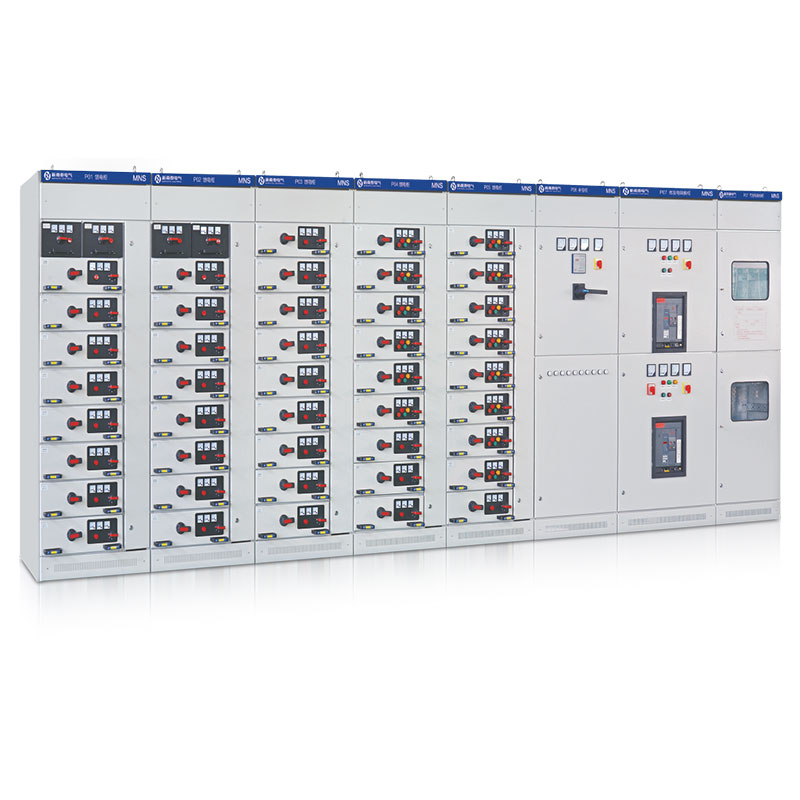


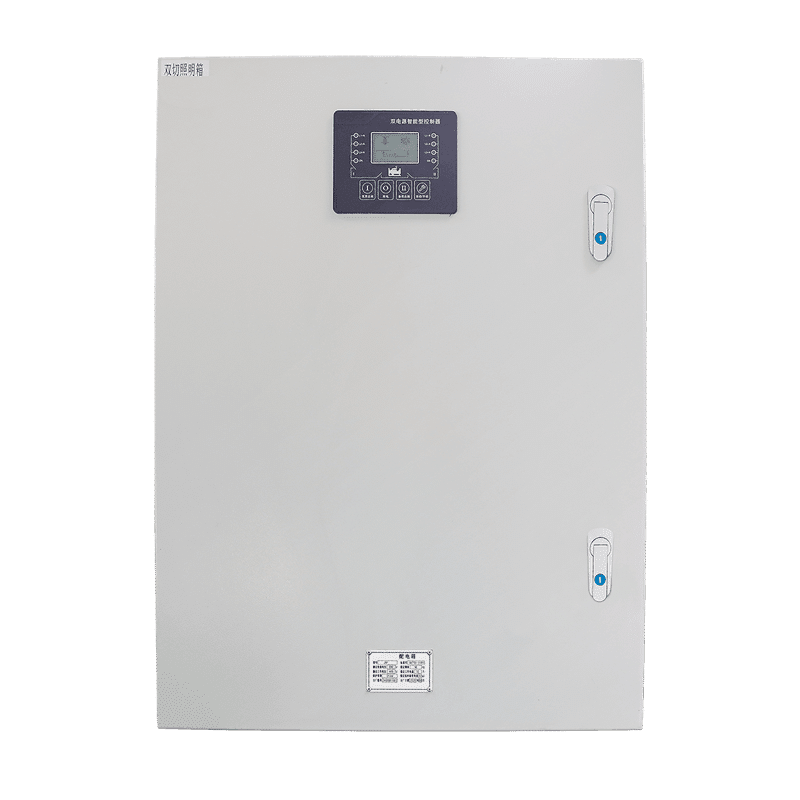


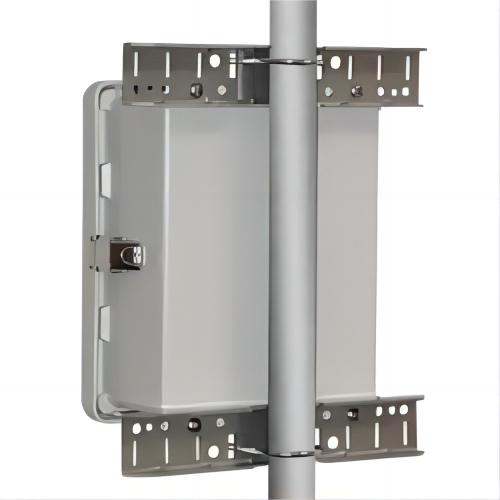


A motor control center — MCC in electrical vocabulary — is a floor-standing lineup of metal enclosed sections that concentrates the starting, protection, and monitoring of many low-voltage motors in one structure. Instead of scattering individual starters around a plant, an MCC arranges them as standardized, withdrawable plug-in units fed from common horizontal and vertical bus bars: one bucket controls one motor, and any bucket can be pulled for service while its neighbors keep running. Motor control centers sit between the incoming switchgear and the field devices on the load side, which makes them one of the highest-density products in a low-voltage distribution room — and a natural companion to the withdrawable cabinet families we manufacture. As always, ratings, standards compliance, and installation details must be confirmed by qualified engineering for each project.
What a motor control center is
Functionally, an MCC is a motor distribution and control engine. Each motor in a factory needs a disconnecting means, short-circuit protection, a contactor or soft starter or variable frequency drive, overload protection against sustained overcurrent, and often control transformers, terminal blocks, and signaling. An MCC gives every motor its own compartment containing exactly that chain, pre-wired to a standard pattern, and connects all compartments in parallel to shared bus. The economics are straightforward: above roughly a dozen motors in one area, a centralized lineup beats field-mounted individual starters on installation labor, troubleshooting access, and space. Facilities with hundreds of pumps, fans, conveyors, and compressors — water treatment, steel and paper mills, chemical plants, material handling — are the classic MCC territory.
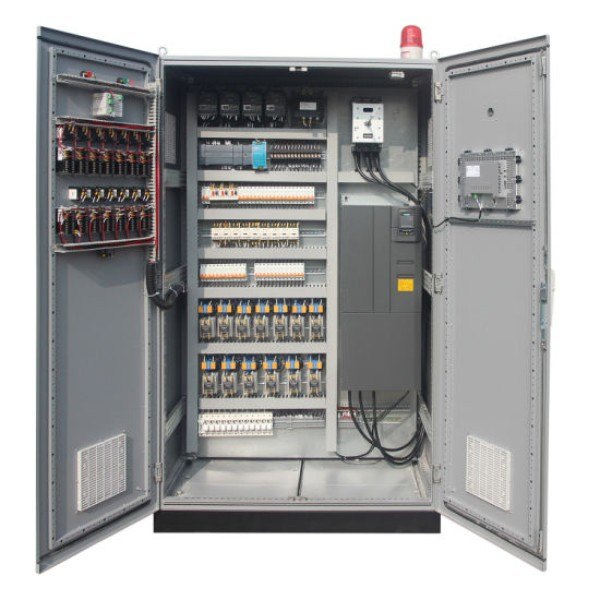
Inside an MCC: horizontal bus, vertical bus, and buckets
Three structural layers repeat down every lineup. Horizontal bus — high-capacity copper or aluminum bars running the length of the structure, sized for the total current of all sections and braced for the fault current the upstream transformer can deliver. Vertical bus — a riser in each section that taps the horizontal bus and feeds the units stacked in that one column. Drawout units (buckets) — the plug-in compartments, each with its stabs, disconnect or breaker, contactor and overload, and control wiring on a separate terminal zone; a bucket withdraws onto rails or unlatches as a module without de-energizing the vertical bus feeding its neighbors.
A modern bucket is increasingly an intelligent unit: electronic overloads that model motor heating and report load current over the plant network, communication-capable protection devices, and starters that publish status to the control system over industrial protocols. That shift is what turns a passive lineup into a monitored asset — the motor data an MCC collects (running current, trip causes, run hours) is the raw material of a maintenance program. Readers whose interest is the control-and-automation side rather than the power side will find that perspective in our motor control panel types guide.
MCC vs switchgear vs distribution panel
| Attribute | Motor control center | Switchgear | Distribution panel / board |
|---|---|---|---|
| Primary job | Concentrated motor starting, protection, and control | Feeding, protection, and switching at the head of the system | Branch distribution to final loads |
| Typical devices | Contactors, overloads, soft starters, VFDs, unit breakers | Power circuit breakers, protection relays | Molded-case breakers, fuses |
| Unit construction | Withdrawable buckets on vertical bus | Fixed or withdrawable breaker compartments | Fixed plug-in or bolt-in ways |
| Load character | Many motor loads | Few large feeders and transformers | Many small mixed loads |
The boundary is functional, not physical: switchgear looks upstream (transformers, mains, tie and feeder breakers — see what is switchgear for that layer), the MCC looks downstream at motors, and a distribution panel handles the non-motor branch loads. In a typical room all three coexist, and the MCC main breaker or feeders land in the switchgear or main board.
Standards: IEC 61439-2 and UL 845
Motor control centers are standardized assemblies, and two documents govern them depending on market. In IEC markets, IEC 61439-2 — the power switchgear and controlgear assembly part of the 61439 low-voltage switchgear and controlgear assembly series — defines design verification, ratings, and routine testing; China’s GB 7251.2 aligns with it. In North America, UL 845 is the specific motor control center standard, covering construction, temperature rise, short-circuit ratings, and the unit types an MCC may contain. Both frameworks put the burden of proof on verified assembly testing rather than component ratings alone — which is why a compliant lineup carries type-test evidence for its bus bracing and fault withstand, not just a parts list. Specifiers should name the governing standard explicitly, because an IEC 61439-2 verified assembly and a UL 845 listed MCC are not interchangeable deliverables.
Selection inputs for an MCC lineup
A usable specification starts with a motor schedule, not a cabinet drawing. The inputs that size and shape the lineup:
| Input | What it decides |
|---|---|
| Motor schedule (kW, full-load and locked-rotor current per motor) | Number of buckets, unit ratings, vertical bus loading |
| Starting method per motor (DOL, star-delta, soft starter, VFD) | Bucket depth and content; whether drive harmonics need filtering or derating of the bus |
| Total connected load and diversity | Horizontal bus rating and incoming feeder size |
| Prospective short-circuit current at the MCC | Bus bracing and fault withstand rating to verify against the upstream transformer |
| Environment (temperature, dust, moisture, corrosive atmosphere) | Enclosure IP rating, heaters, gaskets, material |
| Control and communication (hardwired I/O, networked intelligent units) | Smart unit count, protocol gateway and segregation of control wiring |
| Future motors | Spare buckets or reserved vertical-bus capacity — cheap at purchase, expensive as a retrofit |
Withdrawable low-voltage lineups in the same family
The withdrawable-unit principle behind MCCs is the same one that structures the broader low-voltage switchgear families we build: the GCK withdrawable low-voltage switchgear, the GCS low-voltage withdrawable switch cabinet, and the MNS withdrawable switchgear lineups all use drawout compartments on vertical buses, at feeder-level ratings above bucket duty; the removable AC metal-clad construction extends the same maintainability logic. Projects specifying an MCC usually specify the feeder lineup in the same room, from the same bus logic — worth settling as one package with one manufacturer so the bus, interlocks, and finish match.
Frequently asked questions
What does MCC mean in electrical work?
MCC stands for motor control center: a centralized lineup of motor starting and protection units sharing common bus bars. If you have seen a row of identical cabinet sections with a door per motor in a plant electrical room, that was an MCC.
What is the difference between an MCC and switchgear?
Switchgear protects and switches feeders — mains, transformers, large outgoing circuits — with power circuit breakers. An MCC concentrates many motor circuits in withdrawable buckets optimized for starting and control. Both may sit in the same room; the MCC is normally fed from the switchgear. The comparison table above places the two side by side.
Can one motor unit be serviced while the rest keep running?
Yes — that is the defining advantage of drawout buckets. A bucket withdraws from its vertical bus and works on the bench while the section’s other units stay in service, provided the safety procedures for the still-energized bus are followed.
Which standard should my MCC comply with?
IEC 61439-2 (with GB 7251.2 in China) for IEC-market projects, UL 845 for North American projects. State the standard in the specification and ask for the design-verification evidence, not just the nameplate.
When do I need an MCC instead of individual motor control panels?
Motor count and density decide it. A handful of motors spread across a site suits dedicated panels — our motor control panel guide linked above covers that pattern; a dozen or more motors in one process area almost always lands cheaper and more maintainable as a centralized MCC.
 EN
EN