

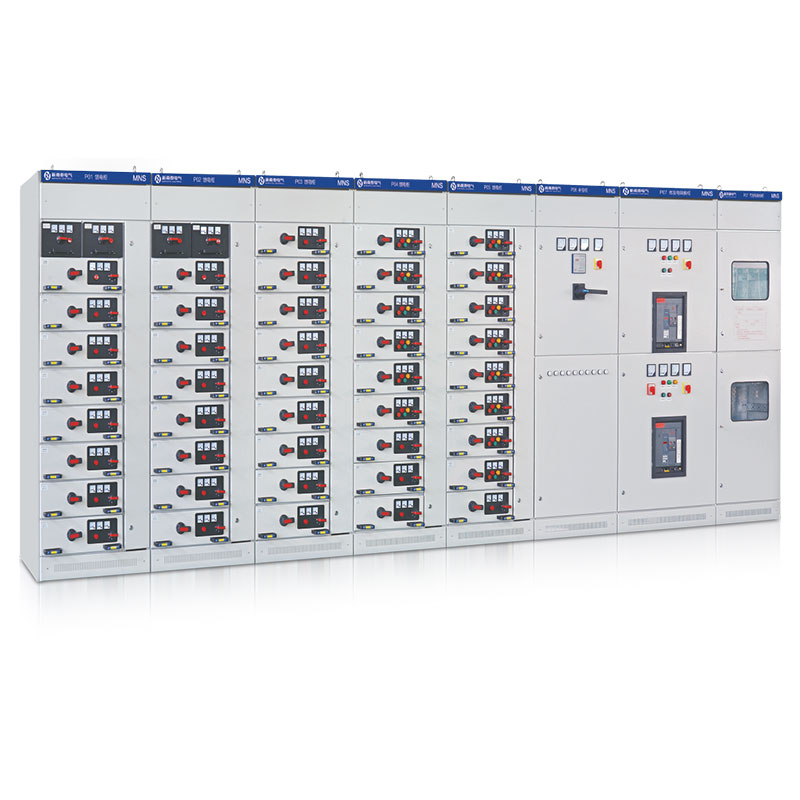


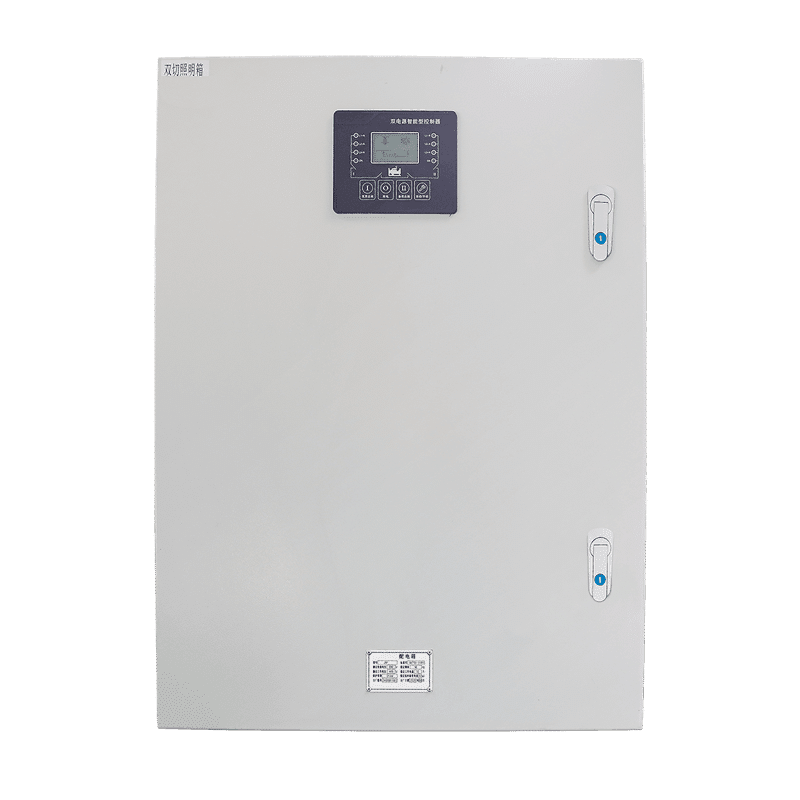




Low voltage switchgear — the main LV switchboards and distribution assemblies below 1,000 V that carry your entire site load — is bought less frequently than any other equipment class and written about less honestly. Most buyers specify it once or twice a career. The manufacturers who build it well are distinguishable, but not by their websites: the differences live in the design verification files, the busbar engineering, and the routine test records.
We manufacture LV switchgear assemblies to both IEC and UL frameworks. This guide compresses what matters when comparing low voltage switchgear manufacturers for an industrial or infrastructure project.
What you are actually buying: verified ratings, not enclosures with breakers
An LV switchgear lineup is defined by five ratings. Every one of them must be evidence-backed:
| Rating | Typical industrial range | What backs the claim |
|---|---|---|
| Rated operational voltage | 400 / 690 V AC (IEC), 480 / 600 V (NA) | Design verification per IEC 61439-1/-2 or UL 1558 / UL 891 |
| Rated current (main bus) | 630 A – 6,300 A | Temperature-rise verification (test or derivation) |
| Short-time withstand current | 15–100 kA for 1 s or 3 s | Type-test report, busbar dynamics calculation |
| Peak withstand | 2.1–2.2 × short-time value (50/60 Hz) | Included in withstand testing |
| Form of internal segregation | Form 1 – Form 4b (IEC 61439-2) | Construction design verification |
The Form of segregation deserves specifier attention because it drives cost and maintainability: Form 1 (no segregation) suits compact secondary boards; Form 2b (functional units separated from busbar, terminals separated) is the common industrial mains compromise; Form 4b (functional units and terminals isolated from busbar and from each other) enables safe maintenance of one feeder while the bus remains live — standard for data centers, hospitals, and continuous-process plants.
The two compliance frameworks
IEC route (most of the world): IEC 61439-1/-2 replaced the older 60439 series and sharpened the distinction between type-tested (TTA) and partially type-tested (PTTA) assemblies into a unified “design verification” concept: every rated characteristic must be verified by test, by derivation from tested designs, or by calculation, using defined methods. Ask a manufacturer which method covers your configuration — a 4,000 A, 65 kA/1s, Form 4b board derived from a tested 3,150 A design should come with the derivation file, not an assertion.
North American route: UL 1558 (metal-enclosed LV switchgear) or UL 891 (switchboards), installed per NEC Article 408; circuit protection per UL 489 breakers. SCCR documentation parallels the IEC withstand concept but is expressed and verified differently. Manufacturers serving both markets maintain parallel design files — a meaningful capability marker if your project spans regions.
Order shape disciplines the evidence request. On a 500-board multi-site IEC program, ask each candidate two scaled questions: which accredited-lab type-test reports (KEMA-CESI, ASTA, TÜV, CPRI, or CNAS-accredited national labs) bracket the exact Form 4b construction and withstand rating quoted — with report numbers you can confirm with the issuing lab — and how per-panel routine test records are batched and delivered across a phased rollout. Volume does not dilute the IEC 61439 requirement that every manufactured assembly passes routine verification; it multiplies the paperwork, and the suppliers who survive this screening are the ones whose test-floor records arrive organized by site and phase without being chased.
Manufacturer evaluation: seven checks
- Design verification file access. Will they show (under NDA if necessary) the design verification summary for the configuration quoted — withstand, temperature rise, IP, and the applicable internal arc classification if specified?
- Type-test reports with lab identity and report numbers (KEMA-CESI, ASTA, TÜV, CPRI, or CNAS-accredited labs). Confirm the tested ratings bracket your order.
- Busbar engineering detail. Copper cross-section per rating, plating (tin or silver), joint design with specified torque, and support spacing derived for peak forces. Undersized margin here is the classic cost-cut that a nameplate does not reveal.
- Breaker and component ecosystem. Air-circuit-breaker (ACB) and molded-case platforms from major houses (ABB, Schneider, Siemens, Eaton, Mitsubishi), sourced through authorized channels with batch traceability. Ask about the supply-cycle plan: which frames have qualified alternates, and what the substitution procedure is.
- Protection and metering integration. Electronic trip units, protective relays on incomers, power metering (basic or power-quality class), and communications (Modbus, Profibus, IEC 61850 on larger boards). Who configures trip units and relays — factory, or your engineer at site?
- Routine test records per shipment. IEC 61439 mandates routine verification of every manufactured assembly: dielectric, wiring/functional checks, and inspection of the construction against the design. “Type-tested family” does not exempt per-panel routine testing; suppliers who imply otherwise are transferring risk to you.
- Production capacity and schedule protection. LV switchgear lines at mid-size manufacturers typically deliver tens to a few hundred panels per month; the constraint is engineering hours plus test-bench time. Ask where your order sits in the current plan and what happens if a breaker frame slips a quarter.
Project delivery structure
- Timeline: configured LV switchboards 4–8 weeks from drawing approval; large Form 4b lineups 8–14 weeks with witnessed FAT. Drawings approval — GA, single-line, SLD protection settings, terminal schedules — is the milestone that anchors everything after it.
- FAT protocol: dielectric test, functional simulation of breakers/interlocks/trip units, dimensional checks, and documentation review. Witnessed FAT (your engineer, your consultant, or a third party) is inexpensive relative to the cost of discovering issues at site.
- Site works boundary: busbar connections, protection setting, SAT, and energization supervision are contract lines, not assumptions. Name the responsible party for each in the purchase order.
- Spares and lifecycle: agree the critical spares list (trip units, control fuses, one of each breaker frame if the site standard demands) and the documentation archive (drawings, settings, BOM) that makes the ten-year retrofit conversation possible.
FAQ
Why do quotes differ 30–50% at identical ratings?
Copper weight, breaker platform tier, Form of segregation actually offered (quotes for “Form 4b” that deliver Form 2b construction are a recurring dispute), enclosure steel thickness, and included test scope. Demand a BOM-level and construction-level comparison before deciding.
Which of those drivers can be negotiated without de-rating the board?
Breaker platform tier within authorized supply, metering scope, and enclosure finish are honest levers. Busbar cross-section, Form of segregation, and routine test scope are not — agreeing less there buys a cheaper board that fails its evidence checks.
How does a 500-board multi-site IEC program change the comparison?
Add program terms to the price table: phased delivery slots, batched routine-test documentation per site, and a named substitution procedure for breaker frames. A 5% unit-price premium from the supplier who holds those three terms is usually the cheaper program.
Does internal arc classification matter for LV boards?
Increasingly yes — IEC TR 61641 (arc fault testing of LV assemblies, often expressed as IAC classification) is specified for operator-facing boards in many utilities and large industrials. It is an option with real cost; specify it consciously, not by default.
One manufacturer for LV switchgear, another for the MCCs — problem?
Workable with clean interface definitions (bus tie details, control wiring boundaries, documentation standards). Single-supplier reduces those interfaces; evaluate whether the engineering savings outweigh the commercial diversification. Both answers are legitimate.
Enquiry package
Send: single-line diagram with fault levels, load schedule, Form of segregation, environment (ambient, altitude, corrosion), standards destination (IEC/UL/local approvals), metering and protection scope, and milestone dates. Manufacturers who mark this up with questions have started earning the order.
Related reading
- low voltage switchgear — the LV assemblies this guide helps you source.
- beginner’s guide to low voltage switchgear — vocabulary and busbar basics for LV evaluation.
- switchgear assemblies — our LV/MV manufacturing scope.
Engineering note: ElectricalCabinet.net manufactures LV switchgear and distribution assemblies to IEC 61439 and UL frameworks for export projects. This guide is a procurement evaluation framework; final ratings and compliance require qualified engineering review for the specific installation.
 EN
EN