







This guide is an engineering and procurement aid. The final enclosure, junction-box, protection, and installation decisions must follow the equipment data, local requirements, approved drawings, and the supplier’s documented capability. A search result or competitor page is not evidence that ElectricalCabinet.net offers a particular rating or certification.
“Weatherproof” and “waterproof” are marketing words, not engineering ratings. No international standard defines either term. When a specification, datasheet, or purchase order uses them, the practical translation is always the same: convert the word into a tested protection level, normally an IP code under IEC 60529 or a NEMA 250 enclosure type, and then verify that the complete configuration – body, door, gasket, glands, plugs, and vents – has evidence for that level. This article explains what the two words usually imply, how each maps to testable ratings, and which exposure questions decide the correct specification.
What the two words usually mean in practice
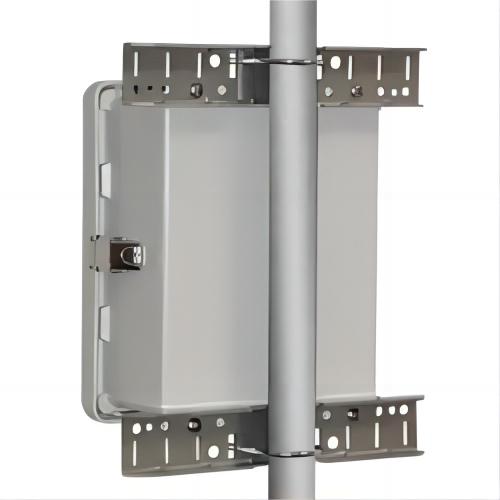
Suppliers use “weatherproof” for enclosures intended for outdoor or sheltered outdoor use: resistance to rain, wind-driven spray, dust, and temperature cycling. “Waterproof” is stronger in common usage and is applied to everything from hose-washdown cabinets to submersible junction boxes – which is exactly why the word is unreliable. A box that survives a garden hose is not a box that survives a 1-meter flood, and neither result predicts survival under an 80 °C pressure wash. The everyday phrase weatherproof box usually points to the first row — a rain-tight enclosure for outdoor service — but the words alone do not say whether driving rain, hose washdown, or temporary flooding is in scope, which is why the exposure questions below decide the actual rating. The table shows how the vocabulary typically maps to tested protection levels.
| Common wording | Real exposure behind the word | Typical tested equivalent |
|---|---|---|
| Weatherproof, rain-tight | Rain, wind-driven spray, outdoor dust | IP54 / IP65; NEMA 3R (with drains) or NEMA 3/3S |
| Weatherproof, hose-resistant | Splash and low-pressure jets from any direction | IP66; NEMA 4 / 4X |
| Waterproof, washdown | High-pressure, high-temperature cleaning | IP69 / IP69K (ISO 20653); NEMA 4X with washdown hardware |
| Waterproof, submersible | Temporary or continuous immersion | IP67 / IP68; NEMA 6 / 6P |
Note that the two “waterproof” rows are different engineering problems. Washdown adds heat and chemical attack to the sealing question; immersion adds hydrostatic pressure and cable-entry depth limits. Selecting the higher-looking number does not cover the other scenario – IP68 and IP69 are separate tests, a distinction covered in detail in our IP68 vs IP69 comparison.
How IEC 60529 replaces adjectives with digits
The IP code gives each word a measurable boundary. The first digit grades solid protection (5 = dust-protected, 6 = dust-tight); the second digit grades water protection using defined laboratory tests. The commonly quoted water levels are:
| Second digit | Test condition (IEC 60529) | Practical meaning |
|---|---|---|
| 3 | Spray at up to 60° from vertical | Rain that is not driven near-horizontal |
| 4 | Splashing from any direction | Wind-driven rain, splashes |
| 5 | 6.3 mm nozzle jet, 12.5 L/min | Low-pressure hose jets |
| 6 | 12.5 mm nozzle jet, 100 L/min | Strong hose washdown, ship-deck seas |
| 7 | Immersion, 1 m depth, 30 min | Temporary flooding |
| 8 | Continuous immersion, depth/time per manufacturer | Standing water, buried or submerged boxes |
| 9 / 9K | High-pressure, high-temperature spray jets | Sanitize-in-place and vehicle-style washdown |
Two details in this table decide real projects. First, IPX7 and IPX8 immersion conditions beyond the standard minimum are set by the manufacturer – always ask for the tested depth and duration instead of assuming “IP68” means indefinite submersion. Second, a higher second digit does not automatically include the lower dynamic-jet levels unless the marking states it (for example IPX6/IPX9 combined ratings); in most food and pharma washdown specifications, spray-jet resistance is the governing test, not immersion.
Exposure checklist: describe the site, not the adjective
Whether the specification is written around IP or NEMA, the enclosure body cannot be evaluated separately from its door, cable glands, blanking plugs, vents, and mounting position. Record the following before selecting:
| Exposure | Questions to answer |
|---|---|
| Rain and spray | Is water directed, wind-driven, or able to collect beneath the box? Is a drip loop or roof present? |
| Cleaning | What pressure, temperature, chemicals, and frequency are expected, and from what distance and angle? |
| Immersion | What depth, duration, medium, and energized state apply during floods or cleaning? |
| Condensation | Will day-night temperature cycling require drainage, anti-condensation heaters, or controlled vents? |
| Cable entry | How will each used and unused opening be sealed, strain-relieved, and re-sealed after service? |
| Solar and heat | Does direct sun add thermal load that stresses gaskets and internal components? |
Condensation is the most commonly underestimated line. A sealed “waterproof” box in a humid outdoor cycle can collect more water from internal condensation than from rain; drainage, heaters, or pressure-equalizing vents are discussed in enclosure condensation and ventilation planning.
Standards and certifications that define water protection
Three families of documents carry most of the evidence weight in water-exposure projects:
- IEC 60529 (IP code). Defines the digit system, the test apparatus, water rates, and pass criteria for each level. It tests a specific configuration on a test sample – not a product family – so field modifications such as drilled holes invalidate the marking unless re-evaluated.
- NEMA 250 (enclosure types). Defines types by construction and environmental performance: Type 3R for outdoor rain with drainage, Type 4/4X for hose-directed water (4X adds corrosion resistance), Type 6/6P for temporary/prolonged submersion. NEMA types bundle additional factors – ice, corrosion, oil – that IP digits do not address, which is why a one-to-one IP-to-NEMA conversion is never valid for design approval; our IP vs NEMA planning guide covers the mapping discipline.
- UL 50 / UL 50E. The safety and environmental construction standards for electrical enclosures sold into North American listings. UL 50E carries the environmental construction requirements (including rain, sprinkler, and hosedown categories for enclosure types). A related point for buyers of complete panels: UL 508A covers the industrial control panel as an assembly, and an empty enclosure listing does not transfer to a populated panel.
For plastic outdoor boxes, ask additionally for UV and material evidence (for example UL 746C outdoor exposure ratings for polymeric materials) and RoHS/REACH declarations where the destination market requires them.
Frequently asked questions
Is an IP65 enclosure waterproof?
It is water-jet resistant, not submersible. IP65 passes a 6.3 mm nozzle at 12.5 L/min from any direction, which covers most rain and rinse scenarios, but it has no immersion rating. If flooding is possible, specify IP67 or IP68.
Can I upgrade IP65 to IP66 by fitting better gaskets?
Not by gasket selection alone. The rating belongs to the complete tested configuration – gasket profile, groove geometry, latch compression, hinge design, and cable entries together determine the result. A field gasket change is a modification that has no test evidence until the whole assembly is re-evaluated by the responsible party.
Which NEMA type means “waterproof”?
There is no single one. Type 4/4X covers hose-directed water, Type 6/6P covers immersion, and Type 3R covers rain with drainage. Choose the type from the actual exposure: washdown lines need 4X, flood-prone pits need 6 or 6P.
Do weatherproof enclosures need drain holes?
Many do. NEMA 3R is explicitly constructed with drains so that ingress that gets past door seams exits safely. Fully sealed high-IP boxes instead shift the problem to condensation management, which may call for heaters or vents.
What evidence should a supplier provide?
A test report or certificate identifying the exact configuration (size, door, window, glands, vents), the standard and clause tested, the orientation tested, and who owns the follow-up service. State the mounting orientation and accessories in the purchase documents, because ratings are configuration-specific.
Ordering scenarios where the distinction matters
Consider a solar-farm contractor procuring roughly 300 outdoor combiner and junction boxes for a Middle East site: the governing inputs are wind-driven sand (first digit 6), thermal cycling across 60 °C days, and UV stability, so an IP66 glass-fiber or UV-stabilized polycarbonate box with IP68-capable glands and documented temperature range – not an undefined “weatherproof” label – is the correct specification. For a food-plant project exporting packaged control boxes to North America, roughly 40 washdown-zone units would instead be specified as NEMA 4X stainless steel with IP69K-tested spray resistance, food-safe gaskets, and a supplier able to show UL 50E-based enclosure evidence plus the panel-level UL 508A scope. In both cases the purchase order names the rating, the material, the gland plan, and the acceptance evidence, and treats the word “waterproof” only as shorthand for that documented combination.
 EN