







This planning guide supports design and procurement discussions. Confirm final installation, code, safety, rating, and testing requirements with the responsible qualified engineer.
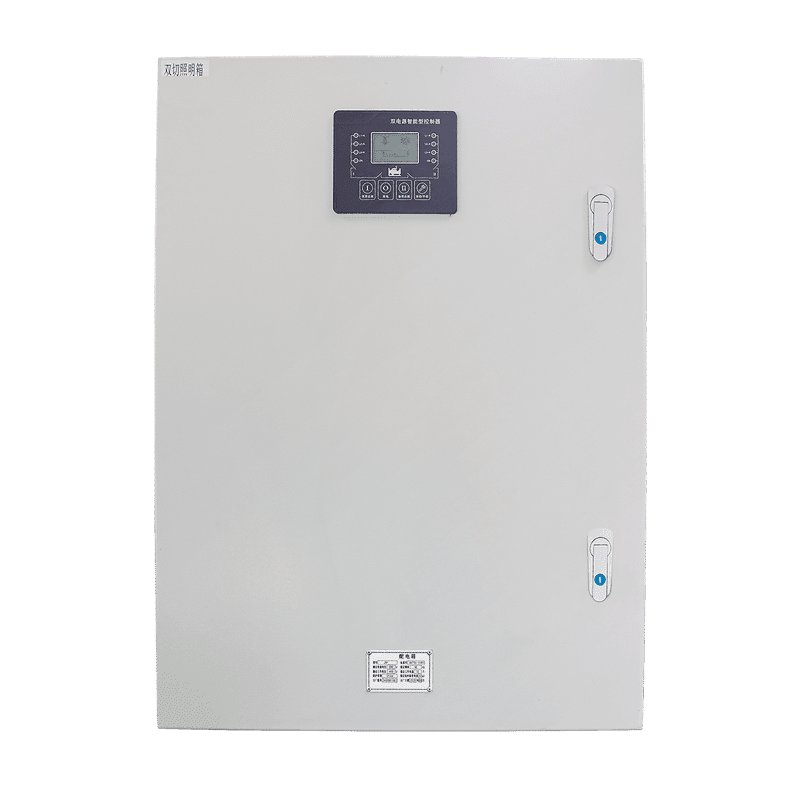
A control box is a packaged enclosure that houses the devices needed to start, stop, protect, and monitor a machine or process locally: contactors, overload relays, circuit breakers or fuses, a power supply, terminal blocks, pushbuttons and indicator lights, and increasingly a small PLC or relay interface. You see them as motor-starter boxes on conveyors and pumps, star-delta boxes on larger motors, soft-starter panels, lighting-control cabinets, and equipment-mounted operator boxes. Functionally, it is the smallest complete unit of industrial control – the point where switching, protection, and operator interface meet in one protected housing, which is why its selection is driven as much by the equipment inside and the environment outside as by the box itself.
What a control box contains
Although designs vary by application, most control boxes share the same functional sections, and each section imposes requirements on the enclosure:
| Section | Typical devices | Requirement it imposes on the box |
|---|---|---|
| Power switching | Contactors, soft starters, motor starters, relays | Heat dissipation, terminal spacing, arc-clearance per device data |
| Protection | Miniature and molded-case breakers, fuses, overload relays, SPDs | Door-interlocked disconnect provisions, labeling, fault-rating documentation |
| Control and logic | PLC or smart relay, timers, interface relays | Separation from power sections, clean wiring routes, EMC considerations |
| Power supply | Control-voltage transformer or DC supply | Additional losses for the thermal budget |
| Operator interface | Pushbuttons, selector switches, pilot lights, small HMI | Door cutouts that must retain the enclosure’s ingress rating |
| Wiring and entry | Terminal blocks, ducts, glands or cord grips | Space for bend radius, segregation, and service access |
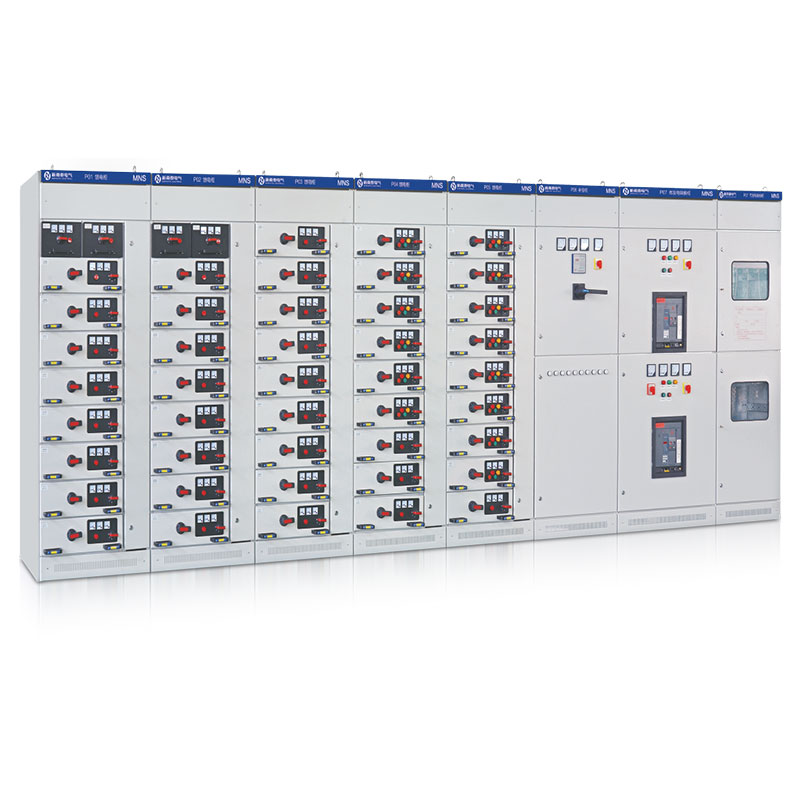
The box is thus a system, not a container: a correctly selected enclosure that is too small for wiring clearances is as much a defect as an under-rated breaker. For the broader panel-level context – distribution cabinets and larger assemblies – see our electrical control panel guide.
Common control-box types
- Motor starter boxes: direct-on-line, star-delta, or soft-start configurations mounted at or near the driven equipment, commonly from small wall boxes up to floor-standing units for larger motors.
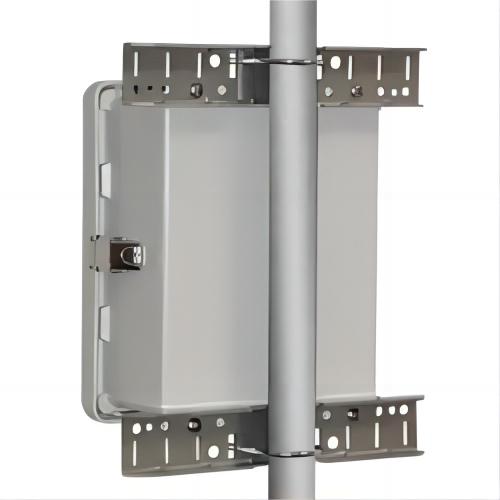
- Operator and junction boxes: button stations and junction boxes that carry commands and signals rather than main power, often only 100-300 mm in their largest dimension.
- Equipment-integrated boxes: vendor control boxes built into pumps, HVAC units, and machinery, where the enclosure is part of the product certification.
- Process skid boxes: assembled with instruments and analog signals, adding segregation and shielding requirements to the basic control function.

Define the application before selecting the enclosure
Selection should follow the equipment outline, interfaces, environment, mounting, access, service plan, and documentation required for the complete installed configuration. The table below lists the inputs that decide both the electrical design and the enclosure.
| Input | Why it matters |
|---|---|
| Equipment and interfaces | Sets internal layout, cable entries, clearances, and access: number of motors, control voltage, I/O count, and interface location define component count and box size. |
| Load and duty | Starting method, motor power, and duty cycle determine switching device size and, with it, internal heat the enclosure must dissipate. |
| Environment and duty | Guides material, sealing, heat, corrosion, and exposure review: an indoor clean wall box, a washdown zone, and a dusty foundry corner need different constructions. |
| Mounting and modification | Controls brackets, fasteners, cutouts, grounding, and post-work evidence – especially whether door cutouts for operators are factory-made or field-drilled. |
| Access and service | Who operates, who maintains, lock-out/tag-out boundaries, and how often the door opens under the site’s exposure. |
| Validation and records | Defines drawings, inspection, testing, and supplier documentation for acceptance. |
Standards and certifications for control boxes
Control boxes sit at the intersection of enclosure standards and panel-assembly standards, and the two are frequently confused:
- UL 508A (industrial control panels). The North American practice for certifying a complete panel assembly – enclosure, wiring, devices, and documentation. An enclosure “UL Listed” as a component does not make the finished control box listed; the assembly is the certified unit.
- IEC 61439-1/-2 (low-voltage switchgear and controlgear assemblies). The IEC-market framework for assembly ratings, verification, and documentation; control boxes below the assembly rating thresholds may alternatively follow the component approach, which is a design decision for the responsible engineer.
- IEC 60529 and NEMA 250 / UL 50E. Ingress and environmental construction evidence for the housing itself – IP codes for IEC markets, NEMA types with UL-based listing for North America. Door-mounted operator components must be rated for the same environment to preserve the enclosure’s marking.
- CSA C22.2 No. 14. The Canadian industrial control equipment standard relevant when a project requires cUL or CSA evidence.
- IEC 60204-1 (machinery electrical equipment). Where the control box forms part of a machine’s electrical equipment, its requirements for disconnecting means, stopping functions, and protection apply.
Use project-specific data and do not transfer a competitor rating, certification, or performance claim to the complete assembly. A supplier’s role is to state what the enclosure and the assembly were built and tested to do; the project’s engineer confirms fitness for the installation.
Frequently asked questions
What is the difference between a control box and a control panel?
Scale and assembly practice. A control box is typically a compact, single-equipment unit; a control panel is a larger assembly, often a cabinet or console with distribution, multiple motor circuits, and a certified assembly standard such as UL 508A or IEC 61439 behind it. The boundary is conventional rather than sharp.
Does the enclosure rating apply after I drill the door for pushbuttons?
Not automatically. Ingress ratings attach to the tested configuration; field cutouts are modifications. Use operator devices rated for the same environment and installed per their instructions, or order the box with factory-cut doors so the evidence stays intact.
How does a control box handle heat?
Every contactor, supply, and breaker releases heat, and a sealed box accumulates it. Sum the component losses and check the enclosure’s passive heat-transfer capacity; where insufficient, specify ventilation, filtered fans, or closed-loop cooling – the inputs for that calculation are covered in our enclosure temperature rise guide.
Can one control box serve several motors?
Yes, group-starter boxes do exactly that. The design then accounts for simultaneous starting, discrimination between protection devices, grouped heat load, and clear labeling of each circuit – plus working space so one circuit can be serviced safely.
What documentation should arrive with a control box?
As a minimum: schematic and layout drawings, a bill of materials, device settings, IP or NEMA evidence for the enclosure configuration, and an inspection/test record appropriate to the standard the assembly claims to meet.
Ordering scenarios
An OEM packaging 120 machine-mounted control boxes into a Gulf export line would specify IP65 as the housing minimum, request UV-stable material or coated steel for outdoor storage, ask for IEC 61439-based assembly documentation, and require RoHS/REACH declarations for the destination. A US-bound water-treatment project ordering 25 starter boxes instead writes NEMA 4X housings into the contract, asks for UL 508A assembly evidence with a documented file number, and specifies factory-fitted operator components so no field cutout voids the listing. In both cases the purchase documents tie the enclosure rating, the assembly standard, and the interface plan to one tested, delivered configuration – which is what turns a box of components into a control box.
 EN