







Programmable automation means industrial control where the sequence lives in software on a programmable controller — PLC, PAC, or industrial PC — rather than in fixed wiring, cams, or dedicated logic. The controller continuously reads inputs, executes the stored program, and writes outputs in a repeating scan; changing the machine’s behavior means changing code, not re-wiring relays. In industrial settings, programmable automation is the standard answer wherever products vary, recipes change, data must be collected, or the process is expected to evolve. This guide covers how it works, where it wins, the controller families and languages, the cabinet and network context, and the standards that govern the engineering. It supports design and procurement discussions; final installation, code, safety, testing, cybersecurity, and qualified engineering requirements must be confirmed for the actual project.
The scan cycle: how programmable control actually runs
Every PLC works the same fundamental way. It reads all input states into a memory table, executes the user program top to bottom using that table, writes the resulting output states, then performs housekeeping — communications, diagnostics, self-checks — and repeats. Typical scan times for machines run in the milliseconds, which is fast for sequencing and far too slow for some electrical protection — which is why safety functions and fast trips use dedicated hardware while the PLC supervises. Understanding the scan explains most beginner surprises: response timing to input changes, the need for filtering noisy signals, and why one-shot and edge instructions behave as they do.
What changes when automation becomes programmable
| Aspect | Fixed (hard) automation | Programmable automation |
|---|---|---|
| Behavior defined by | Wiring, cams, relay logic | Application program in the controller |
| Product or recipe change | Physical rework or adjustment | Program or parameter change, often minutes |
| Data collection | Largely external add-ons | Inherent — every signal is already in software |
| Diagnostic depth | Limited to indicator devices | Programmed fault messages, historical logs, remote access |
| Engineering skill demanded | Electrical and mechanical | Electrical plus controls and software discipline |
| Best fit | Single product, very high volume, stable for years | Variable products, evolving process, quality data needs |
The deeper comparison — including changeover economics and the crossover questions — is in our programmable versus fixed automation guide.
Controller families and where each fits
Compact PLCs package processor, power supply, and I/O in one body — right for single machines and skids. Modular PLCs separate rack-mounted processor and I/O cards, scaling to large distributed systems. PACs (programmable automation controllers) combine PLC determinism with PC-class data handling for process-intensive applications, and industrial PCs with real-time kernels serve high-speed and data-heavy niches. Around the controller: remote I/O drops extend the footprint over industrial networks; safety processors handle safety-rated logic; and edge or SCADA layers aggregate lines to plants. The honest selection sequence is requirements first — I/O count and types, scan and motion demands, network environment, data volume — controller brand last, because ecosystems are sticky and the choice outlives the machine.
Programming languages: the IEC 61131-3 set
| Language | Form | Typical use |
|---|---|---|
| Ladder diagram (LD) | Relay-logic symbols on rungs | Discrete sequencing; readable to electricians |
| Function block diagram (FBD) | Connected function blocks | Control loops, reusable libraries |
| Structured text (ST) | Pascal-like high-level text | Calculations, data structures, complex algorithms |
| Sequential function chart (SFC) | Steps and transitions | High-level process sequencing and exception handling |
| Instruction list (IL) | Assembly-like mnemonics | Legacy maintenance; deprecated in newer practice |
IEC 61131-3 standardizes these languages and the data types underneath, which is why structured, documented code can be audited and maintained across vendors and generations. Modern robot and motion programming adds vendor-specific environments, but the IEC layer remains the interoperable backbone of machine control.

Define the system boundary
Separate the control cabinet, field devices, PLC or supervisory software, networks, site conditions, and responsible engineering disciplines before selecting a configuration.
Inputs to document
| Input | Why it matters |
|---|---|
| Equipment and interfaces | Sets layout, entries, clearances, signals, power, network paths, and service access. |
| Process and environment | Guides sensor choice, material, heat, corrosion, moisture, and exposure review. |
| Installation and maintenance | Controls mounting, isolation, access, labels, replacement, and service sequence. |
| Validation and records | Defines drawings, testing, alarm checks, software handover, and supplier documentation. |
Do not transfer a competitor automation performance, cybersecurity, safety, or compliance claim to the complete project without project-specific evidence.
Cabinet, network, and security context
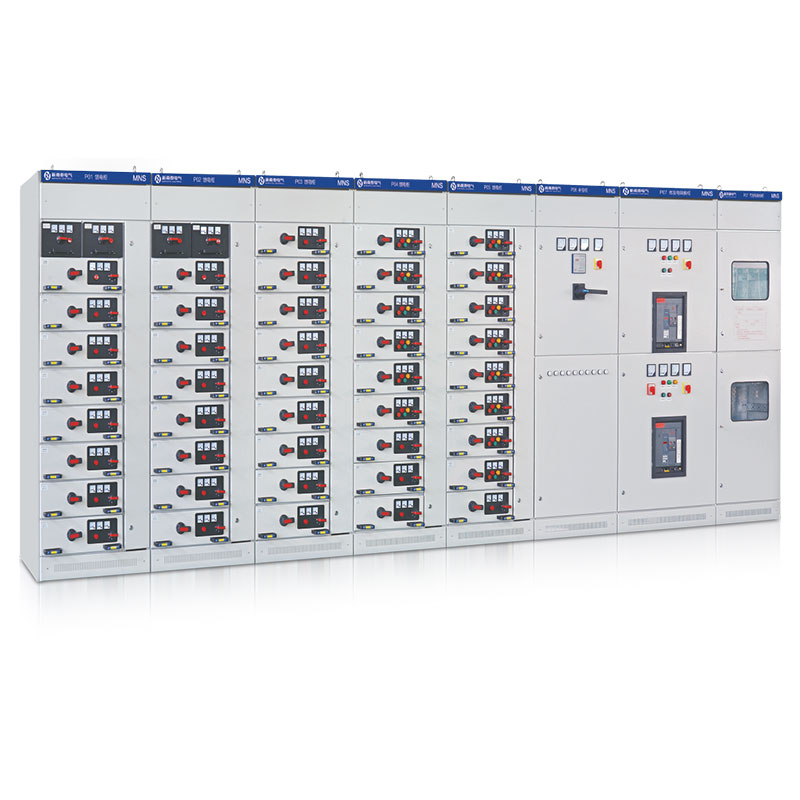
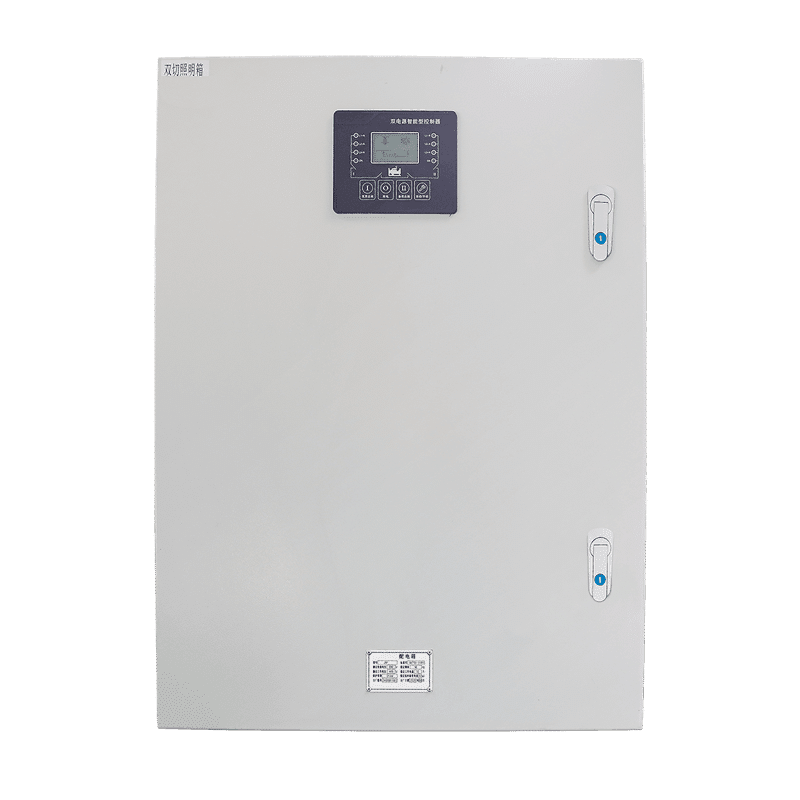
Programmable automation lives in a control panel — built to the market’s panel standard (UL 508A with NFPA 79 in North America, IEC 61439-1/-2 with IEC 60204-1 in IEC markets) — and talks over industrial networks: fieldbuses and real-time Ethernet for devices, OPC UA and MQTT-class protocols upward to SCADA and MES. Each new pathway is a cybersecurity boundary; the IEC 62443 series structures zones, conduits, and security levels, and remote-access provisions deserve explicit design rather than bolt-on modems. Functional safety — IEC 61508 in general, ISO 13849 for machinery — governs any safety function implemented in the control system, with required performance decided by the machine risk assessment, not integrator habit.
Frequently asked questions
Is programmable automation more expensive than fixed?
Higher engineering cost upfront, lower change cost over life. For stable single-product lines, fixed automation can stay cheaper for decades; the crossover arrives with product variety and expected change frequency.
What scan time do we need?
Sequence logic tolerates 10–100 ms comfortably; motion, high-speed counting, and fast interlocks need dedicated modules or faster platforms. Specify by requirement, verify by test — ask the integrator to report measured scan time as a FAT deliverable.
Can one PLC run the whole plant?
Technically sometimes, architecturally unwise. Segment by machine and process area for fault containment and commissioning clarity, then integrate at the supervisory layer.
What does IEC 61131-3 compliance buy us?
Portable engineering structure: standard languages, data types, and execution semantics that make code reviewable and maintainable beyond its author. It does not guarantee code quality — that comes from standards of discipline in the project itself.
How do we protect the program from loss?
Version control, documented backups at every acceptance gate, and a recovery procedure tested on a spare controller. The follow-up that matters operationally: who holds the current version and the credentials when the original integrator is no longer reachable — answer that in the contract, or the plant eventually pays for it.
Procurement scenarios
For a first machine-automation project, buy the panel, program, and documentation as one package with the source code and passwords included at handover — the small premium for open code ownership pays back at the first modification. For multi-line plants, standardize one controller ecosystem across new projects to consolidate spares and skills, and hold that line even when a machine vendor proposes its favorite platform. For export projects with programmable systems, confirm at order which software licenses, language versions, and cybersecurity documentation ship with the machine — license and access questions discovered at customs or commissioning are the classic schedule-killers in this product class, and they cost days exactly when the machine is expected to run.
ElectricalCabinet.net builds the control cabinets at the heart of programmable automation — see PLC control panel applications for the panel-side detail and PLC machinery for manufacturing automation for the machine-side engineering.
 EN
EN