

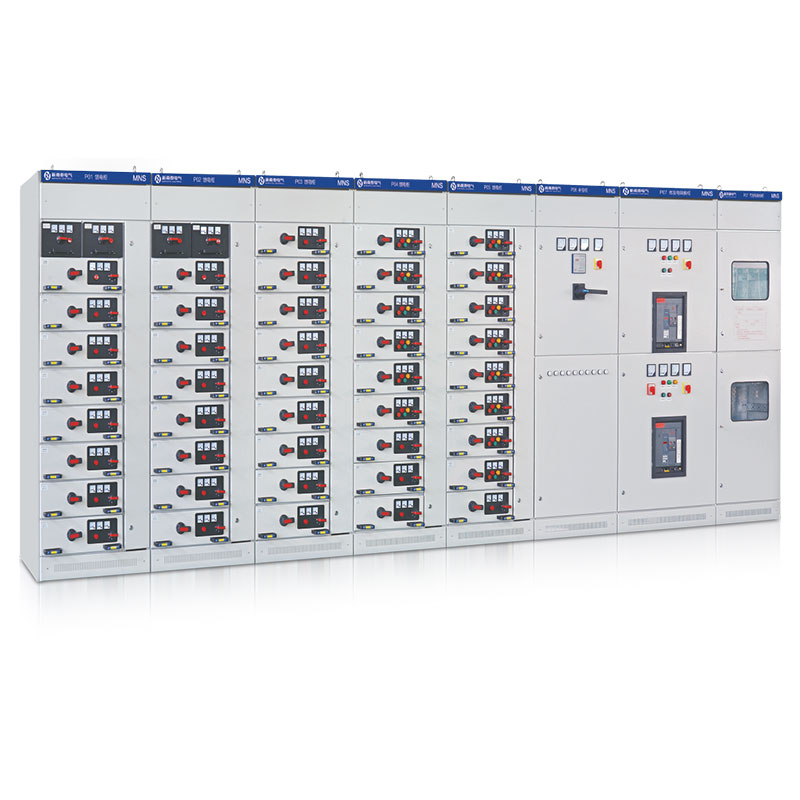


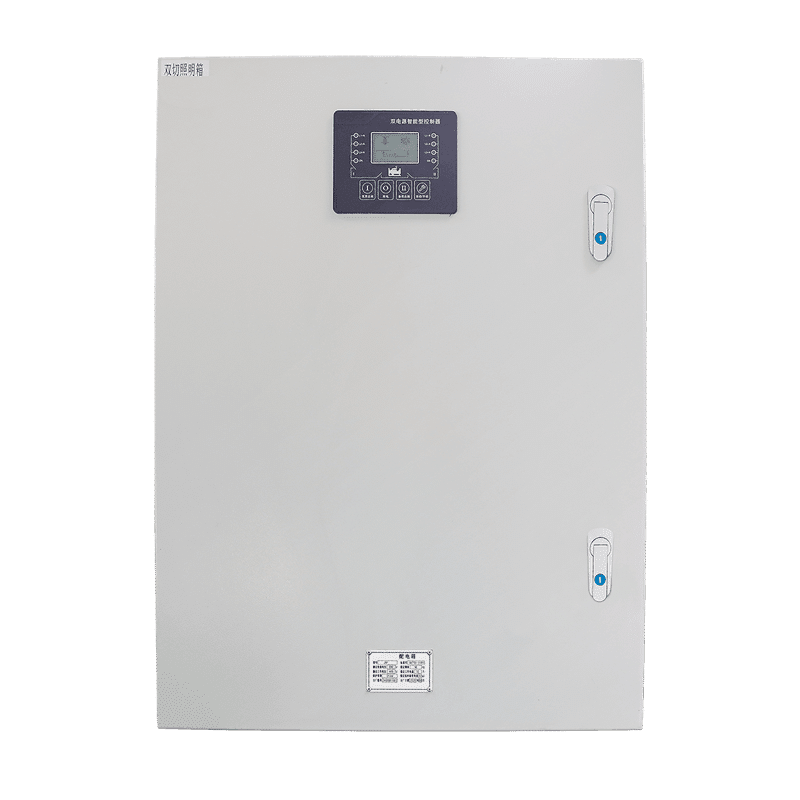


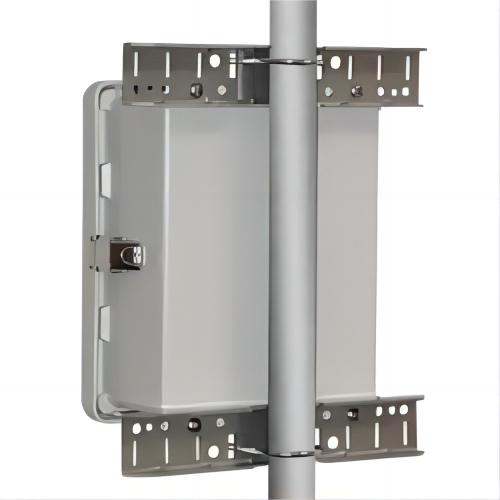


A material-handling PLC control panel coordinates the equipment that moves, feeds, sorts, lifts, or transfers material — conveyors, feeders, elevators, screens, diverters, and the motors that drive them. Its job is not simply to house a PLC: it must provide a clear control architecture for the connected process, from power distribution for each drive to the smallest jam-detection sensor. This guide walks through the planning inputs that determine the design, the typical architecture, and the boundaries that keep a material-handling panel project on track.
What a material-handling panel does
The panel may exchange signals with conveyors, feeders, elevators, screens, sensors, motors, drives, valves, and operator interfaces. The exact panel design depends on the machinery, sequence, safety concept, environment, and interface responsibilities. A product image or an industry label is not proof of a completed material-handling project.
Define the process before selecting the panel
Start with a process description and an equipment list. Identify what must start, stop, sequence, interlock, alarm, or report status. Record the operating modes, permissives, normal stops, fault conditions, restart behavior, and manual controls. This information is more useful than beginning with a preferred PLC brand or a fixed input/output count.

| Planning input | Questions to answer |
|---|---|
| Process stages | Which conveyors, feeders, screens, lifts, or machines operate in sequence? |
| Motor and drive list | Which loads are across-the-line, soft-started, or drive-controlled? |
| Field signals | Which sensors provide position, level, speed, jam, pressure, or limit feedback? |
| Operating modes | Is there local, panel, remote, automatic, maintenance, or jog operation? |
| HMI and alarms | What must operators see, acknowledge, trend, or reset? |
| Environment | Is the panel indoors, outdoors, dusty, wet, hot, cold, or subject to vibration? |
| Interfaces | Which signals or network handoffs belong to upstream and downstream equipment? |
A typical control architecture
A material-handling panel may contain separate power, control, interface, and documentation layers. The power layer distributes energy to the connected loads. The control layer contains the PLC, power supplies, relays, and signal conditioning. The interface layer connects field devices, drives, remote stations, and operator controls. The documentation layer identifies terminals, cables, I/O, alarms, and responsibility boundaries.
The architecture should make it clear which functions are performed in the panel and which are performed by a machine, drive, safety system, or upstream controller. This prevents hidden assumptions during quotation and commissioning — the most expensive place to discover that two parties each assumed the other owned the interlock.
PLC and drive coordination
Where drives are used, define the required command source, speed reference, run feedback, fault feedback, permissives, and stop behavior. The panel specification should state whether the interface is hardwired, networked, or left to the project team. Do not promise a protocol or brand compatibility unless it is supported by the selected components and engineering scope.

For conveyors and feeders, sequence logic often depends on downstream-ready signals, upstream permissives, jam detection, zero-speed feedback, and controlled restart behavior. These are process requirements to be confirmed with the machinery supplier, not generic features that can be assumed for every panel. A conveyor that restarts at full speed after a jam, when the sequence required a slow ramp-in, is a specification gap — not a component failure.
Dust and maintenance considerations
Material-handling environments can expose a panel to dust, vibration, temperature swings, and frequent maintenance activity. The enclosure material, mounting method, cable entries, cooling approach, door access, filter strategy, and labeling should be selected for the actual location. If the area has a hazardous-location classification, that classification and equipment strategy require separate engineering confirmation.
Keep the panel maintainable. Leave a clear terminal and cable schedule, identify spare capacity honestly, provide accessible disconnecting means where required by the project, and document the boundary between panel wiring and machine wiring. For dusty areas, sealed construction with closed-loop cooling is the usual answer; sizing it starts with the heat estimate from the enclosure temperature rise calculator, and the enclosure family options are compared on the PLC control cabinet page.
Standards relevant to these panels
- UL 508A — the industrial control panel standard for the NEC market. Material-handling panels shipped to North American distribution centers and plants are commonly built and documented to it, including the marked short-circuit current rating and the component rules behind it.
- NFPA 79 — the electrical standard for industrial machinery in the NEC market, addressing conductor protection, disconnecting means, control voltage, and e-stop behavior at the machine boundary the panel serves.
- IEC 61439 — the IEC assembly framework under which panels for IEC-market conveyor and sorting systems are rated and verified.
- NEMA 250 / IEC 60529 — the enclosure protection references behind type numbers and IP codes for the dusty, washdown, or outdoor variants.
Information required for a quotation
Provide a process flow or sequence description, equipment list, motor and drive schedule, sensor list, I/O list, operating modes, alarm list, HMI expectations, network/interface requirements, enclosure environment, incoming power details, cable-entry direction, drawings, and the expected documentation package. If the machine builder supplies a safety controller or local operator station, identify that boundary explicitly.
Frequently asked questions
How many I/O points should the panel be built for?
Build for the documented sequence plus an agreed spare percentage — commonly ten to twenty percent — rather than for an arbitrary round number. Undocumented spares are free at design time and expensive after the panel is full; documented spares keep the growth path honest.
Follow-up: are spare I/O channels delivered wired to terminals?
They can be, if specified: the channels land on spare terminal positions with labels, ready for field devices. Without that line item, spares often exist only inside the PLC rack, and the field wiring arrives to find no terminals available.
Should each conveyor have its own panel?
Small clusters are usually served by one panel per functional group — a transfer line, a sortation zone — with remote I/O where distances grow. One panel per machine makes isolation simple; one panel per line makes sequencing simple. The choice follows the safety and isolation plan, not panel count alone.
What is the most common commissioning problem?
Interface mismatch: a permissive or ready signal that both parties assumed the other would provide. The prevention is the responsibility matrix in the quotation package, reviewed before wiring starts.
Do these panels need network communication?
Line-level coordination and remote monitoring usually justify an industrial network; a stand-alone conveyor group with local control may not. If a network is planned, specify the medium, topology, and who owns addressing — retrofitting a network into a panel built without segregation between power and data paths invites noise problems.
What this article does not claim
This planning guide does not define a universal PLC program, safety circuit, network protocol, motor rating, enclosure rating, or commissioning result. Those items depend on the approved equipment schedule, applicable standards, site conditions, and the responsibilities agreed for the project.
ElectricalCabinet.net can use the planning inputs above to route a material-handling enquiry to the appropriate PLC, VFD, control-panel, and enclosure capabilities. The final panel design should be reviewed against the complete machine and site requirements.
Ordering scenarios
A logistics-automation integrator commissioning a new sortation line typically orders the first panel — the one governing the most complex zone — as a pilot, runs it through factory acceptance with the machine builder’s program, and releases the remaining zone panels against the frozen I/O list. The controlling constraints are the I/O freeze and program handover dates, because a panel series built against a moving I/O list generates rework in every zone.
An conveyor OEM exporting material-handling systems to both North American and IEC-market customers should decide the build regime per destination at the first order: the NEC-market panel carries UL 508A construction and NFPA 79-aligned documentation, the IEC-market panel carries IEC 61439 assembly verification. Ordering a pilot panel per regime — commonly one unit each — confirms the documentation split while volumes are still small, and keeps the series order from inheriting the wrong evidence package.
 EN
EN