

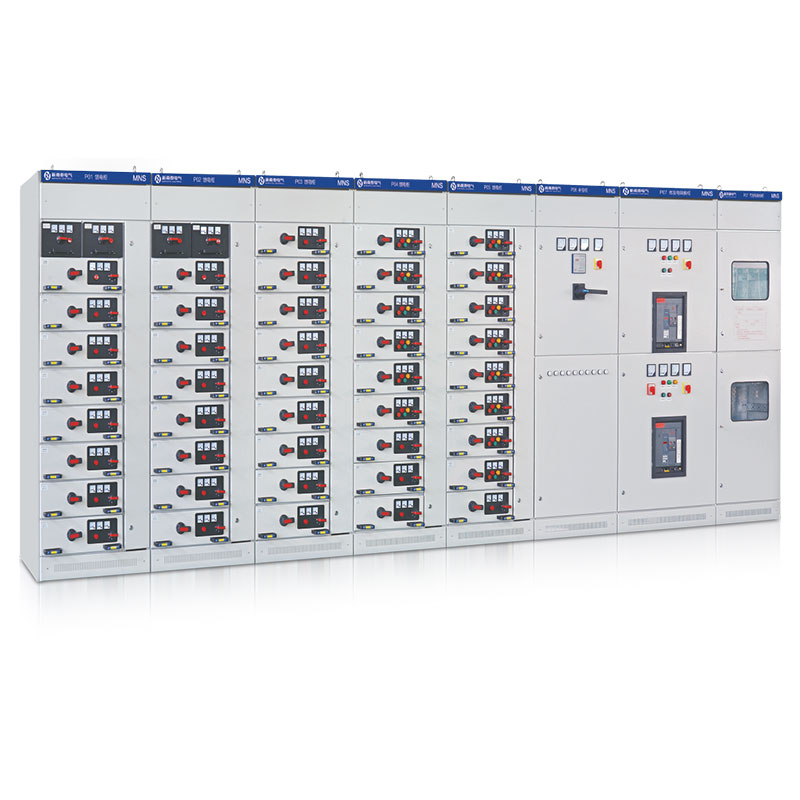


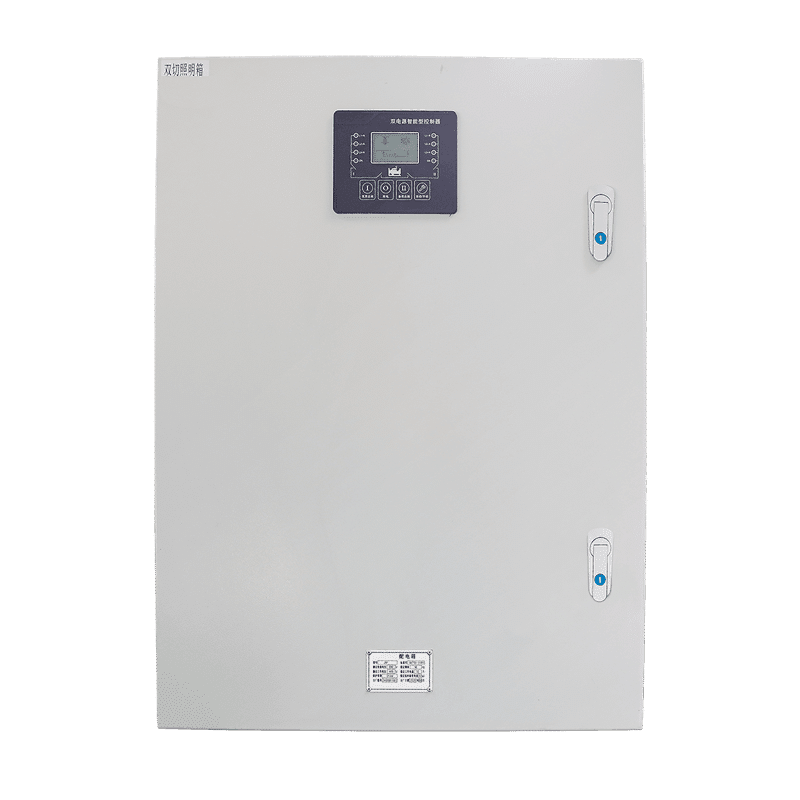


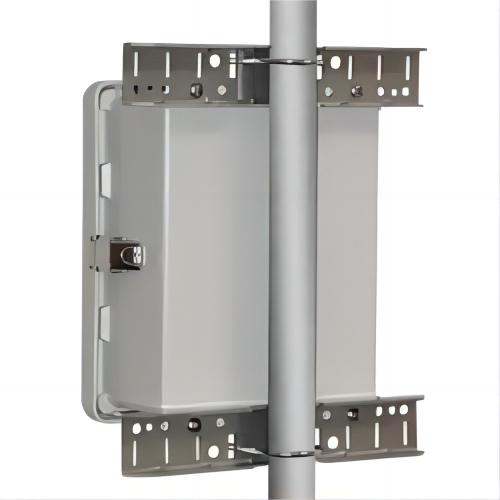


Switchgear is the highest-consequence equipment a project will buy: it sits between the utility supply and everything downstream, and a single misapplied rating — an undersized busbar, an unverified short-time withstand claim, a wrong duty class — surfaces years later as an arc-flash incident or a failed acceptance test. That is why searching for switchgear manufacturers is not the same as shopping for a catalog product: what you are really screening for is design verification capability, type-test evidence, and the discipline to repeat factory quality across every panel in a multi-bay order.
As a manufacturer of low- and medium-voltage switchgear and distribution assemblies, we handle these enquiries daily. This guide summarizes the evaluation framework our own customers use — and the one we recommend you use on any supplier, including us.
What separates a switchgear manufacturer from an assembler
The distinction matters commercially because it determines what fails at commissioning:
| Capability | Assembler / panel shop | Verified switchgear manufacturer |
|---|---|---|
| Design verification | By copying a precedent panel | Against IEC 61439-1/2 or UL 891 / UL 1558 requirements, with calculation or test files |
| Short-circuit rating | Nameplate claim only | Type-test report (e.g., 50 kA/1 s, peak withstand 105–110 kA at 50/60 Hz asymmetry) |
| Busbar fabrication | Cut, drill, bolt | Calculated cross-sections, torqued joints with marked fasteners, dynamic-force supports at rated peak |
| Routine testing | Continuity check only | Full routine verification per standard: dielectric (2.5 kV megger + power-frequency withstand), functional operation, wiring verification, temperature-rise validated by type design |
| Documentation | Generic datasheets | GA drawings, single-line diagrams, instruction manuals, Declaration of Conformity, as-built BOM |
An assembler can produce a visually identical panel. The difference is whether the ratings are evidence-backed — and that is precisely what a consultant, an inspector, or an insurance loss-prevention engineer will ask you to prove.
The voltage-class map (get this right before contacting anyone)
Suppliers are rarely credible across the full voltage spectrum. Segment your enquiry:
- Low voltage (≤ 1,000 V AC): IEC 61439-2 PTTA/TTA assemblies, UL 891 switchboards, UL 1558 metal-enclosed LV switchgear. Form of internal segregation (Form 1 through Form 4b per IEC 61439-2) is a key specifier input — Form 2b minimum for most industrial mains, Form 4b for critical and maintainable installations.
- Medium voltage (1–38 kV class, IEC 7.2/12/24/36 kV or ANSI 5/15/27/38 kV): IEC 62271-200 metal-clad / metal-enclosed, IEEE C37.20.2 (MV metal-clad), C37.20.3 (interrupter switchgear). Arc-class options (IAC AFLR per IEC 62271-200 Annex A) are increasingly specified.
- Ratings that anchor the quote: rated continuous current (630 A–4,000 A typical), short-time withstand (16–50 kA/1 s or 3 s), peak withstand, BIL for MV (60–200 kV impulse depending on class), and copper busbar percentage coverage.
A supplier who quotes MV gear from an LV brochure, or who cannot state the difference between metal-clad and metal-enclosed construction, has told you where their real capability ends.
Constraints change the audit. If your first order is only 50 panels for a North American project, split the screening accordingly: the LV portion resolves to UL 891 / UL 1558 listing evidence and an SCCR documentation trail, while any MV sections must answer to IEEE C37.20.2 (metal-clad) practice — not an IEC 62271-200 file offered as “equivalent.” A factory whose type-test portfolio is IEC-only can still serve a dual-standard order, but only with the delta list in writing: which withstand values, BIL steps, and construction details differ between the two families at your ratings, and who signs the reconciliation. And at 50 units the order is large enough to demand a witnessed FAT and per-panel routine test records, yet too small to justify dedicated tooling — so weight the audit toward evidence handling and schedule protection rather than headline capacity claims.
Certification stack to verify
Ask for certificates with report numbers and scopes, not logos on a website:
- IEC route: IEC 61439-1/2 design verification file + routine test records; type-test reports from an accredited lab (KEMA / KEMA-CESI, ASTA, CPRI, or CNAS-accredited national labs) covering withstand, temperature rise, and IP verification.
- North American route: UL 891 (switchboards) or UL 1558 (LV metal-enclosed) listing; for control portions, UL 508A panel shop certification; SCCR documentation per UL/NEC requirements.
- CE / UKCA: LVD 2014/35/EU and EMC 2014/30/EU compliance, with a real DoC naming the product family and applicable harmonized standards.
- Project-specific: CCC (China market), SASO/G-mark (Gulf), or local utility approval lists where the project demands them.
- Quality system: ISO 9001 is table stakes — check that the certificate scope covers electrical assembly manufacturing, not just trading.
Verify document authenticity where stakes justify it: UL certificate numbers are publicly searchable in UL’s Product iQ database; KEMA-CESI and ASTA report numbers can be confirmed with the issuing lab. Fabricated test reports circulate in this industry, and the cost of discovering one at site acceptance is entirely yours.
Production and delivery reality checks
- Lead time: standard LV distribution assemblies from a production-ready design typically ship in 2–6 weeks; custom MV metal-clad lineups commonly run 8–16 weeks including type-design adaptation, FAT, and export packing. Quotes promising MV gear in under a month deserve scrutiny.
- Capacity signal: ask for the current production plan load and the monthly output by voltage class (mid-size Chinese panel manufacturers commonly deliver 200–800 cabinets per month across LV lines; MV lines are an order of magnitude lower because of test-bench time). What matters is not the headline number but whether your delivery window is protected in the plan.
- Component sourcing: name-brand breakers and contactors (ABB, Schneider, Siemens, Eaton, Rockwell) should come through authorized channels with traceable batch data. Ask how the manufacturer handles the global breaker supply cycles — a supplier with no second-source qualification process will silently substitute components or miss dates.
- FAT discipline: insist on a written FAT protocol — dielectric test, functional simulation of protection and interlocks, dimensional verification, and documentation review — and attend it or appoint a third-party inspector for MV gear.
Questions that predict post-delivery behavior
- Who owns the design file if you reorder two years later — and will drawings match the as-built panel?
- What is the spare-parts strategy for breakers and relays discontinued mid-lifecycle?
- Is site commissioning and setting of protection relays included, excluded, or optional?
- What warranty applies to the assembly versus the installed components, and where is warranty service performed?
- Can the manufacturer support retrofit (additional feeders, metering upgrades) on their own panels in the field?
Weak answers here are the earliest reliable predictor of a difficult five-year relationship.
FAQ
Is a type-test report from one panel valid for the whole order?
Type tests apply to a design verification family. Panels built within the declared design constraints inherit the verification — but routine tests must still be executed on every manufactured panel. Suppliers offering “type-tested” ratings with no per-panel routine test records are transferring risk to you.
Why do quotes for identical ratings differ by 40% or more?
Common drivers: copper content (busbar sizing margin, tin- versus silver-plated joints), enclosure steel thickness (2.0 versus 1.5 mm), genuine versus gray-market breakers, and the depth of factory testing. Request a BOM-level comparison to see where the difference sits.
Which of those cost drivers can be reduced without adding risk?
Enclosure scope rationalized across the order, breaker brand tier within authorized channels, and the FAT witnessing level are legitimate levers. Copper cross-section, joint plating, and routine test depth are not — cutting those swaps an evidence-backed rating for a nameplate claim.
How does a 50-panel first order change the math versus a repeat program?
At 50 units the drawing-review and NRE load sits on a small base, so engineering quality per panel outweighs unit-price optimization. Lock design-file ownership in the contract now — it is what makes reorder number two cheap and identical.
Should I buy MV switchgear from the same supplier as LV panels?
Not necessarily — evaluate each voltage class on its own evidence. But a single supplier with both lines reduces interface risk (busbar transitions, control wiring boundaries, unified documentation) if both lines pass the checks above.
RFQ checklist before you send the enquiry
- Single-line diagram with fault levels (or ask the manufacturer to calculate from utility data)
- Load schedule and required feeder count with 20% spare provision
- Environment: ambient temperature, altitude (>2,000 m derating), corrosion class, seismic requirement if applicable
- Applicable standards and inspection regime (FAT/SAT, third-party witness)
- Documentation deliverables list and target milestone dates
Related reading
- what switchgear is — the functional anatomy behind the supplier categories.
- how to choose the right switchgear — selection criteria mapped to voltage class and duty.
- switchgear product line — our LV/MV switchgear platforms referenced in this guide.
Engineering note: this article is a procurement evaluation framework from ElectricalCabinet.net, a manufacturer of LV/MV switchgear and industrial control assemblies. Final ratings, protection settings, and compliance decisions for any project require qualified engineering review against the applicable installation codes.
 EN
EN