

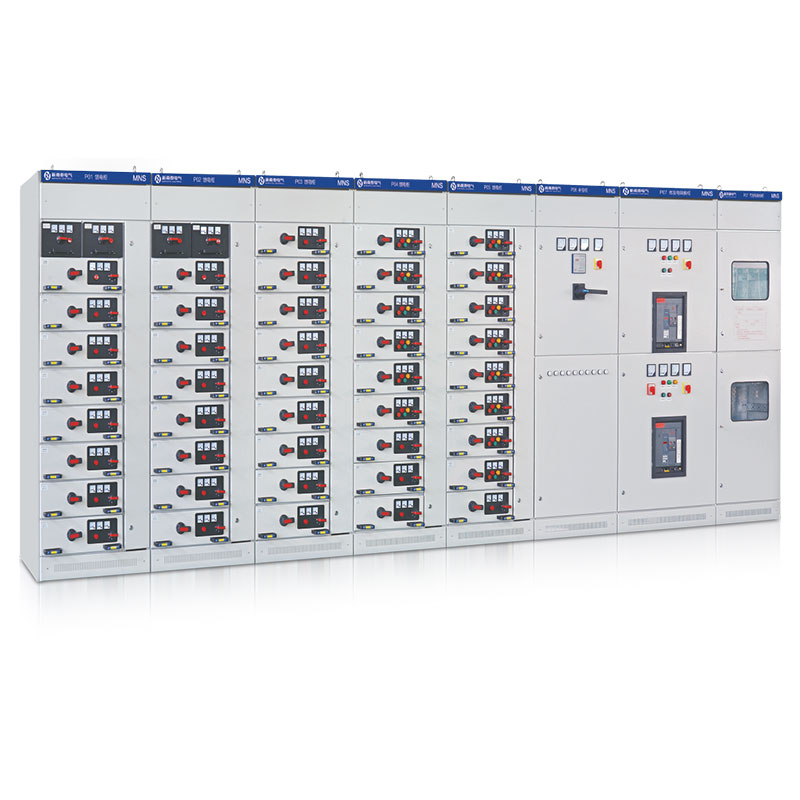


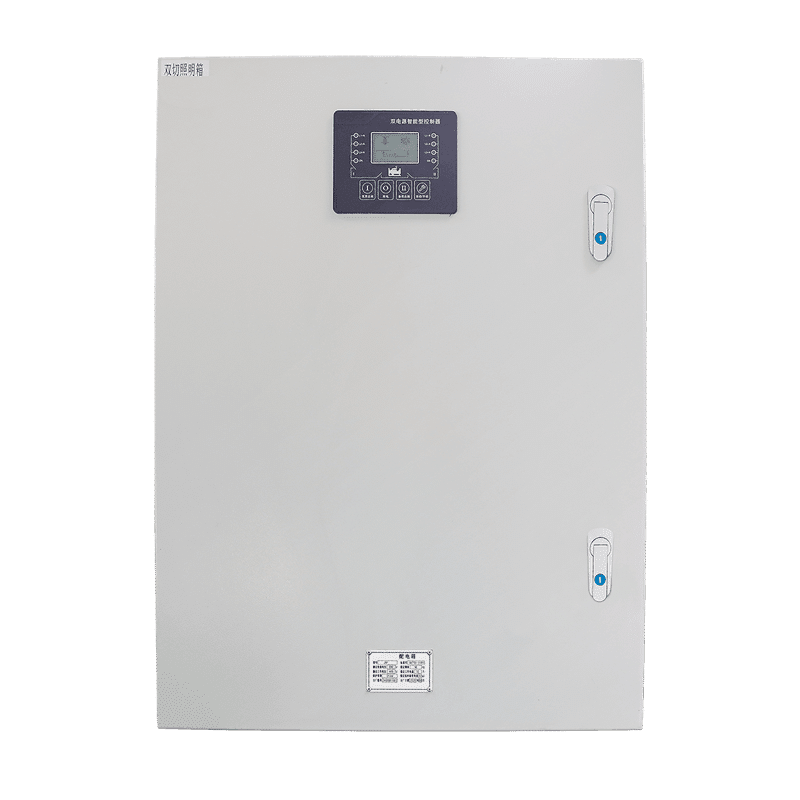


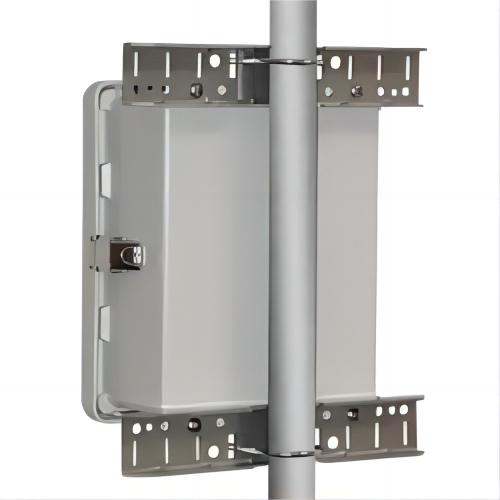



A telecom enclosure is the physical and electrical boundary that keeps power supplies, radios, fiber devices, batteries, and monitoring equipment safe from weather, dust, heat, and unauthorized access. Selecting one is not a matter of picking a box by size: the correct choice follows from the equipment list, the heat it produces, the cables it needs, and the environment at the site. This guide summarizes the inputs a buyer should assemble before requesting a quotation, and explains how those inputs drive material, sealing, cooling, and interface decisions.
Start with the equipment inside
A telecom enclosure protects and organizes power, network, radio, fiber, or monitoring equipment. Selection should begin with the equipment list, heat dissipation, cable routing, access, and installation environment. A generic outdoor cabinet description cannot prove compatibility with every telecom device or network deployment, so the equipment inventory comes first.
Record the dimensions and mounting pattern of each device, whether it mounts on 19-inch rails, shelves, or a backplane, the weight of batteries, and the space needed for wiring and service. Also record which equipment is supplied by others, because the enclosure manufacturer is normally responsible for the cabinet, its thermal and cable infrastructure, and its protection rating — not for the radio configuration or the telecom service itself.
Define the installation environment
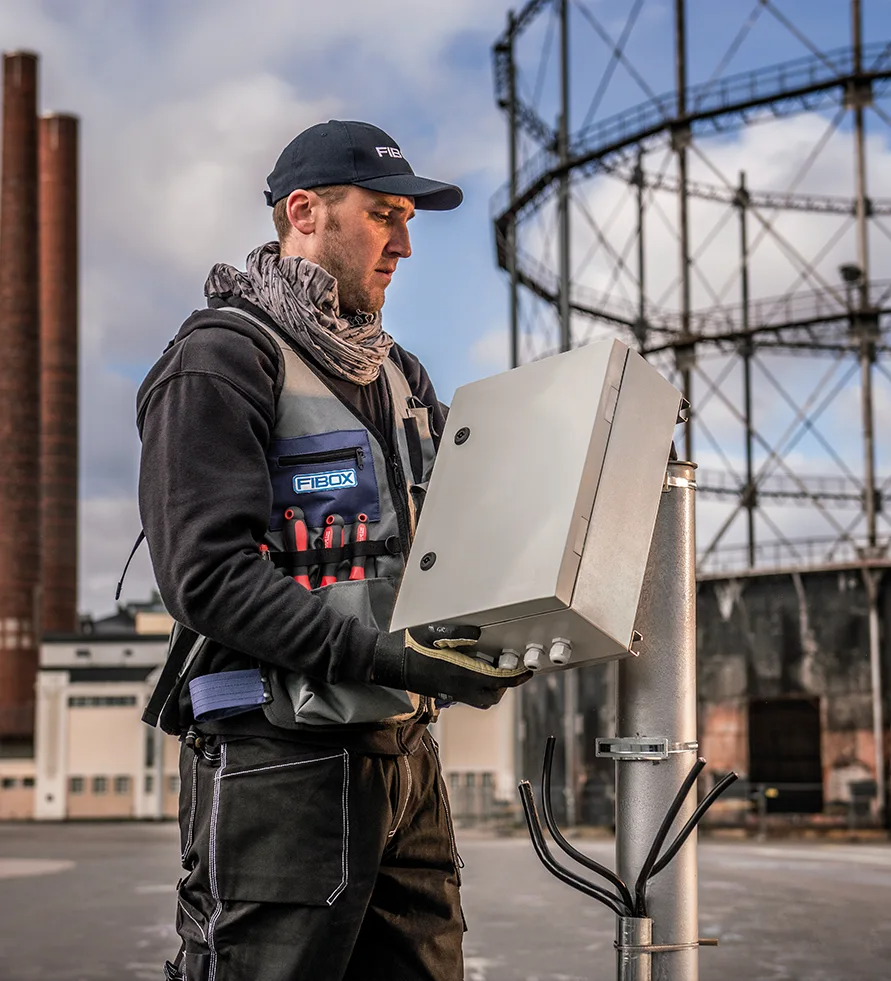
Record whether the enclosure is indoors, outdoors, rooftop, roadside, plant-mounted, pole-mounted, or installed in another exposed location. Note temperature range, solar exposure, rain, dust, salt, condensation, vandalism risk, and maintenance access. These inputs affect material, sealing, ventilation, cooling, locks, mounting, and cable-entry choices.
| Input | Questions to confirm |
|---|---|
| Equipment | What racks, shelves, power supplies, batteries, radios, or fiber devices are installed? |
| Heat load | What heat must be removed, and under which ambient conditions? |
| Power | What incoming power, DC distribution, backup, or grounding arrangement is required? |
| Cable entry | From which sides do fiber, data, antenna, and power cables enter? |
| Environment | What moisture, dust, salt, temperature, and solar exposure apply? |
| Access | Who maintains the cabinet, and what door, lock, and working space are needed? |
| Interfaces | Which power, grounding, network, and monitoring responsibilities are included? |
Enclosure construction and protection
Choose material, finish, door arrangement, hardware, seals, mounting, and cable glands for the site conditions. Galvanized and powder-coated steel suits many inland sites, while stainless steel or aluminum with a marine-grade finish is preferred where salt, fertilizer, or industrial corrosion is present. Confirm the required enclosure protection for the complete configured assembly, including vents, filters, cooling equipment, cable entries, and field modifications. Do not infer a NEMA or IP result from a product title or photograph — a rating only holds for the exact configuration that was tested.
Heat and condensation management
Telecom equipment may operate continuously and produce heat even when the cabinet is lightly loaded. Passive ventilation, filtered fans, heat exchangers, air conditioning, insulation, heaters, or pressure-equalization devices may be considered depending on the ambient environment and heat load. The solution should be based on a thermal calculation and condensation risk review, not on cabinet dimensions alone.
If outdoor air is humid, dusty, salty, or contaminated, an open ventilation strategy may transfer the environment into the cabinet. Filtered forced ventilation moves more heat but adds a maintenance item; closed-loop cooling keeps contaminated air out at higher cost. In mixed climates, a heater or thermostatically controlled anti-condensation device prevents the internal dew point from being reached during night-to-morning temperature swings. Record filter maintenance, drain paths, gasket inspection, and cooling alarms in the maintenance plan. A practical first step is to estimate the internal temperature rise for the expected heat load with our enclosure temperature rise calculator before choosing between natural and forced cooling.
Power, grounding, and cable interfaces
Define AC or DC input, disconnecting means, power distribution, battery or backup boundaries, surge protection, grounding, bonding, and cable separation. Identify fiber and copper entry routes, bend-radius requirements, shielding, and who supplies network or radio equipment. The enclosure supplier should not assume responsibility for the telecom service, configuration, or cybersecurity platform unless explicitly included.
Separate power and signal cable routes inside the cabinet reduce noise coupling into data lines. Door bonding and a documented grounding bar position make site acceptance faster, because telecom installers typically verify grounding before energizing equipment.
Standards and ratings relevant to telecom enclosures
Several published standards define how enclosure protection is specified and tested:
- IEC 60529 defines the IP code: the first digit grades protection against solid objects and dust (0–6) and the second digit grades protection against water (0–9). An IP54 cabinet is dust-protected and splash-resistant; IP66 adds a dust-tight and powerful-jet requirement. IP ratings are defined for enclosures as tested assemblies, not for empty sheet metal.
- NEMA 250 defines enclosure types for North America, including environmental considerations such as corrosion resistance and ice formation that the IP code does not address. A NEMA 3R enclosure, for example, is intended for outdoor use with a degree of protection against rain and falling ice, while NEMA 4X adds hose-directed water and corrosion resistance. NEMA types and IP codes are not interchangeable one-to-one; use our NEMA-to-IP converter only as a translation aid, then confirm the required rating with the project specification.
- UL 50E covers supplementary requirements for electrical enclosures, including coatings and corrosion protection evaluation, and is applied together with the applicable UL enclosure safety standard when a UL-marked enclosure is specified for the North American market.
Confirm which standard the project actually references — an IEC-specification project, a NEC-market project, and a carrier specification may each require different evidence for the same physical cabinet.
Frequently asked questions
What size telecom enclosure do I need?
Size follows from the equipment layout, not from the device count alone. Allow space for cable bending, service clearance, future expansion slots, and thermal separation between hot devices. A cabinet that is full on day one has no room for battery replacement or technology refresh.
Can I upgrade an IP54 enclosure to IP66 by adding gaskets?
No. A protection rating belongs to the tested configuration. Field-added gaskets change the sealing system and void the original result unless the modified assembly is re-evaluated. Specify the target rating before ordering instead.
Follow-up: if the site specification asks for IP66 but the equipment heat load requires ventilation, how are both satisfied?
Use a closed-loop cooling method — a heat exchanger or air conditioner with the same protection class as the cabinet — so the enclosure boundary remains sealed while heat is moved out. Alternatively, re-negotiate the specification if filtered vents with rain protection are acceptable for the location.
Who is responsible for the thermal design?
The buyer supplies equipment heat dissipation and ambient conditions; the enclosure supplier sizes the cabinet, cooling, and heating for those inputs. If heat data is unavailable, a conservative estimate can be agreed in writing, with a note that final sizing is the buyer’s responsibility.
Do telecom enclosures need surge protection?
Most outdoor sites do. An AC or DC surge protective device at the power entry, combined with bonding and grounding practice, reduces damage from induced surges on long supply runs. The SPD rating and location follow the power system design, which should be defined by the electrical engineer of record.
Quotation checklist
Provide equipment dimensions and heat data, power requirements, cable-entry drawing, mounting location, environmental conditions, required access and locks, material/finish preference, enclosure protection target, cooling or heating expectations, monitoring points, documentation, and installation responsibilities. Projects comparing outdoor cabinet families can also review our electrical enclosure design overview for construction options.
Scope boundary
This article does not promise carrier approval, 5G site certification, radio performance, cybersecurity, battery autonomy, or a specific NEMA/IP rating without project and model evidence. It identifies the information needed to select a telecom enclosure responsibly.
Ordering scenarios
A regional integrator deploying roadside cabinets in a coastal, salt-exposed area typically orders a small first batch — often one to three units — in stainless steel with a NEMA 4X or IP66 target, factory-fitted closed-loop cooling, and documented cable entries, with the balance of the rollout ordered after the pilot units pass site acceptance. The decisive constraints are the corrosion boundary of the finish system and the delivery time of the cooling units, which usually govern the overall lead time.
A data-center or campus project following IEC-style specifications may instead order wall-mounted or floor-standing cabinets in larger single lots, with IP ratings referenced to IEC 60529 and internal power distribution pre-wired. For this route, confirm early whether the acceptance documents must name the applicable standards for the assembled cabinet, because evidence requirements differ between IEC-referenced and NEC-market projects, and the enclosure must be ordered against the correct one.
ElectricalCabinet.net can use these inputs to route a telecom enclosure enquiry to the appropriate outdoor cabinet, enclosure, power, cooling, and control-panel capability.
 EN
EN