







Choosing among gas-insulated switchgear manufacturers comes down to verifiable capability, not brand slogans. A reliable GIS supplier for medium-voltage projects (typically 12 kV to 40.5 kV class) is one who can present type-test certificates to IEC 62271-200, a documented design for the gas handling and sealing system, complete primary and secondary drawings, and a factory acceptance test scope you can witness. This guide breaks the evaluation into a structured checklist — system boundary, supplier evidence, standards, and commercial terms — so you can compare quotations on engineering substance rather than unverified rankings.
What gas-insulated switchgear is, in one paragraph
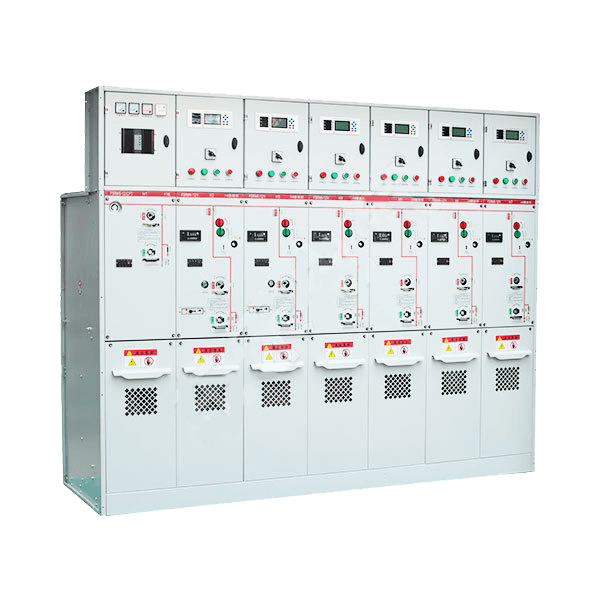
Gas-insulated switchgear houses the busbars, circuit-breaker, disconnectors, earthing switches, and cable terminations inside sealed stainless-steel or aluminum tanks filled with SF6 or, increasingly, dry-air or SF6-free gas mixtures at low pressure. Because these gases have roughly two to three times the dielectric strength of air at moderate pressure, phase-to-phase and phase-to-earth clearances shrink dramatically: a complete MV ring-main or double-busbar unit occupies a footprint a fraction of the equivalent air-insulated lineup. The sealed tank also encloses the switching compartments, keeping them away from dust and humidity, which is why GIS dominates in compact substations, high-rise buildings, metros, wind towers, and heavily polluted or coastal environments. For terminology, component groups, and the 2025–2026 regulatory changes affecting SF6 equipment, start from our gas insulated switchgear guide.
Define the system boundary before you contact manufacturers
Separate equipment, cabinet, field devices, power, protection, networks, installer scope, commissioning, and maintenance responsibility before procurement or fabrication. Most GIS procurement disputes are boundary disputes: a quotation that includes only the gas-filled tanks leaves the VT/CT chambers, protection relays, low-voltage marshaling cabinet, inter-panel wiring, and commissioning somewhere else. Write the boundary into the inquiry.

Inputs to document in the inquiry
| Input | Why it matters |
|---|---|
| Equipment and operating data | Loads, feeders, I/O, sequences, switching duty, environmental conditions, and operating modes. |
| Cabinet and installation | Layout, compartments, heat, cable entry, clearances, access, labels, grounding, and service sequence. |
| Evidence and testing | Drawings, BOM, settings, inspection points, FAT/SAT scope, test records, manuals, and open decisions. |
| Supplier responsibility | Interfaces, exclusions, assumptions, documentation ownership, training, spares, and qualified review. |
How to compare gas-insulated switchgear manufacturers
Use the same seven dimensions with every bidder, and require documentary evidence for each claim. Do not copy competitor certification, ranking, safety, performance, or availability claims without project-specific evidence.
| Evaluation dimension | What to ask for | Warning sign |
|---|---|---|
| Type-test evidence | IEC 62271-200 test reports covering internal arc classification, rated short-time and peak withstand current, and climate class, with the exact rating points quoted | “Meets IEC” with no report numbers, dates, or rating points |
| Gas system design | Gas density monitor settings, leakage rate guarantee per compartment, pressure relief arrangement, and topping-up procedure | No stated annual leakage rate or per-compartment monitoring |
| Primary circuit scope | Single-line diagram showing breaker, disconnector, earthing switch, CT/VT, surge arresters, cable plugs, and ratings of each | Diagram stops at the tank flange |
| Secondary and protection | Relay models and settings responsibility, wiring drawings, terminal schedules, and inter-panel bus | “Protection by others” appearing late in the negotiation |
| Production quality | Factory routine-test plan (route resistance, power-frequency withstand, partial discharge where applicable, gas checks) and FAT witness points | No customer FAT offered, or FAT limited to visual inspection |
| Track record | Reference projects at the same voltage class and duty, with contactable end users where possible | References only in unrelated voltage classes or climates |
| Service footprint | Spare-parts availability, gas-handling support, commissioning supervision, and response commitments for your region | Commissioning and spares excluded by default |

Ratings and parameters worth checking on every GIS quotation
At medium voltage, verify the rated voltage (kV) matches your system highest voltage — 12, 24, or 40.5 kV class equipment are the common IEC families — together with rated normal current (commonly 630 A to 2,500 A for MV GIS feeders), rated short-time withstand current with its duration (16, 20, 25, or 31.5 kA for 3 s are typical values), internal arc classification (for example IAC A FLR 25 kA / 1 s), and climate class for the installation site. A quotation that states only “24 kV GIS” without the withstand current and duration is not comparable to one that states all of them.
Standards and certifications relevant to GIS procurement
IEC 62271-200 is the core standard for AC metal-enclosed switchgear and controlgear for rated voltages above 1 kV up to 52 kV, covering design, routine and type tests, and the internal arc classification used worldwide. IEC 62271-100 governs AC circuit-breakers, IEC 62271-102 disconnectors and earthing switches, and IEC 62271-203 applies to gas-insulated switchgear above 52 kV, relevant if your project reaches transmission voltages. In North America, the equivalent metal-clad family is covered by IEEE Std C37.20.2, and assemblies may also need to meet UL 891 or ANSI C37 coordination depending on the installation. For SF6 itself, the EU F-Gas Regulation (EU) 2024/573 phases out SF6 in new medium-voltage switchgear in stages — equipment at or below 24 kV from 2026 and the 24–52 kV band from 2028, with defined exemptions — which is why most global manufacturers now offer dry-air or alternative-gas versions alongside SF6 designs. Ask each manufacturer which gas the quoted design uses and how the regulation affects delivery to your market.
Frequently asked questions
Is a bigger GIS manufacturer always the safer choice?
Not necessarily. Large brands offer global service networks and broad catalogs, but for a defined MV lineup the deciding evidence is the type-test coverage at your exact ratings, the completeness of the quoted scope, and the responsiveness of the engineering team. A mid-size manufacturer that answers drawing queries in days often delivers a smoother project than a tier-one brand that queues your project behind utility frameworks.
What documents should a GIS manufacturer provide before fabrication starts?
At minimum: a signed single-line diagram, general arrangement drawing, secondary wiring schematics, cable termination details, gas compartment diagram with density alarm settings, type-test certificates for the rating points quoted, and a routine-test plan. If any of these arrive only “after order,” treat it as a schedule risk.
Can a manufacturer quote GIS from a datasheet without a site survey?
Yes for standard lineup configurations fed with complete electrical data; the exceptions are retrofits into existing rooms (door openings, cable basement depth, seismic bracing) and sites with unusual climate or pollution, which need verified installation data.
What if two manufacturers quote identical ratings at very different prices?
Audit the boundary first: often one price omits CTs, protection relays, the low-voltage compartment, plugging type cable terminations, or commissioning. Then compare test evidence and lead time. Only after the scopes match does the price difference become meaningful.
How do I check the internal arc classification claim?
Request the type-test report section for internal arc testing under IEC 62271-200 Annex A, and check the accessibility class (A for authorized operators only, B for public), the arc duration in seconds, and the tested current in kA. The classification printed on the nameplate must match the report.
Procurement scenarios and how to run them
For a first-time GIS buyer — for example, a plant replacing an old 24 kV air-insulated room with a compact GIS lineup under 6 to 10 panels — order one panel as part of the first batch dedicated to full FAT witnessed by your engineer, including gas-leak checks and secondary injection, and hold the balance release until the report clears. For projects delivered into NEC-governed markets, confirm early whether the manufacturer can supply the documentation package North American inspectors expect or whether an integrator must bridge IEC-designed GIS with UL-listed low-voltage compartments; this decision changes both price and lead time more than panel count does. For export projects with 10–14 week target lead times, ask manufacturers to quote standard climate-class units with common spares (density monitors, motors, relay boards) rather than specials, and to state the gas type explicitly so SF6 phase-out rules in the destination country do not strand the shipment at customs.
ElectricalCabinet.net builds medium-voltage switchgear and transformer solutions to order and can use the inputs above to route your gas-insulated switchgear inquiry to the right engineering scope — see our medium voltage switchgear and high voltage switchgear overview pages for the wider product context.
 EN
EN