







Metal-enclosed air-insulated switchgear (AIS) is the workhorse of medium-voltage distribution: busbars, circuit-breakers or fuse switches, cables, and relays insulated by air at atmospheric pressure, all enclosed in a grounded metal structure with compartmentalized construction. It is specified everywhere indoor or outdoor MV distribution has room for air clearances — 12 kV and 24 kV class systems most commonly, extending to 40.5 kV class — because it offers straightforward maintenance access, low first cost, and freedom from gas-handling obligations. Planning it well means planning compartment boundaries, bus and cable interfaces, access, protection, ventilation, grounding, and evidence as one package. Final ratings, code, safety, installation, and testing requirements must be confirmed by qualified engineering for the project.
How metal-enclosed AIS is built
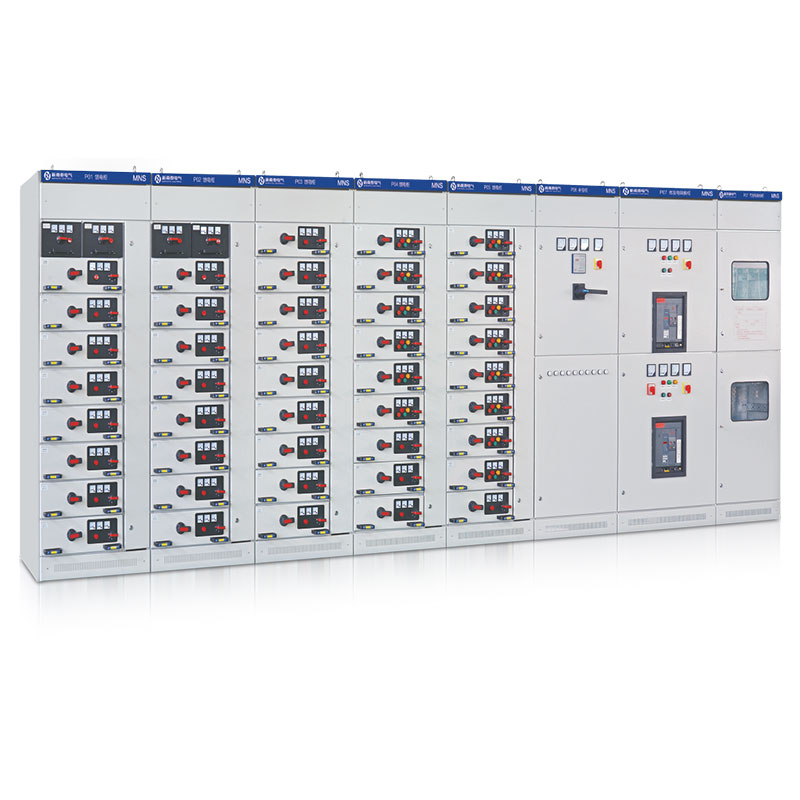
A lineup is divided into compartments: a main busbar compartment running the length of the switchgear, breaker or switch compartments (fixed or withdrawable), cable termination compartments, and low-voltage compartments for relays, meters, and controls. Compartment walls of grounded metal — with shutters that automatically cover live busbar spouts when a breaker is withdrawn — are what distinguish metal-clad construction under IEEE Std C37.20.2. Insulation in air demands clearances measured in tens of centimeters at MV, so panel widths of 600–1,200 mm per feeder bay and service aisles in front and often behind are part of the design, not an afterthought. Ventilation and space heaters manage condensation; heaters are standard because a cold, de-energized board is where condensation collects.
Define the system boundary
Separate the power equipment, control cabinet, field devices, protection, networks, installer scope, and maintenance responsibility before selecting a configuration or preparing drawings. The typical boundary questions for metal-enclosed AIS: does the supply include the protection relays or only mounting space; who wires the CT/VT circuits; is the cable trench, fire barrier, or roof section part of the switchgear contract; and who performs the secondary injection tests at commissioning.

Inputs to document
| Input | Why it matters |
|---|---|
| Electrical and operating data | Voltage, current, fault assumptions, operating modes, switching duty, load or feeder information, and protection interfaces set every downstream choice. |
| Cabinet and installation | Compartments, mounting, cable entry, clearances, heat, environment, access, labels, grounding, and service sequence define the physical design. |
| Control and documentation | I/O, terminals, symbols, wire numbers, alarms, revisions, drawings, BOM, settings, test points, and software or data handover define the deliverables. |
| Verification | Inspection points, test records, open decisions, supplier evidence, and acceptance responsibilities define what “done” means. |
Construction families and when each is chosen
| Family | Defining features | Typical use |
|---|---|---|
| Metal-clad (IEEE C37.20.2 / IEC equivalent) | Grounded metal barriers between compartments, automatic shutters, withdrawable vacuum breaker, main bus and cable insulated or bare in dedicated compartments | Industrial plants, utility distribution, anywhere switching frequency and maintainability matter |
| Metal-enclosed interrupter / low-cost AIS (IEEE C37.20.3 family) | Interrupter switches and fuses in a metal enclosure, fewer compartmental barriers, lower duty | Secondary distribution, small RMU-style substations, transformer feeders with fuse protection |
| Arc-resistant construction | Reinforced panels, pressure relief flaps, ducted or top venting, qualified to an internal arc class | Operator-occupied rooms, high fault levels, installations where personnel classification applies |
| IEC loss-of-service continuity classes | LSC2A/LSC2B compartments allow work on one feeder with others live | Processes that cannot tolerate full-board shutdown for maintenance |

Ratings to verify on a metal-enclosed AIS quotation
Check the rated voltage and insulation level (for 12 kV class equipment, a lightning impulse withstand of 75 kV and power-frequency withstand of 28–42 kV depending on the rated voltage point within the class; 40.5 kV class equipment rises to roughly 185 kV impulse), rated continuous current of the main bus (commonly 1,250–3,150 A) and of each outgoing feeder, short-time withstand current and duration (16–40 kA / 3 s across the common range), and the internal arc classification where specified. Also verify the climatic conditioning — heaters, condensation control — against the actual room conditions, and the busbar material and cross-section, which drive both continuous rating and heat dissipation.
Protection, control, and secondary interfaces
Protection in metal-enclosed AIS is where scope disputes concentrate. Document which relays are included, who owns the settings files, whether CT and VT circuits land on terminal blocks with shorting facilities, and how breaker status, trip alarms, and remote control reach the RTU. Withdrawable breakers need secondary isolating contacts rated for the duty; fixed breakers need isolation facilities designed in. Wire numbers, terminal schedules, and loop-checked I/O lists are the difference between a two-day and a two-week commissioning.
Standards and certification for metal-enclosed AIS
The governing standards depend on market. IEC 62271-200 covers AC metal-enclosed switchgear above 1 kV up to 52 kV — its internal arc classification, LSC service-continuity classes, and routine-test regime are the reference vocabulary for most international projects, with IEC 62271-100 for the circuit-breakers inside and IEC 62271-201/202 covering the ring main unit variants. In North America, IEEE Std C37.20.2 defines metal-clad switchgear, IEEE C37.20.3 metal-enclosed interrupter switchgear, and ANSI/IEEE C37-series ratings apply to the interrupting devices; UL 1558 covers metal-enclosed power switchgear listing where an AHJ requires it. Installation clearances, earthing, and working space follow the local installation code — NEC or IEC 61936 contexts — and the responsibility for meeting them sits with the project, not the switchgear nameplate.
Frequently asked questions
Metal-enclosed versus gas-insulated — which should I choose?
Choose metal-enclosed AIS when floor space is available, maintenance staff prefer visible, accessible components, and you want to avoid gas handling and the SF6 regulatory trajectory. Choose GIS when footprint, pollution, or weather exposure dominate. Many sites combine both: GIS for the compact intake, AIS for feeder boards.
What maintenance does metal-enclosed AIS need?
A schedule of breaker contact inspection and mechanism lubrication, busbar joint torque and thermography checks, insulation cleaning and resistance testing, heater and gasket verification, and secondary injection on a rolling program. Withdrawable breakers make the breaker portion fast; bus work requires planned shutdowns.
Are shutters and interlocks optional extras?
In metal-clad construction they are definitional — grounded compartment barriers and automatic shutters are what the standard means by metal-clad. Interlock logic (no breaker operation unless seated, no earthing switch on a live feeder) should be functionally tested at every commissioning.
Can one lineup mix fixed and withdrawable bays?
Yes, and it is a common cost optimization: withdrawable breakers for the main incomer and large feeders, fixed fuse-switches for small transformer feeders. Confirm the bus rating and protection coordination still hold across the mixed lineup.
What is the single most quoted-after document at handover?
The as-built single-line diagram with relay settings and test records attached — when operators ask a follow-up years later, that file answers ratings, settings history, and test evidence in one place.
Procurement scenarios
For a plant adding a second MV board to an existing IEC-market room, order the lineup with identical bus height and coupling flanges to the existing board and put one interpanel coupling kit plus spare breaker truck in the first purchase — a mixed-brand coupling later costs more than the spare does now. For projects targeting North American delivery, resolve the standards path at inquiry: IEEE-rated, UL 1558-listed construction with documented SCCR, or an IEC design accepted under an engineered site-specific approval — the choice changes delivery by weeks and should anchor the schedule, not trail it. For multi-board projects with staged energization, ask the manufacturer to sequence factory testing by energization stage so the first boards can ship while later ones are still in FAT, matching an 8–12 week staged site program.
ElectricalCabinet.net manufactures metal-enclosed and medium voltage switchgear lines and pairs them with dry type transformers; see also our beginner’s guide to low voltage switchgear for the LV side of the same room.
 EN
EN