

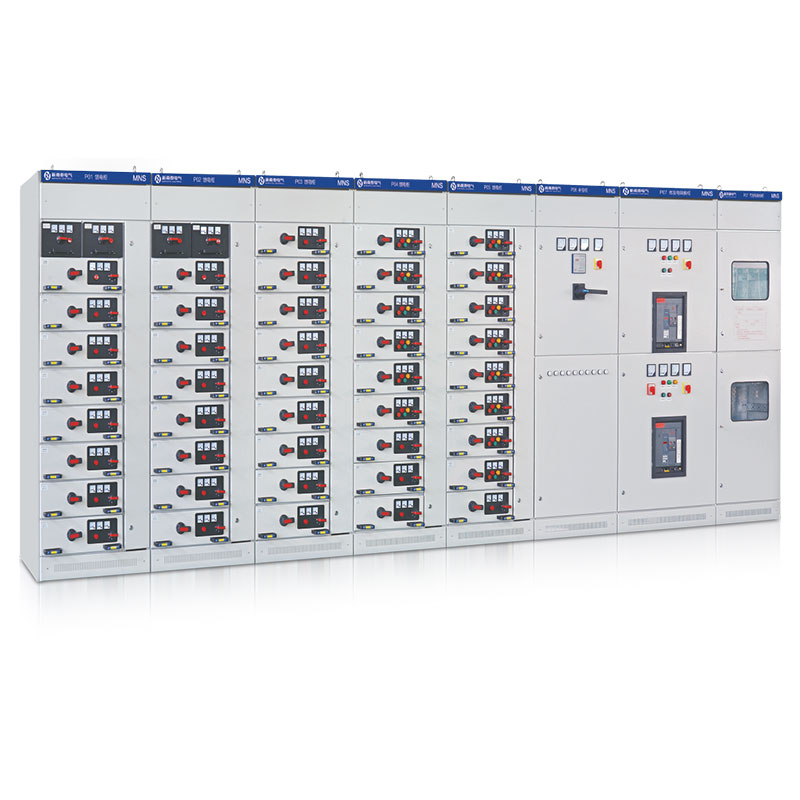


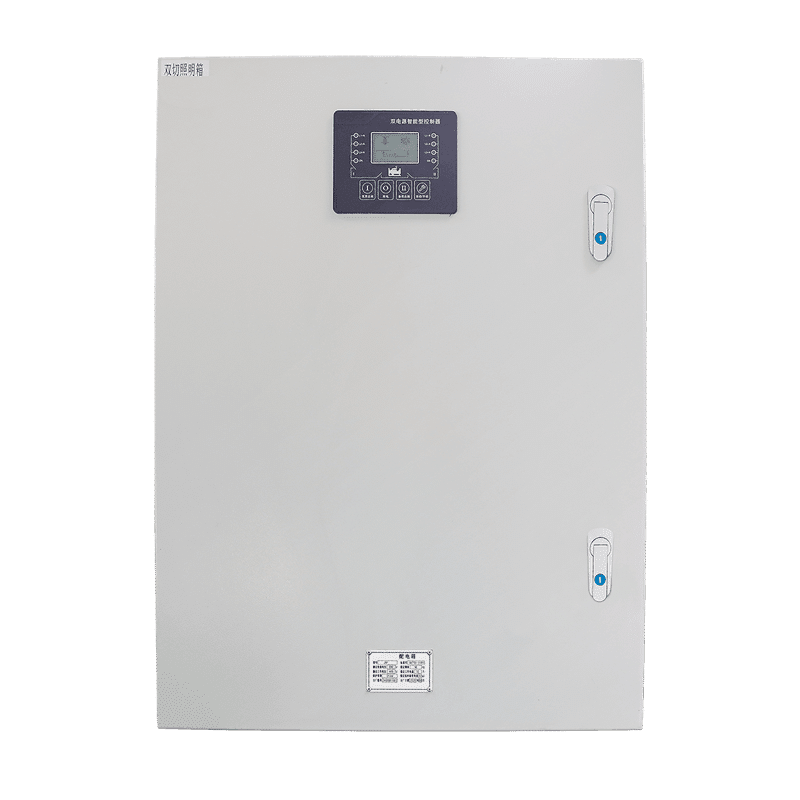


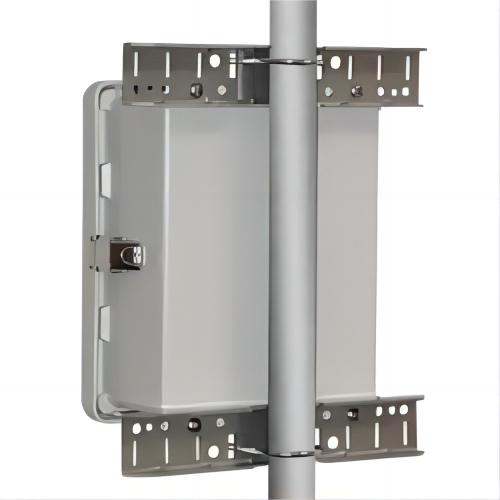


Industrial control panel surge protection is the coordinated set of devices and wiring decisions that keeps transient overvoltage — from lightning, utility switching, and in-plant load switching — from destroying power supplies, PLCs, drives, instruments, and communication interfaces. It belongs in the panel specification, not in a retrofit after the first failure. This guide maps the entry paths a designer should review, explains why coordination matters more than any single device rating, and lists the inputs a panel builder needs to quote surge protection correctly.
Why surge protection belongs in the panel specification
Industrial control panels can be connected to long power, signal, and communication conductors. Switching events, lightning activity, and disturbances on connected equipment may expose the panel’s electronics to transient overvoltage. A surge protective device (SPD) chosen at design time can be placed at the right boundary, wired with short leads, and coordinated with upstream protection. The same device bought after a failure is usually installed wherever there is space, with long leads that degrade its performance.
Surge arrester vs. SPD vs. surge suppressor
Three device families share this vocabulary. A lightning surge arrester is the heavy-duty unit at the service entrance or on overhead lines, sized to divert direct lightning strokes to earth; a surge protective device (SPD) is the panel-level device described above; and a surge suppressor is the colloquial North American name for that same panel-level device — an electric surge protector, electrical surge protector, electronic surge protector, or power surge protector on a retail datasheet all name the same product class. How does a surge suppressor work? Non-linear elements inside — metal-oxide varistors, gas discharge tubes, or for signal circuits silicon avalanche diodes — switch from insulating to conducting in nanoseconds once a transient exceeds the clamping level, diverting surge current away from the surge protection electronics it guards and back through the bonding system to earth.
A related product simplifies panel layouts: circuit breakers with surge protection integrate the SPD and its backup overcurrent protection into one breaker body, so the protected feeder and its surge device share one terminal and one mounting space. When comparing them against discrete devices, verify the breaker’s fault rating and the integrated SPD class against the same coordination rules described above.
Map the possible entry paths
Start by identifying every conductor entering the enclosure: incoming power, motor feeders, field I/O, analog instruments, network cables, and remote-control circuits. Record the cable length, route, building or outdoor transitions, grounding arrangement, and connected equipment. This map helps the engineer decide which circuits need protection and where the protective device should be installed.

| Circuit | Planning question |
|---|---|
| Incoming power | What is the upstream protection and grounding arrangement? |
| Control power | Which power supplies and transformers are sensitive to transients? |
| Field I/O | Do long outdoor or inter-building cables enter the panel? |
| Analog signals | Could a transient damage a transmitter, input card, or measurement loop? |
| Communication | What interface, shield, reference, and cable route are used? |
| Motor/drive circuits | What switching events and cable lengths must be considered? |
Coordination matters more than ratings
A surge protective device must be coordinated with the system voltage, available fault current, upstream protection, grounding, conductor arrangement, and the equipment being protected. The device location, lead length, connection method, backup protection, and status indication all affect performance. Two devices with identical catalogue numbers behave differently when one is wired with short leads at the boundary and the other is strung across a crowded backplate.
Do not select a generic device from cabinet dimensions alone. The correct ratings and wiring must be confirmed against the product documentation and the project electrical design. In particular, confirm who performs the coordination study — the panel builder installs and documents the agreed devices; the study itself belongs to the project’s electrical engineering scope unless it is explicitly included.
Control-panel layout considerations
Keep surge-protection connections short and arranged according to the manufacturer’s instructions. Separate power and signal paths where practical, maintain clear labeling, and leave access for inspection or replacement. Coordinate the protective device with terminal blocks, disconnects, fuses, power supplies, and communication interfaces.
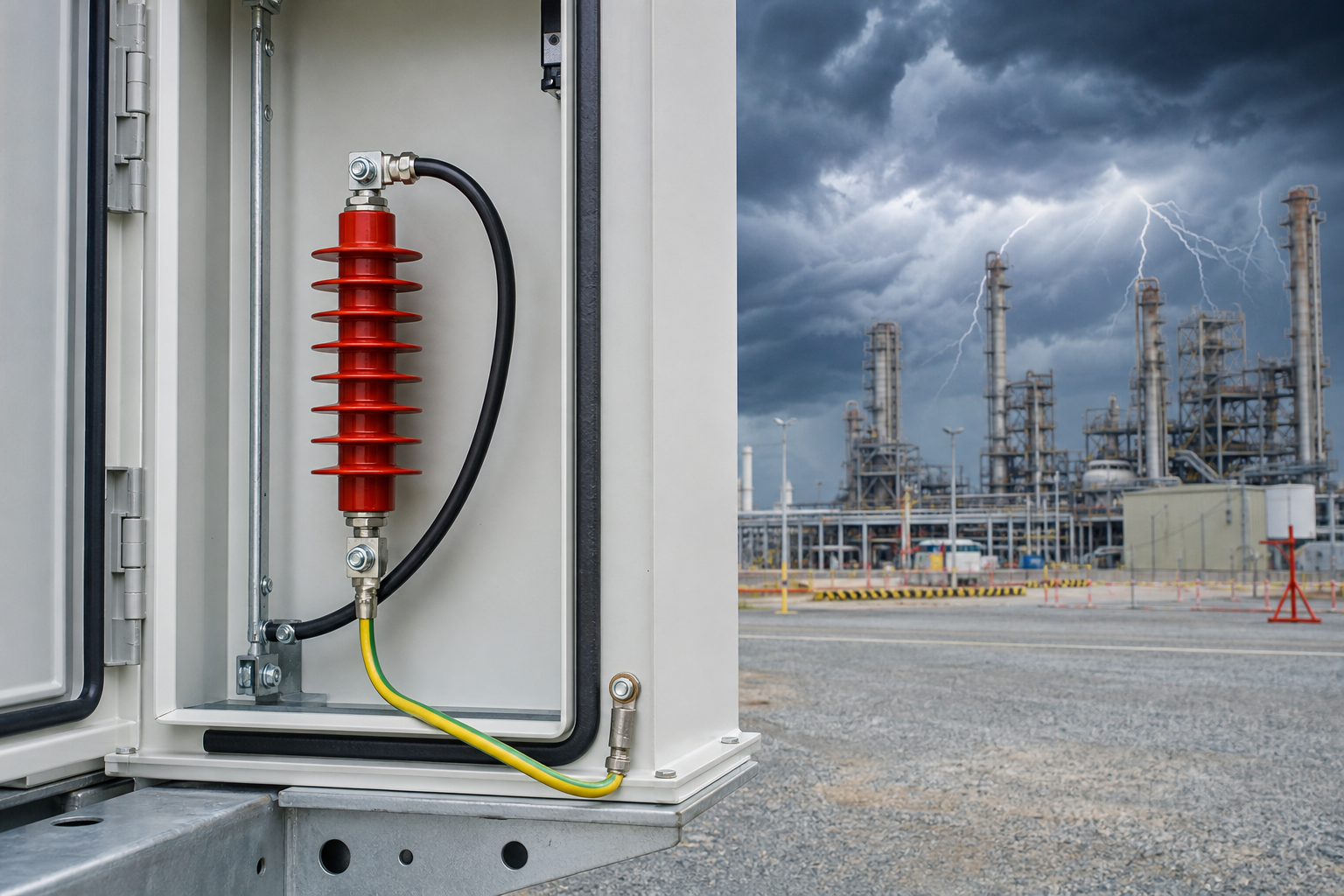
The panel drawing should identify the protective device, protected circuit, grounding connection, status contact, and maintenance responsibility. If a field device has its own protection, document the boundary rather than assuming the panel device protects the entire cable route.
Standards and documentation context
- UL 508A — for industrial control panels in the NEC market, governs how the panel as a whole is built, documented, and rated; surge protective devices installed inside such a panel must fit its component and wiring rules and appear in the documented bill of materials.
- IEC 61439 — the IEC assembly framework under which panel-mounted devices, SPDs included, are incorporated into a verified assembly; the assembly documents identify the installed devices and their connection arrangements.
- NFPA 79 — the industrial-machinery electrical standard in the NEC market, addressing the machine-level wiring environment in which panel surge protection operates.
SPD component standards themselves (the test classes behind a device’s catalogue data) are product-level documents; this article does not restate their numeric requirements. The panel’s responsibility is the correct device, location, and wiring, evidenced in the drawings.
Environment and maintenance
Outdoor, rooftop, remote, and industrial installations may have different transient exposure and environmental conditions. Enclosure sealing, cable glands, condensation control, corrosion, and access should be considered with the surge strategy — a corroded bonding connection quietly disables the whole scheme. A protection device with a status indicator is only useful if the inspection and replacement process is defined. Sites specifying the enclosure around the panel can review the electrical enclosure design options and the enclosure temperature rise calculator for the thermal side of the same cabinet.
Information needed for a quotation
Provide the system voltage, grounding, fault information, circuit list, cable routes, equipment data sheets, communication interfaces, installation environment, applicable project requirements, and documentation expectations. Identify whether a protection study or engineering sign-off is included.
Frequently asked questions
Does every panel need a surge protective device?
Not automatically. Short indoor cables with no outdoor transitions and a benign supply may need nothing beyond normal overcurrent protection; long outdoor runs, lightning-exposed sites, and sensitive electronics push the answer toward protection. The circuit map decides, not habit.
Follow-up: if the incoming power already has a building-level SPD, is the panel still at risk?
Yes, for two reasons: building-level devices are coordinated for the building, leaving a residual transient that panel-level devices handle closer to the load, and signal or communication cables entering the panel bypass the power-side protection entirely. Each entry path needs its own decision.
Can an SPD be added to an existing panel later?
Physically often yes, electrically only with review. The device needs a short connection to the protection boundary, a compatible overcurrent backup, and a grounding path back to the panel’s bonding system. A retrofit that ignores these turns a protective device into a decorative one.
What does the status contact on an SPD do?
It signals that the device has reached end of life or lost a protection element, so the control system or maintenance team can replace it. Wiring it to a PLC input or a local indicator is only useful if someone is assigned to respond — put that in the maintenance plan.
Who chooses the device ratings?
The project electrical engineer, based on the supply system, exposure, and the equipment to be protected. The panel builder’s role is to install the specified device correctly, document it, and flag conflicts between the specification and the panel layout.
Scope boundary
This article does not assign a universal surge rating, certify lightning protection, or replace a coordinated electrical design. It identifies the inputs needed to select and document panel surge protection responsibly.
ElectricalCabinet.net can use these inputs to route a control-panel enquiry to the appropriate power, signal, enclosure, and documentation scope.
Surge protection is one entry on a longer bill of materials. The control panel components overview walks through the full component set — breakers, power supplies, PLCs, relays, terminals, and the physical build — and how each one is selected.
Ordering scenarios
A water-utility integrator supplying pump-station panels in a lightning-prone region typically orders a first pair of panels with power- and signal-side protection fully documented, holds the series order until one storm season confirms the scheme, then releases the remaining stations in one batch. The governing constraints are the documented device boundaries and spare SPD availability, since a protection scheme without spares degrades silently after the first major event.
An export-oriented OEM shipping panels into both NEC- and IEC-referenced markets should fix the documentation split early: the same physical panel carries a UL 508A evidence package for one destination and IEC 61439 assembly documents for the other, and the SPDs listed must match each package. Confirming this boundary at the first-article order — usually one unit per market — avoids rebuilding documentation when the series order arrives.
 EN
EN