

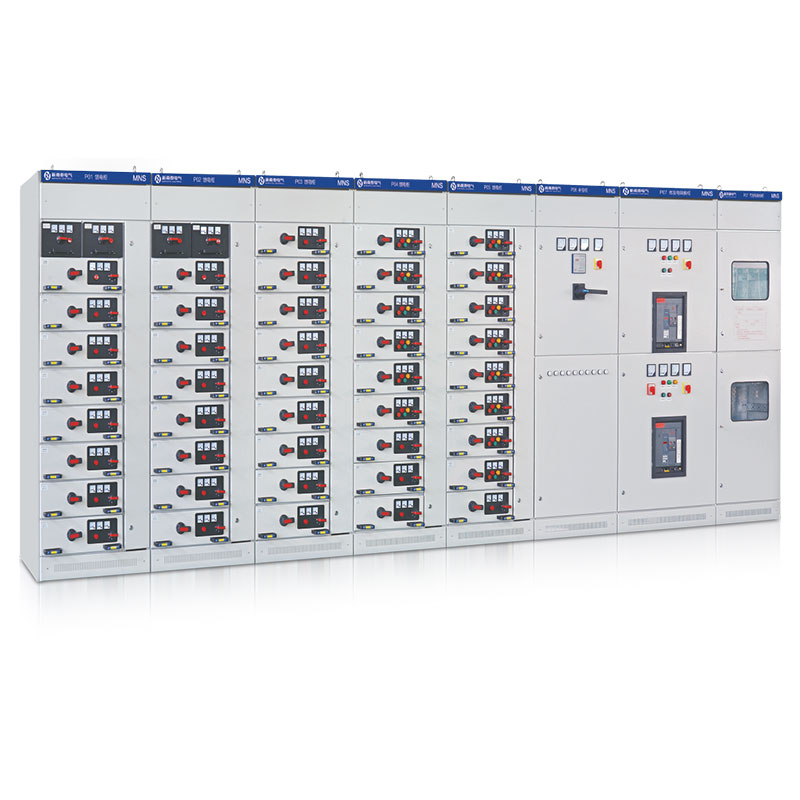


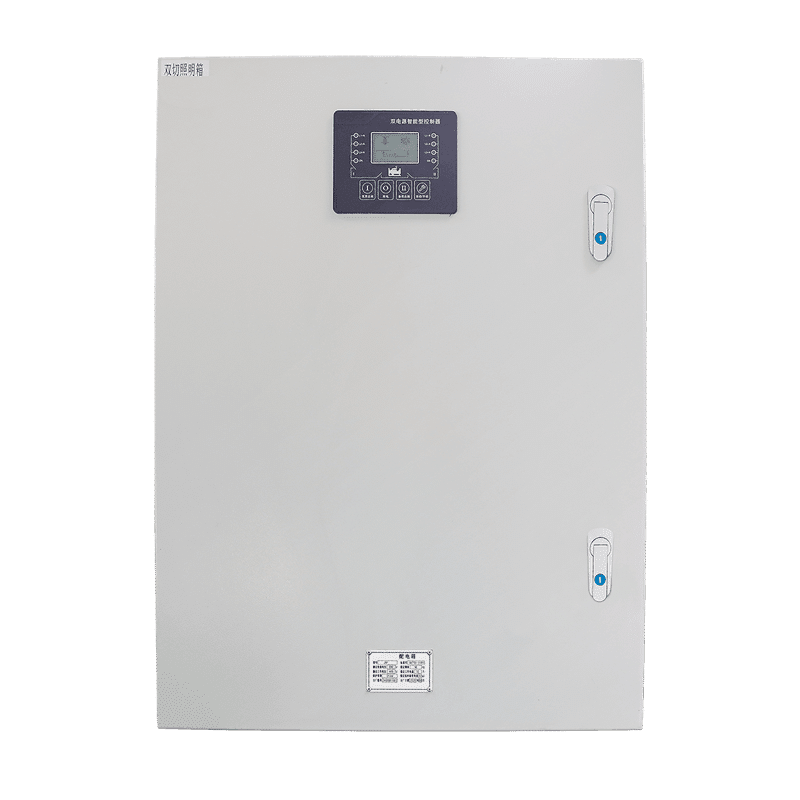


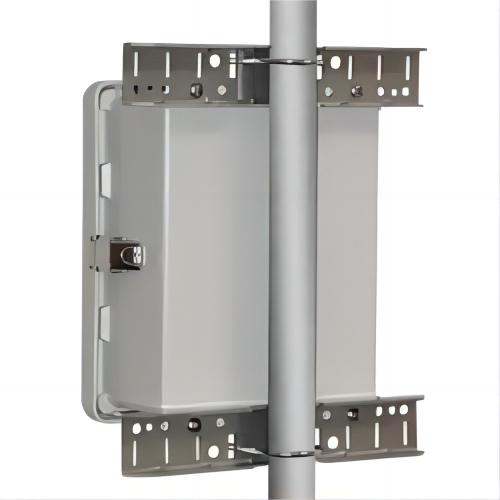


“Electrical panel” is one of the highest-intent, highest-value search terms in this industry — advertisers pay over $24 per click for it because the searcher is usually a purchasing engineer with a budget and a deadline. But the term spans three different products, and quoting the wrong one is the fastest way to lose a week of email. This guide from the manufacturing side covers the panel families, the standards that govern each, and how to compare electrical panel manufacturers on the things that decide whether the panel passes inspection and survives service.
First, pin down which panel you are buying
| Family | What it is | Governing standards (typical) |
|---|---|---|
| Power distribution panel / switchboard | Mains incoming, feeder breakers, metering; 400 V–690 V class common | IEC 61439-1/-2 (CE markets), UL 891 / UL 1558 (North America) |
| Industrial control panel | PLCs, VFDs, contactors, control transformers; UL vocabulary for machine control panels | UL 508A, NEC Article 409 (US), IEC 60204-1 for machinery |
| Panelboard / load center (commercial-light) | Branch lighting and receptacle circuits | UL 67 (panelboards), NEC Article 408 |
Mixing families in one enquiry is common and workable — many manufacturers build all three — but the standards, test regimes, and component ecosystems differ, so a supplier strong in one is not automatically strong in another. Ask for references per family, not in aggregate.
Rating inputs the manufacturer needs on the first email
To quote a distribution or control panel responsibly, a manufacturer needs:
- Supply data: voltage, phases, frequency, available fault current at the point of connection (or transformer kVA and impedance so it can be calculated). This sets the SCCR for North American acceptance or the rated short-time withstand for IEC assemblies.
- Load schedule: each feeder or motor with rated current, duty (continuous/intermittent), and any special loads (VFD-fed, high inrush, harmonic-rich).
- Topology preferences: main breaker or switch, bus ratings, required spares percentage, metering (basic kWh or power-quality class), and any ATS or capacitor sections.
- Environment: indoor/outdoor, ambient extremes, washdown or corrosive conditions (drives NEMA 4X stainless or IP66), altitude above 2,000 m, and seismic category if the site demands it.
- Compliance destination: UL listing needs, CE/UKCA declarations, Gulf or local utility approvals.
A manufacturer who returns this list marked up with engineering questions has started doing their job; one who returns only a price has transferred the engineering risk to you invisibly.
Comparing quotes from electrical panel manufacturers
Same spec, three quotes, 40% spread — here is where the money actually hides:
- Busbar and conductor sizing margin. Copper content is a major cost driver. Compare the busbar cross-section, plating (tin or silver), and joint design between quotes, and check that the quoted withstand rating is consistent with the busbar physicals, not just the breaker rating.
- Enclosure construction. Steel thickness (2.0 mm versus 1.5 mm body), coating system (iron phosphate + epoxy-polyester powder, typically 60–80 μm, with salt-spray performance quoted per ASTM B117 — 500 h minimum for industrial indoor, 1,000 h for outdoor/C4-class environments), gasket quality, and IP/NEMA verification evidence.
- Component tiers. Same breaker frame from authorized distribution versus gray supply can differ materially in both price and authenticity risk. Require authorized-channel sourcing with traceable batch data on life-safety components.
- Included testing. Routine tests per IEC 61439 (dielectric, functional, wiring verification) or UL production-line testing should be included as standard, with records delivered. Quotes that omit test records are quoting a different product.
- Documentation and spares. As-built drawings, BOM, and a named spare-parts list for breakers and relays. Ten-year support starts with this package.
Volume and environment redraw the comparison. On a 3,000-panel annual program with a fixed budget ceiling, the quote spread stops being about unit price and becomes about what each supplier can hold fixed across twelve months of releases: frozen BOM discipline, controlled substitution rules, and batch traceability on breakers are what prevent month nine from delivering a different panel than month one. If the destination is hot plant rooms — ambient in the 40 °C class with drives inside — the budget conversation must buy thermal engineering first: enclosure sizing against internal heat load, verified cooling, and derating statements. A supplier who meets the budget by shrinking the enclosure has spent your margin on future field failures, and at 3,000 units even a 1% thermal-related failure rate is thirty site visits.
Certification verification — five minutes that prevents most disasters
- UL-listed panels: verify the manufacturer’s UL file via UL Product iQ (free registration) — check that the panel category matches your purchase.
- IEC 61439 assemblies: request the design verification summary and routine test certificates per shipment. Type-test reports should carry an accredited laboratory report number (KEMA-CESI, ASTA, TÜV, CPRI, CNAS-labs).
- CE: a credible DoC names the product, the manufacturer’s registered address, and the applied harmonized standards. A DoC that lists only “2014/35/EU” with no standards is a compliance smell.
- ISO 9001: check the scope line — “manufacture of low-voltage switchgear and control assemblies,” not “trading.”
Delivery structure and risk management
- Typical lead times: configured distribution panels 2–5 weeks from drawing approval; engineered control panels 4–8 weeks; add review cycles for UL or witnessed FAT.
- Protect the drawing-approval milestone. Freeze the design (component substitutions thereafter only by written agreement), then hold the schedule. Post-approval changes are the primary source of cost disputes and slipped deliveries.
- For export orders: agree Incoterms, export-grade crating with desiccant, and pre-shipment photo/video documentation as contractual deliverables.
- Order the commissioning scope explicitly: who sets protection, who runs SAT, who trains operators. Ambiguity here surfaces as an invoice dispute at energization.
FAQ
Why is SCCR such a frequent acceptance failure for imported panels?
North American inspectors check the assembly SCCR against the available fault current at installation. Panels built without a documented SCCR evaluation (UL 508A Supplement SB method) get rejected or require expensive field re-engineering. Fix it pre-order: state the fault current and require the SCCR mark in the documentation.
Can one manufacturer supply both the distribution switchboard and the machine control panels?
Yes, and it reduces interface risk (common documentation, coordinated sparing, one FAT calendar) — provided their certifications cover both families. Evaluate each family’s evidence separately as described above.
How do I judge a manufacturer I cannot visit?
Third-party factory audits (SGS, TÜV, BV, QIMA) are inexpensive relative to order value; a live video walkthrough during production, plus photographic build records at defined stages, is now a standard arrangement for our export customers and any serious manufacturer will accept it.
What should that remote audit cover for a high-volume repeat program?
Go beyond workmanship: audit the change-control process, the BOM freeze mechanics, the component traceability chain, and how the first-article panel is qualified and archived. On repeat programs, drift between batches is the failure mode — the audit should hunt for it directly.
How does a 3,000-panel annual program change the evaluation versus a one-off?
Capacity claims matter less than scheduling mechanics: monthly release slots, engineering bandwidth for ECNs, and test-bench throughput. Ask for the production-plan load data and a reference customer running comparable volume — then verify the reference actually exists.
Related reading
- electrical control panel guide — component-level fundamentals behind panel selection.
- electrical control panels — our panel manufacturing scope and platforms.
- enclosure design service — the enclosure engineering that houses the panel.
Engineering note: ElectricalCabinet.net manufactures electrical distribution and control panels for OEM and project customers across UL and IEC markets. This guide is an evaluation framework; final panel selection, ratings, and compliance require qualified engineering review for the specific installation.
 EN
EN