

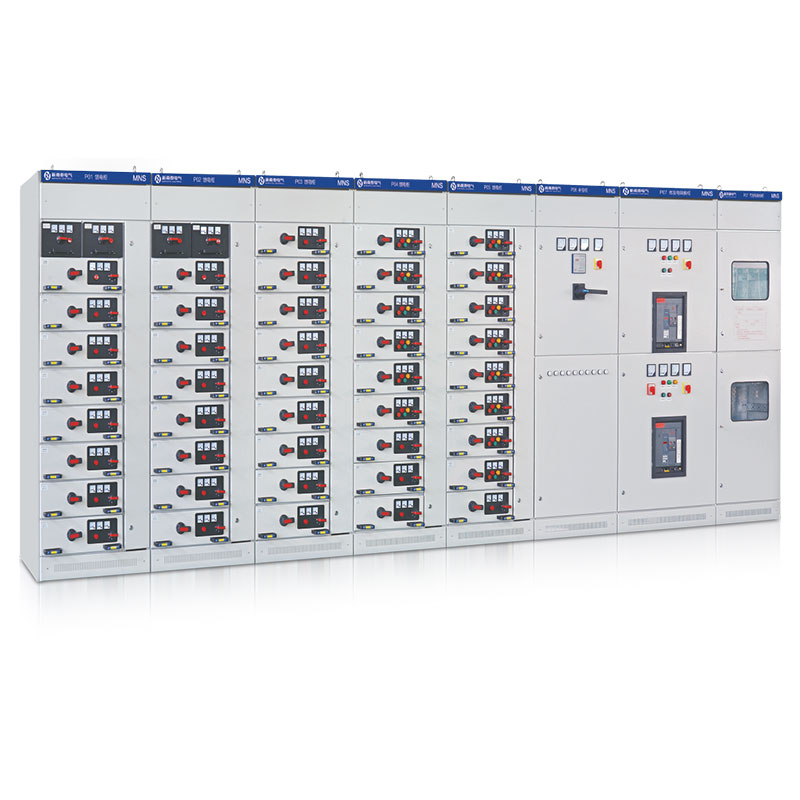


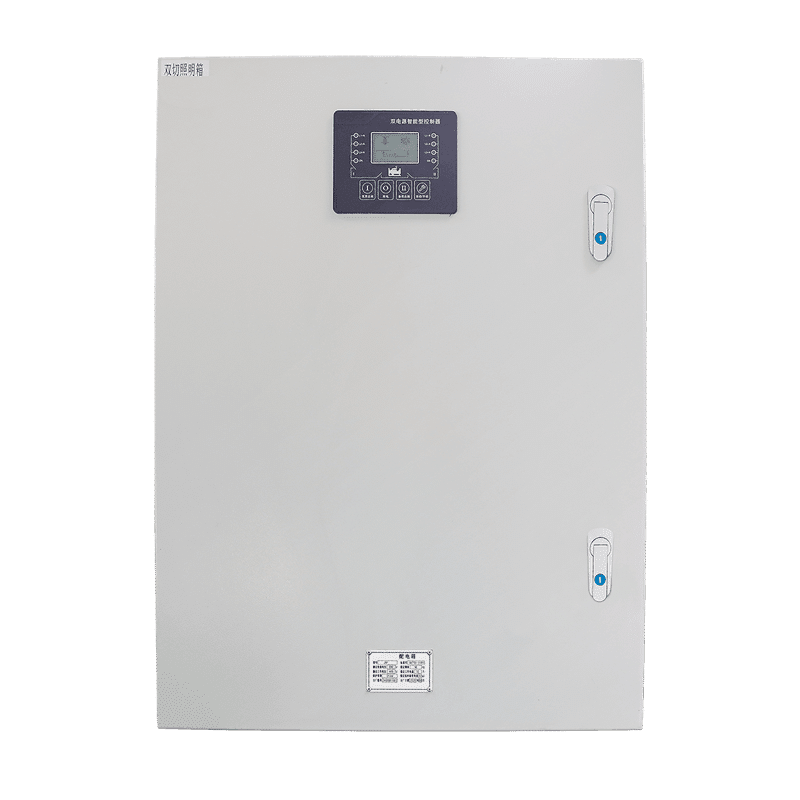


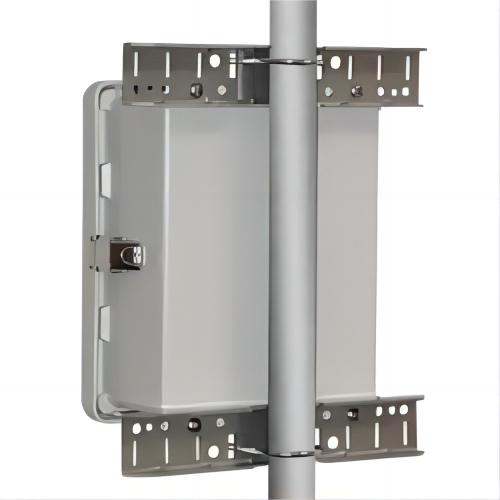


Water treatment facilities use several distinct control-panel functions rather than one universal “water treatment panel.” The right arrangement depends on the process stages, pumps, valves, instruments, alarms, chemical systems, and monitoring requirements. This guide groups panel types by function so a project team can describe what it needs before requesting a quotation — and so that two suppliers quoting “a water treatment panel” can be compared on the same scope.
The Water Treatment Control Panel Architecture article explains how the layers fit together. This article focuses on the distinct functional roles that may appear in a treatment project.
1. Process PLC control panel
A process PLC panel coordinates signals and logic for a defined treatment sequence. It may receive level, pressure, flow, quality, or equipment-status signals and issue commands to pumps, valves, drives, and alarms.
Before selecting the panel, document the process sequence, I/O list, operating modes, alarm states, communications, and required operator interface. A PLC panel title does not establish a specific PLC family, I/O count, protocol, or programming scope.
2. Pump control panel
Pump panels manage one or more pumps and their starting, stopping, protection, feedback, and sequence. A project may use simplex, duplex, lead/lag, or another arrangement based on the process duty.

Provide pump and motor data, duty point, sensor inputs, normal and abnormal conditions, and the response when a pump faults or fails to prove operation. The Pump Control Panel Design and Duplex Pump Control Panel articles provide focused checklists.
3. VFD control panel
A VFD panel is used when variable-speed operation is part of the process objective. The drive may be used for pressure, flow, level, or another control requirement, but the final arrangement depends on the motor, pump, process, and control sequence.
Define motor data, speed range, feedback, acceleration and stop requirements, alarms, bypass or fallback expectations, and heat or installation conditions. The VFD Pump Control Panel Selection article explains the pump-specific inputs.
4. Valve and actuator control panel
Treatment processes may require commands and feedback for motorized valves, actuators, gates, or other flow-control devices. The panel must distinguish command, open/closed proof, fault, local/remote status, and any process interlock.

List each valve or actuator, its signal type, normal state, failure response, and relationship to the process sequence. Do not assume that a generic PLC panel includes the required actuator power or interfaces.
5. Chemical dosing control interface
Chemical dosing equipment may require pump commands, tank-level signals, flow or feedback signals, alarms, and interlocks. The correct interface depends on the chemical process and the equipment supplied.
Describe what the panel must monitor and control, and identify which equipment is supplied by the dosing package. Avoid publishing chemical-handling, safety, or dosing-performance claims without project and product evidence.
6. Monitoring and communication panel
Some projects need a dedicated interface for HMI, SCADA, remote status, data logging, or communications. Define the source signals, receiving system, alarm ownership, network boundary, and required documents.
Do not assume a protocol, remote-access feature, cybersecurity scope, or data-retention function from the phrase “smart” or “remote monitoring.” These items belong in the project specification.
Panel types at a glance
| Panel type | Core equipment served | Key inputs to define |
|---|---|---|
| Process PLC panel | The treatment sequence as a whole | Sequence, I/O list, modes, alarms, communications |
| Pump control panel | Pumps and their protection | Motor data, duty, alternation, fault response |
| VFD control panel | Variable-speed loads | Motor, speed range, feedback, thermal conditions |
| Valve/actuator panel | Flow-control devices | Command and proof signals, failure states |
| Dosing interface | Chemical metering equipment | Dosing boundary, level signals, interlocks |
| Monitoring panel | HMI, SCADA, remote systems | Signals, alarm ownership, network boundary |
How the panel types work together
The functions above may be combined into one cabinet or divided into several panels. A small installation may combine PLC, pump, valve, and alarm functions. A larger facility may separate power, motor control, process PLC, chemical equipment, and supervisory interfaces.
Choose the arrangement from the process and I/O boundaries, not from the number of product names on a brochure. The final architecture should identify which panel owns each signal, command, alarm, and interlock.
Standards context for treatment panel types
- IEC 61439-1/-2 — the IEC framework for low-voltage assemblies; whichever functional type a panel represents, if it contains power distribution it is rated and verified under this series.
- UL 508A — the industrial control panel standard for the NEC market; all six functional types, when shipped into North American water projects, are commonly built and documented under it with a marked short-circuit rating.
- NFPA 79 — the industrial-machinery electrical standard in the NEC market, applied at the machine boundary these panels serve.
- NEMA 250 / IEC 60529 — the enclosure protection references for wet rooms and outdoor installations; the NEMA-to-IP converter bridges the two rating vocabularies during specification.
Water treatment panel selection checklist
Provide:
- process stages and sequence;
- pump, valve, actuator, and chemical-equipment list;
- motor and load data;
- sensors, I/O, alarms, and interlocks;
- PLC, HMI, SCADA, and communication requirements;
- installation environment and enclosure constraints;
- required drawings, manuals, inspection, and programming scope; and
- assumptions, exclusions, and site responsibilities.
The supplier should return a clear panel boundary and identify included devices, interfaces, documents, and exclusions. This makes a water treatment panel proposal easier to compare without presenting a generic diagram as a project design.
Frequently asked questions
Do we need one panel per type?
No — the types are functional roles, not mandatory cabinets. A compact station may deliver several roles from one enclosure; a plant may split one role across several panels. The governing logic is which panel owns each signal and command.
Follow-up: is one combined panel cheaper than several?
Usually cheaper in hardware and wiring, but with trade-offs: a fault or maintenance isolation in one function can affect the others sharing the enclosure, and the combined heat load concentrates in one place. Plants valuing isolation or staged delivery often split despite the premium.
Which type should be specified first?
The process PLC scope, because it defines the sequence every other panel participates in. Pump, valve, and dosing scopes then fall out of the I/O list. Starting from a pump panel and bolting on logic later produces the rework the architecture guide warns about.
Can a dosing skid supplier’s panel join our system later?
Yes, when the interface is defined: which signals cross in each direction, what happens when the link is absent, and who owns the sequence. Undocumented handoffs between skid panels and plant panels are the most common integration failure in treatment projects.
What environment rating do treatment rooms demand?
It follows the room: wet areas and hose-down zones push enclosure families upward, chemical atmospheres drive material choices, and clean electrical rooms allow lighter constructions. Confirm the rating for the configured cabinet rather than by area label alone.
Ordering scenarios
A municipal plant upgrading in stages typically orders the process PLC panel plus one exemplar of each functional type first — commonly three to four panels covering one treatment train — and releases the remaining trains against the proven I/O and sequence. The binding constraints are the instrumentation delivery and the SCADA protocol agreement, because both feed the panels from outside and both resist being frozen early.
A treatment OEM building packaged plants for export into both NEC- and IEC-referenced markets should split the pilot order by regime: the North American package carries UL 508A panels with NFPA 79-aligned documentation, while the IEC-market package carries IEC 61439 assemblies. Because a packaged plant contains several panel types at once, the evidence split multiplies — discovering it after the series order means re-documenting every type for one of the destinations.
 EN
EN