

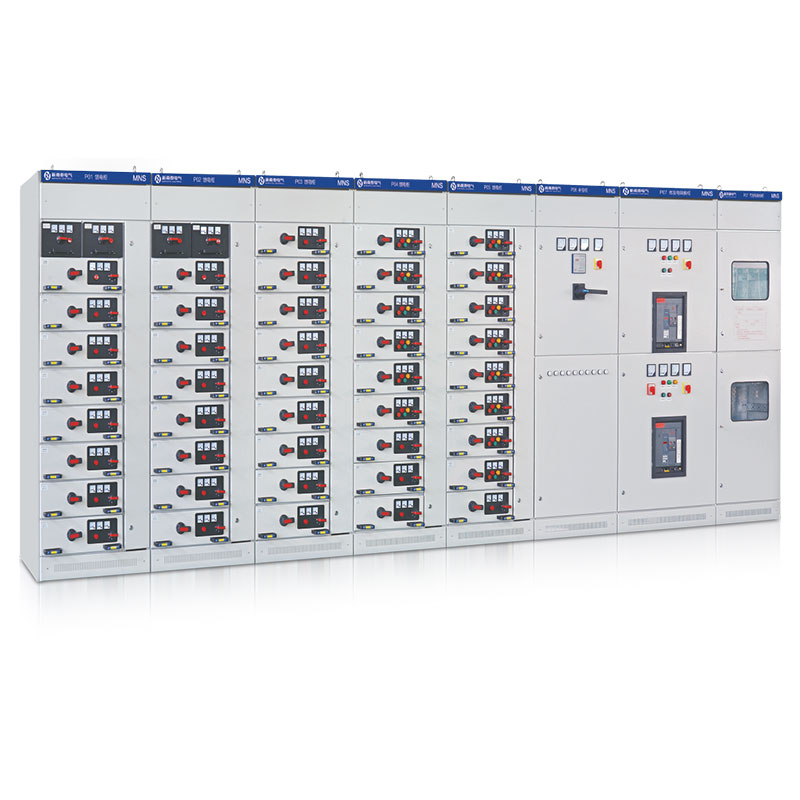


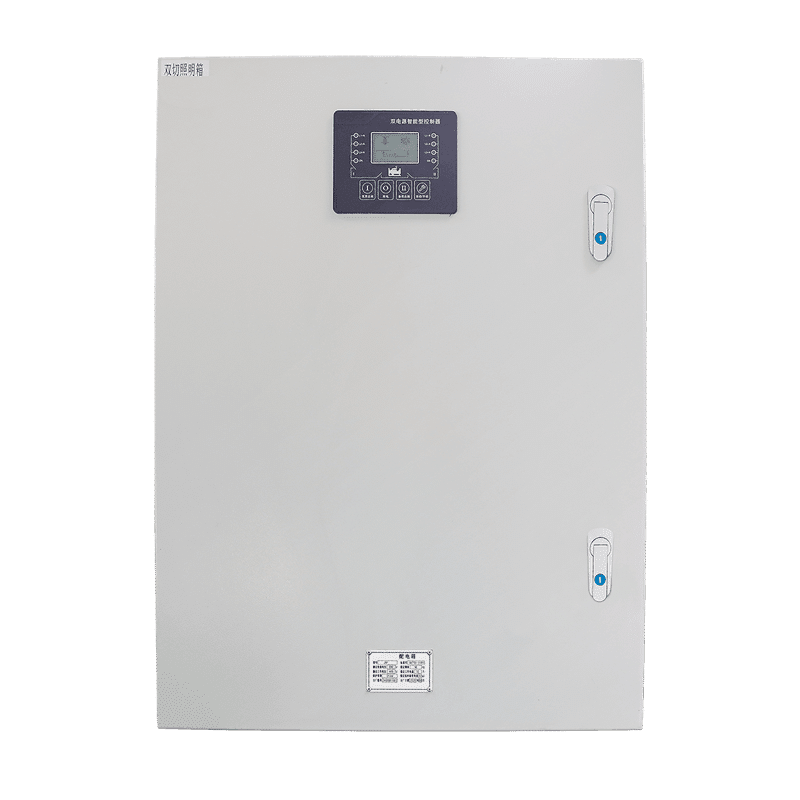


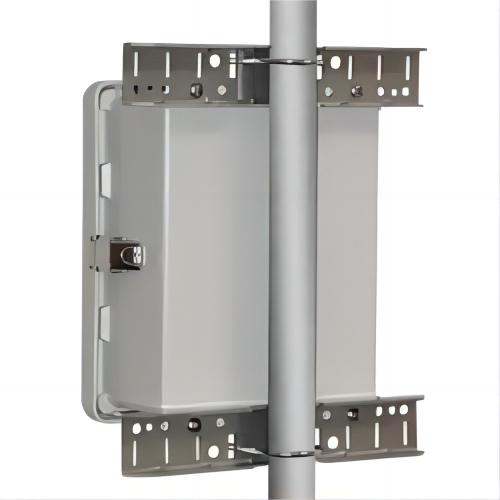


With dynamism in power distribution, the Ring Main Units have found their niche in modern, busy industrial and urban settings. These switchgear devices, metal-enclosed, excel in efficiently and stably supplying electricity to run infrastructure of different types seamlessly. RMUs range from high-rise building projects and industrial facilities to residential neighborhoods and other applications that are central to managing a given power supply and ensuring constant supply.
Understanding RMUs is thus the key to making informed decisions about your power distribution system. This goes for understanding their basic functions, advantages, and types. You’ll have the ability to explore how RMUs function and why they are of paramount importance in modern electrical systems.
What is a Ring Main Unit?
An Ring Main Unit is a factory-assembled, metal-enclosed switchgear device at load connection points for a ring-type distribution network. This shall enclose the main components: two switches connecting the load to the main conductors and a fusible switch or circuit breaker arranging the distribution of medium voltage to low voltage power.
Because “Ring Main Unit” is a mouthful, documents abbreviate it heavily: you will see RMU unit, RMU units, or even RM unit in older drawings—all meaning the same device; the RMU in the name is simply the abbreviation of Ring Main Unit. If you are asking what is RMU in electrical terms, it is exactly this ring-connected load switchgear unit. The most common deployment is an RMU for transformer feeders: an RMU in transformer substations sits between the ring and the distribution transformer, so each RMU–transformer combination forms one load point of the ring.
This makes RMUs very useful, especially in humid and other hostile environments. The compact design does not compromise on power and functionality; on the contrary, they are capable of holding a constant, reliable flow of electricity. These units are provided for fast switching from one power source to another during maintenance or in case of emergencies to reduce downtime and minimize disruptions.

The Working Principle of RMUs
The RMUs operate based on a closed-loop, highly advanced electrical distribution system, and more simply put, a ring system. It means that even in the case of failure of one component of the system, the supply is not disrupted and remains stable. Another significant advantage associated with the ring structure is that an unbroken flow of power is sustained because electricity reroutes from other pathways within the ring during a fault, which then can assure reliability and consistency of the circuit.
At the very center of any Ring Main Unit is an intricately designed and engineered assembly of switches, circuit breakers, and fuses. The system is designed to handle and isolate electrical faults with very high accuracy. This is basically aimed at protecting the system against overload and short-circuited conditions, with assurance that any such disturbances will be swiftly handled to ensure no damage and loss of operation time is incurred.
Ring Main Units have compact designs, making them space-efficient, and can thus be best deployed in areas where less space is available. Internally, RMUs are capable of holding many vital devices or components in a single enclosure. This may include circuit breakers, load break switches, protection devices, among other devices of importance in the creation of a much more integrated and streamlined electrical management system. This compact design saves much space and also makes the installation process quite easy, hence saving time and labor costs.
Apart from the space-saving advantages of RMUs, they have improved insulation against the environment—in particular, protection from dust, moisture, and other contaminants. This thick layer of insulation helps safeguard the integrity and functionality of the unit by ensuring that all internal components are kept at optimal working conditions, even under severe environmental conditions. RMUs provide better resistance to environmental influences, thereby increasing their lifespan and assuring reliability of operations in a number of electrical distribution applications.

Advantages of Ring Main Units
- Cost Efficiency: The RMUs have efficient operation and easy installation, which can help in frugal use of labor and installation costs. Their design ensures that the downtime is kept at a minimum, saving time and money in the long run.
- Compact and Feature-Packed: Even though small in size, RMUs are power-packed with features that make their performance impressive. Their compact design is especially appropriate in urban areas and industrial settings where space comes at a premium.
- Customization: RMUs can be tailored to meet special applications. They are available in different voltages and can be used for both indoor and outdoor installations, allowing flexibility with the installation site type at hand.
- Improved Safety and Protection: Electrical installations demand special attention to safety. RMUs provide safety to the equipment and the people associated with them as well. Their design is strong and provides consistent performance in different conditions.
- Minimum Maintenance: As discussed above, RMUs are designed for rough use; hence, they require a minimum of maintenance, which reduces operational costs and minimizes the chances of an unwanted breakdown at any moment, thus assuring continuous performance over time.
- Longevity: RMUs have been designed with highly valued materials and advanced technology that will last for over two decades. With this kind of long life expectancy, they are able to offer a reliable and long-term solution to any power distribution needs.
Structure of a Ring Main Unit
The following components are typically housed inside an RMU cabinet:
- Input and Output Cable Compartments: These are connected to transformers through isolation circuit breakers and load circuit breakers.
- Switch Equipments: The load breakers, cutter machines, ground knives, busbars and terminals shall be housed in a tank filled with SF6 gas having excellent resistance to environmental conditions.
- Customizable Compartments: Depending upon the need, RMUs can be configured into two, four, or six compartments.
Traditionally, distribution grids used to be protected for medium voltage transformers by fuse applications combined with cutter knives. Nowadays, RMUs come up with SF6-insulated circuit breakers, self-powered relays, and current transformers optimized for performance, hence offering a cost-effective alternative to traditional fuse-cutter combinations.
Types of Ring Main Units
RMUs can be classified on the basis of several factors.
Structure-Based Classification:
- Extensible RMUs: These are designed to provide for future expansion in them.
- Compact RMUs: These are space-saving units for installing in limited spaces.
Insulation-Based Classification:
- Air-Insulated Cabinets: These cabinets are suitable for environments where there is less moisture and dust.
- Vacuum-Insulated Cabinets: It provides better insulation in a vacuum environment.
- SF6 Gas-Insulated Cabinets: They offer high resistance to environmental factors like temperature and other agents.
Voltage-Based Classification:
- 24kV Cabinets: These are used for lower medium voltage applications.
- 36kV Cabinets: They find application in higher medium voltage needs.
Frequently Asked Questions (FAQ)
Which areas are RMUs suitable for?
RMUs are specially designed with highly insulating materials and sealed areas for protecting divide from dust, moisture, and drastic temperatures. This property therefore supports their use in indoor and outdoor, as well as industrial and urban applications.
In what ways do the features of RMUs make power distribution reliable?
The RMUs in the ring system help make sure that there is no disruption of power, even if a part of the system fails. This enhances the total reliability of the power distribution network by the quick switching of other feeders.
What is the life expectancy of an RMU?
The robust construction and modern technology used in RMUs give it a designed operating life of over 20 years. This expectancy can be improved through regular maintenance.
Can RMUs be easily maintained?
Yes, RMUs have been designed for low maintenance. Their robust construction and reliability of performance reduce repair occurrences, making them cost-effective in power distribution.
Can RMUs be customized to meet special requirements?
Yes, RMUs can be customized to serve special requirements. There exist unique needs in terms of voltage and methods of installation. Customized options are available in terms of different compartment configurations and insulation types.
Conclusion
In modern power distribution today, the ring main unit is a very important device that characterizes compactness in design, efficiency in operation, and versatility. With the capability to service a myriad of various applications—from residential and commercial building applications to large industrial establishments—the need for RMUs in ensuring a reliable and stable power supply cannot be overemphasized.
The compact design ensures that RMUs can be installed in confined spaces without compromising functionality. Their efficient operation ensures perfect management of power distribution, with very minimal chances of outage and maintenance of the electrical system’s stability. Besides, RMUs are highly flexible and can be designed to suit most specific requirements found in different environments and applications. Such flexibility also extends to their design, which can be tailored to suit different operational needs and configurations.
One must be aware of the principles of operation of RMUs, their advantages, and the different types available to adopt a very decisive approach toward power distribution solutions. With the knowledge of how RMUs work, their benefits, and the various options in detail, you are better placed to assess which solution will meet your power distribution needs with a reliable electricity supply.
Any good RMU solution will require one to look out for manufacturers renowned for their quality and innovativeness. Well-established manufacturers with high-tech competency and a full capacity to customize products will give an RMU that meets current standards while assuring long-term reliability and performance. With technology changing fast, customized RMUs are available for the supply of stable, efficient power across a myriad of environments and applications. Once you invest in the right RMUs from the best manufacturers, you can rest assured about the power distribution system’s reliability for quite a good period of time. For more information please contact us.
Updated Selection Guidance
A ring main unit (RMU) is a compact distribution assembly used for defined switching, isolation, and protection functions in a ring or loop distribution arrangement. The term describes a product category and network role; it does not establish the number of ways, protection device, voltage, fault duty, or monitoring capability for every unit.
This update guide covers RMU terminology and specification inputs. The separate RMU vs Switchgear comparison explains how an RMU differs from a broader switchgear lineup.
What an RMU does
An RMU may provide incoming and outgoing ring connections, a protected tee-off, switching, isolation, and fault protection in a compact enclosure. The actual functions depend on the selected configuration and the distribution network.
The RMU should be evaluated against the project diagram and operating sequence. A generic RMU description cannot confirm the correct number of ring ways, fuse or breaker arrangement, earthing device, cable interface, or control system.
Common functional groups
Review an RMU proposal by the functions it must perform:
– ring or loop incoming and outgoing ways; – transformer or feeder tee-off; – switching and isolation devices; – fuses, circuit breakers, or other protection; – earthing and interlocking provisions; – indicators, metering, monitoring, or remote interfaces; and – enclosure and cable termination arrangements.
The fully sealed and insulated ring network switchgear product page is a product-level reference. Exact configuration and documentation must be confirmed for the inquiry.
Inputs for RMU selection
Network and feeder arrangement
Provide the approved or preliminary single-line diagram, incoming and outgoing connections, transformer or load connection, and any normally-open or normally-closed operating arrangement. State whether future extensions or alternate operating modes are expected.
Protection and operation
Identify the protection philosophy, local operating method, interlocks, alarms, fault indication, metering, and remote-control needs. The correct protection device and settings depend on the network and project engineering information.
Cable and site conditions
Document cable type and entry requirements, installation location, ambient conditions, access, service space, and any environmental or enclosure requirements. Do not infer an IP, NEMA, or other rating from a product image.
Monitoring and communications
If the RMU must provide status, fault passage, metering, or remote communication, list each signal and the receiving system. Avoid assuming a protocol or remote feature unless it is explicitly required and supported by the selected product.
RMU, GIS, and broader switchgear terminology
An RMU may use gas-insulated or air-insulated construction, depending on the product. GIS is an insulation and enclosure approach, while switchgear is the broader equipment category. These labels describe different dimensions and should not be treated as interchangeable product specifications.
RMU quotation checklist
Send:
- system and feeder arrangement;
- transformer or load connection;
- protection, switching, and earthing requirements;
- cable interfaces and site conditions;
- local, remote, alarm, and monitoring requirements;
- required drawings, manuals, and inspection documents; and
- assumptions, exclusions, and future expansion points.
Ask the supplier to identify the exact way configuration, protection devices, operating method, and documentation included. The final choice should remain tied to the project diagram and approved technical requirements.
Ring Main Unit Technology Update 2025–2026
Ring main units are the switchgear class most directly affected by the EU F-gas Regulation (EU) 2024/573: the majority of the installed RMU base is SF6-insulated, and from 1 January 2026 new medium-voltage units up to and including 24 kV may no longer be placed into operation in the EU using SF6 or other fluorinated gases, with higher tiers following from 2030 and 2032. Secondary distribution networks are therefore where SF6-free replacement is happening first and fastest.
The commercial answer is already in place. Siemens’ 8DJH 12 blue GIS ring main unit uses dry Clean Air insulation with vacuum interruption at 12 kV, 630 A, and 21 kA; Schneider Electric’s SM AirSeT applies pure air insulation with vacuum switching up to 24 kV; and solid-insulated RMUs (SIS), which encapsulate the busbar and switching functions in epoxy, remove the gas question entirely. Industry surveys in 2025 found all major responding manufacturers offering F-gas-free options up to 24 kV. For EU-bound projects specified in 2025 and 2026, the RMU specification should state the SF6-free requirement and the applicable regulation explicitly, and should request the insulation documentation set (medium composition, pressure or encapsulation details, recovery, and end-of-life handling).
The second development is digitalization. Current-generation RMUs ship with integrated sensors — fault passage indicators, gas pressure or temperature monitoring, and voltage/current sensing — and communication options from Modbus and DNP3 to IEC 61850, so the unit can report its own condition to a SCADA or distribution management system. For utilities and industrial campuses moving toward remote or condition-based operation, the monitoring package is now a selection criterion of the same rank as the electrical ratings, because it decides whether fault location and restoration can be done remotely instead of by a switching crew.
Existing SF6 RMUs are not forced out of service by the regulation: the deadline applies to placing new units into operation. Operators with large fleets are typically running leak-tightness checks, gas inventory accounting, and end-of-life recovery procedures on the installed base while ordering SF6-free units for every new or replacement point from 2026 delivery onwards.
More RMU Questions Answered (2026 Update)
Can I still buy an SF6 ring main unit after 2026?
In the EU, placing a new SF6-filled RMU up to 24 kV into operation is banned from 1 January 2026, so EU projects must order SF6-free units for 2026 deliveries. Outside the EU there is no uniform restriction and SF6 units remain widely available, though many tenders now specify SF6-free voluntarily. Confirm the regulation status of the destination market before ordering.
What is a solid-insulated RMU?
A ring main unit whose busbars, switch, and earthing functions are encapsulated in solid epoxy insulation instead of gas. It has no gas tank, no gas handling at installation or end of life, and no leakage path, which suits environmentally sensitive sites and underground installations. The trade-offs are slightly larger dimensions than gas designs in some ratings and dependence on the long-term quality of the solid insulation interfaces, so cable termination and jointing workmanship matter more.
How do I choose between gas-insulated and solid-insulated RMUs?
Use gas-insulated (SF6-free types: dry air or gas mixtures) where the most compact footprint, the widest ratings range, or proven interchangeability with the existing fleet dominates — it is the closest like-for-like replacement for outgoing SF6 units. Use solid-insulated where the specification excludes gas handling entirely, the site is environmentally sensitive, or the duty allows its rating envelope. Both use vacuum interruption in current designs, so breaking performance is comparable; the decision usually comes down to footprint, gas policy, and vendor support in the destination market.
Do modern RMUs support remote monitoring and automation?
Yes, as an option on most current platforms: fault passage indication, gas or insulation condition sensing, motor operation, and remote terminal units with IEC 61850, DNP3, or Modbus communication. Specifying the monitoring and communications interface together with the electrical ratings avoids retrofit costs when distribution automation is added later.
SF6 vs SF6-Free Gas vs Solid-Insulated RMU: Comparison Table (2026)
| Dimension | SF6 RMU | SF6-Free Gas RMU (dry air / mixture) | Solid-Insulated RMU (SIS) |
|---|---|---|---|
| Insulation medium | SF6 gas | Dry air, Clean Air, or C4-FN / C5-FK mixtures | Epoxy solid encapsulation |
| Interruption technology | SF6 load-break switch | Vacuum interrupter with three-position switch-disconnector | Vacuum interrupter |
| Gas handling required | Yes, at commissioning checks and end-of-life recovery | Dry air: minimal; mixtures: dedicated recovery | None |
| EU status for new units | Banned from placement into operation at ≤24 kV from 1 Jan 2026 | Compliant option | Compliant option |
| Footprint | Compact | Comparable to SF6 designs | Comparable, slightly larger at some ratings |
| Monitoring options | Gas pressure sensors widely available | Sensor packages with IEC 61850 / DNP3 / Modbus options | Sensor packages with IEC 61850 / DNP3 / Modbus options |
| Best fit | Installed base and non-EU markets without restrictions | Like-for-like SF6 replacement in EU-bound projects | Sites excluding gas entirely; sensitive or underground installations |
Treat the table as a screening tool: final selection must be verified against the product datasheet, the network parameters, and the destination market’s regulations.
Browse this topic: Switchgears technical hub
 EN
EN