







The difference between a UPS and a surge protector comes down to the problem each one solves. A surge protector — also called a surge suppressor or SPD (surge protective device) — clamps brief overvoltage spikes, such as lightning-induced surges and switching transients, to a safe level and dissipates the excess energy. An uninterruptible power supply (UPS) keeps connected equipment running when power disappears entirely, using its battery to bridge outages long enough for a safe shutdown or for a generator to take over. One fights voltage that is too high; the other covers voltage that is gone. Most industrial control cabinets eventually need both, and this guide explains why.
What a surge protector actually does
Inside every surge protector is one or more metal-oxide varistors (MOVs). Under normal voltage the MOV is effectively an open circuit; when a spike arrives, its resistance collapses within nanoseconds and it shunts the surge current to ground, clamping the voltage the equipment sees. The protection is sacrificial: each MOV gives up a little of its rated energy with every event — measured in joules for outlet strips, in kA discharge capability for panel-mounted SPDs. In the United States, surge protective devices are listed to UL 1449 (Types 1, 2 and 3); the international standard for SPDs on low-voltage power circuits is IEC 61643-11. “Surge protector” is the retail-facing name; “surge suppressor” is the older technical one — the same device either way.
What a UPS adds: battery backup and voltage regulation
A UPS contains an inverter and a battery bank. When incoming power fails or drifts outside its window, the UPS transfers the load to battery — a standby unit typically within 2–10 ms, an online double-conversion unit with no transfer at all because the load always runs from the inverter. Many line-interactive and online models also regulate voltage continuously, correcting sags and swells without touching the battery. What a standard UPS does not do is absorb large surge energy: its input side contains semiconductors and usually only modest built-in MOV protection. That asymmetry — nanoseconds of clamping versus milliseconds of transfer, kiloamperes shunted versus watt-hours stored — is why the UPS vs surge protector question ends with “both, in the right places.” The three UPS topologies and their IEC 62040-3 classification are compared in the uninterruptible power supply guide.
Function matrix: surge protector vs UPS
| Function | Panel SPD (Type 1/2) | Surge-protected strip (Type 3) | Standby / line-interactive UPS | Online double-conversion UPS |
|---|---|---|---|---|
| Surge clamping | Yes — primary function, kA-class discharge rating | Yes — limited, joule-class | Partial — basic built-in MOVs only | Partial — basic built-in MOVs only |
| Voltage regulation | No | No | Line-interactive: yes (AVR); standby: no | Yes — output fully regenerated |
| Battery backup on outage | No — load drops instantly | No — load drops instantly | Yes — minutes of runtime | Yes — zero-transfer continuity |
| Response character | Nanoseconds, energy-limited | Nanoseconds, energy-limited | 2–10 ms transfer to battery | No transfer break at all |
| Reference standard | UL 1449 / IEC 61643-11 | UL 1449 Type 3 | IEC 62040-3 (VFD / VI classes) | IEC 62040-3 (VI / SSY classes) |
Read the matrix by column, not by row. A panel SPD and a surge strip answer the first row only; every UPS column answers the battery row but only partially answers the surge row. A “surge protector with battery backup” sold as one box is simply a UPS in retail packaging — its surge capability is the modest built-in kind, not panel-SPD-class protection.
Which one do you need? A four-question decision guide
1. Is the only threat overvoltage spikes? If the equipment tolerates outages — heaters, contactor logic, lighting circuits — a surge protective device alone is the right answer: a Type 2 SPD at the distribution panel feeding the circuit, plus a Type 3 device at the point of use where the equipment is semiconductor-dense.
2. Does the equipment need minutes to shut down safely? Computers, HMIs and controllers that must flush state need a UPS. For a single workstation or office PC, a standby or line-interactive UPS on a surge-protected circuit is the economical choice.
3. Can the process tolerate no interruption and poor supply quality? Continuous processes, instrumentation buses and data loads call for an online double-conversion UPS: the load never sees a transfer, and output voltage and frequency are rebuilt from the DC link.
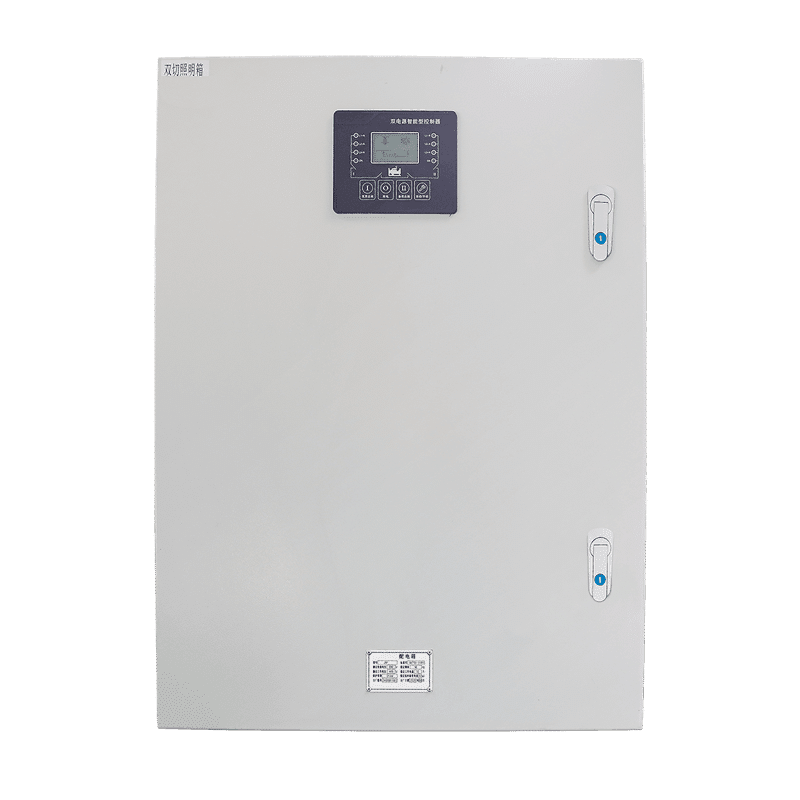
4. Is this a control cabinet with PLC, HMI and comms? Then the answer is both: a UPS sized for the control-power loads — typically a few hundred watts; the UPS sizing calculator does this arithmetic in one step — and SPDs at the cabinet’s power and signal entry, as covered next.
SPD and UPS coordination in industrial control cabinets
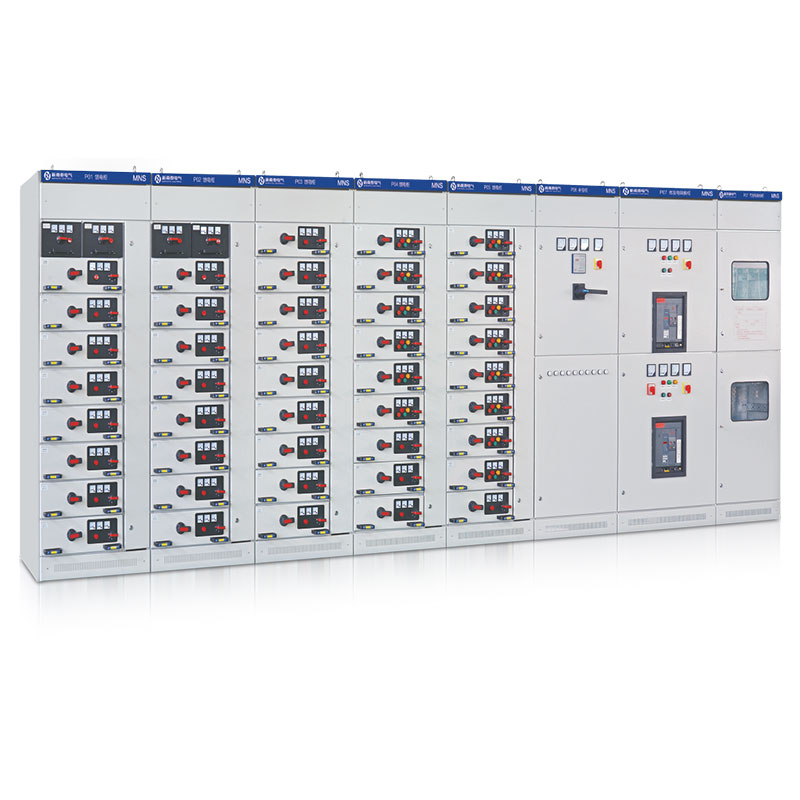
In cabinet practice the two devices are staged, not substituted. The recommended cascade: a Type 1 (Class I) SPD where the supply enters the building or motor control center, a Type 2 (Class II) SPD at the distribution panel feeding the cabinet, and Type 3 (Class III) protection at the point of use. The UPS sits after this cascade, its input rectifier and static switch already shielded, and its battery branch carries the control-power loads. Signal lines — fieldbus, antenna feeds, analog pairs — take their own signal SPDs, because a surge on a 4–20 mA pair does as much damage as one on the power feed. The industrial control panel surge protection guide covers the Type 1/2 split, the IEC 61643-11 class waveforms (10/350 μs versus 8/20 μs) and per-circuit SPD selection in detail.
Two coordination rules worth writing into specifications. First, keep the SPD upstream of the UPS, bonded with short, straight conductors — clamping performance degrades with every extra meter of lead length. Second, size the UPS for the control power only — PLC supply, HMI, network switch — not for the power circuit, which fails safe through PLC logic. When the cabinet also houses the batteries, treat the battery bay as a design zone of its own, with its own thermal and ventilation allowances.
Frequently asked questions
Do I need a surge protector if I have a UPS?
Yes, in nearly every industrial setting. UPS surge protection is real but modest — built-in MOVs sized for incidental transients, not for a nearby lightning strike or a major switching surge. The UPS rectifier, static switch and communication ports are semiconductor circuits; a panel-mounted SPD keeps the big energy events from ever reaching them.
Can a surge protector provide battery backup?
No. The phrase “surge protector battery backup” usually means someone actually needs a UPS. A surge protector contains no energy storage: when the incoming supply drops, the protected load drops with it, instantly. Backup power — even thirty seconds of it — requires a battery and an inverter, which is the definition of a UPS.
What is a surge suppressor?
A surge suppressor is the same device as a surge protector — the older, more technical term. It suppresses transients by clamping: a metal-oxide varistor or gas-discharge component conducts in nanoseconds, diverting surge current to ground and limiting the voltage across the protected equipment. How a surge suppressor works, in one sentence: it is a voltage-dependent shunt path that is invisible at normal voltage and conductive at surge voltage.
Power strip vs surge protector — what is the difference?
A power strip is a set of outlets on an extension cord; it adds outlets, not protection. A surge-protected power strip adds MOV clamping inside the strip. The two look identical on a shelf: check the label for a joule rating and a UL 1449 Type 3 listing. A strip without them passes surges through untouched.
Should I plug the UPS into a surge protector, or the other way around?
Follow the UPS manufacturer’s instructions; most converge on the same layout: the UPS plugs directly into a wall outlet protected by a panel SPD, and sensitive loads plug into the UPS. Chaining strips ahead of the UPS adds impedance it did not account for; putting a surge strip downstream clamps the very inverter output the UPS is regulating. Conditioning belongs upstream at the panel; energy storage belongs downstream at the load.
How do I size the UPS and its battery bank?
Convert the load list to VA (watts divided by power factor), apply a loading target of about 80% of the UPS rating, then compute the battery bank as ampere-hours = load watts × backup hours ÷ (battery voltage × inverter efficiency), plus headroom for battery aging. The UPS sizing calculator on this site walks through both numbers with a 25% battery margin built in.
Surges are a voltage problem, outages are an energy problem: a surge protector answers the first, a UPS the second, and a well-built control cabinet answers both — SPD cascade in front, UPS behind it. For the upstream supply, the transformer kVA calculator sizes the source and the voltage drop calculator checks the branch circuit feeding the cabinet.
 EN
EN