

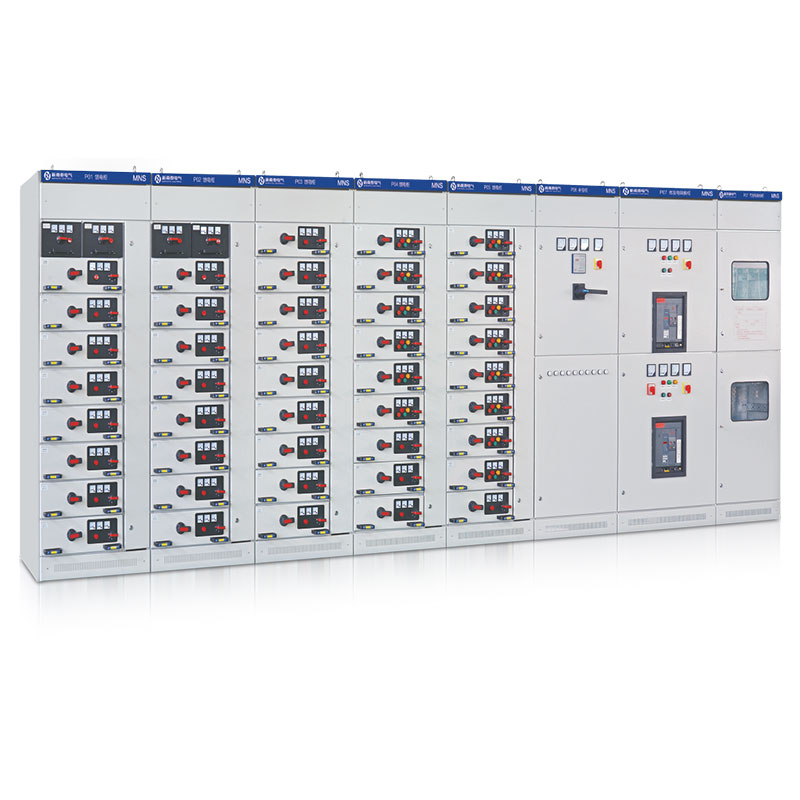


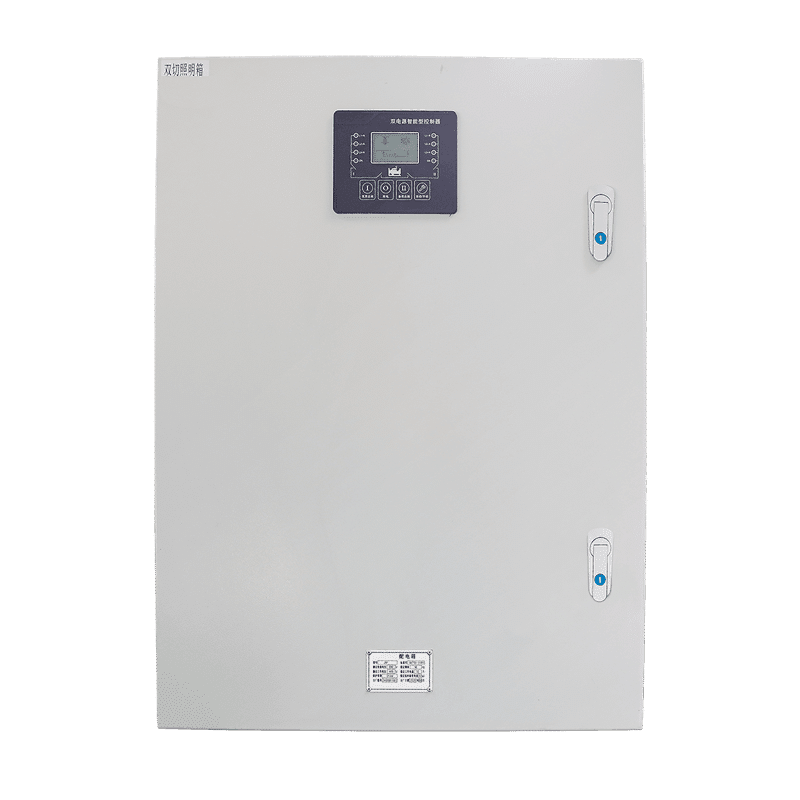


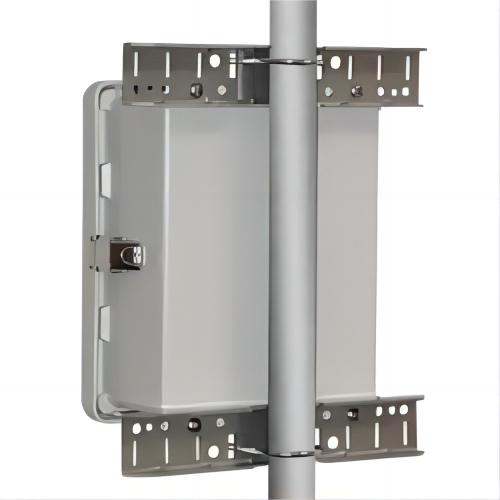


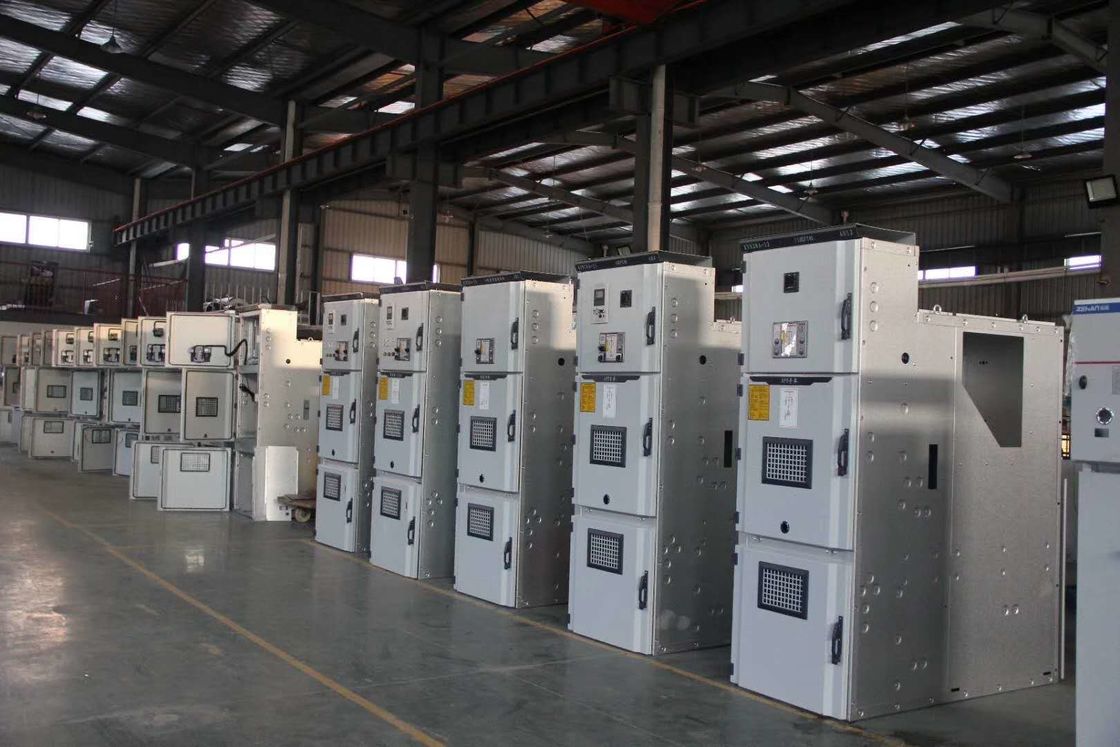
36 kV air-insulated switchgear is the upper band of indoor medium-voltage AIS practice: equipment rated for systems whose highest voltage is 40.5 kV (the 36 kV nominal class), insulated in air at atmospheric pressure inside metal-enclosed panels. It appears wherever power blocks grow beyond the 24 kV class — wind-farm collector systems, mining and heavy industry supply, railway and metro traction feeders, large cogeneration plants, and regional distribution in networks that standardized on 35/36 kV. Selecting it is an exercise in insulation discipline: clearances, creepage, altitude correction, and cable termination quality dominate the design, more than at 12 or 24 kV. Final ratings, code, safety, installation, and testing requirements must be confirmed by qualified engineering for the project.
Where 36 kV sits in the voltage ladder
IEC standard voltage series step through 12, 24, and 40.5 kV as equipment highest voltages, with 36 kV used as the nominal system voltage in many networks (and 35 kV in others using the same 40.5 kV equipment class). For 40.5 kV class equipment, IEC insulation tables assign lightning impulse withstand levels of 185 kV and short-duration power-frequency withstand of 85 kV as typical rated values. Every parameter in this band is more demanding than the class below: creepage distances for polluted environments, phase clearances, and insulation material quality all step up, and panel widths grow accordingly — 1,200 mm per bay is common for withdrawable breaker panels at this class, versus 600–800 mm at 12 kV.
Define the system boundary
Separate the power equipment, control cabinet, field devices, protection, networks, installer scope, and maintenance responsibility before selecting a configuration or preparing drawings. At 36 kV, two boundary items deserve early attention: who supplies the cable terminations (plug-in elastomeric or heat-shrink, and matched to the cable type), and who owns the protection settings for feeders that may run kilometers to wind turbines or mining loads.

Inputs to document
| Input | Why it matters at 36 kV |
|---|---|
| Electrical and operating data | Voltage, current, fault assumptions, operating modes, switching duty, feeder information, and protection interfaces — fault levels at 36 kV are high enough that interrupting ratings must be pinned to test evidence. |
| Cabinet and installation | Compartments, mounting, cable entry, clearances, heat, environment, access, labels, grounding, and service sequence — air insulation makes clearances the geometry of the whole room. |
| Control and documentation | I/O, terminals, symbols, wire numbers, alarms, revisions, drawings, BOM, settings, test points, and software or data handover. |
| Verification | Inspection points, test records, open decisions, supplier evidence, and acceptance responsibilities. |
What changes physically from 24 kV to the 36 kV class
| Parameter | 24 kV class (Um 24 kV) | 36 kV class (Um 40.5 kV) |
|---|---|---|
| Typical lightning impulse withstand | 125 kV | 185 kV |
| Typical power-frequency withstand | 50–65 kV | 85 kV |
| Typical withdrawable panel width | 800–1,000 mm | 1,200 mm class |
| Typical continuous current range | 630–2,500 A | 630–3,150 A (design-dependent) |
| Cable terminations | Plug-in elastomeric common | Plug-in or filled heat-shrink; joint quality more critical |
| Altitude correction | Relevant above 1,000 m | Same rule, larger absolute effect on already-tight clearances |
Insulation in air also means insulation in the environment: at 36 kV, pollution class and condensation management decide insulator creepage and whether porcelain, epoxy, or silicone rubber components are specified. Rooms without stable climate control need space heaters in every compartment as standard.
Applications that drive 36 kV AIS specifications
Wind and solar collector systems aggregate many megawatts at 33–36 kV before the main transformer, favoring withdrawable vacuum-breaker lineups with distance protection on long cable feeders. Mining supply uses the class for deep-shaft power and large drives, adding dust and vibration to the environmental brief. Industrial steam or gas plant auxiliaries and water utilities use it where the utility intake arrives at 35/36 kV and is distributed to several unit transformers — in those projects the switchgear typically sits next to the intake transformers; our pad mounted transformer page covers the MV/LV units such lineups feed.
Standards and certification for 36 kV air-insulated switchgear
IEC 62271-200 governs metal-enclosed switchgear across the whole 1–52 kV band, so a 40.5 kV class lineup is certified against the same framework as 12 kV equipment — but the rating points, insulation levels, and internal arc tests must be evidenced at the 40.5 kV values. IEC 62271-1 defines the preferred voltage and insulation series and altitude correction; IEC 62271-100 covers the vacuum or SF6 circuit-breakers within; IEC 62271-102 the disconnectors and earthing switches. In ANSI/IEEE markets the nearest families are the C37.20.2 metal-clad tradition up to the 38 kV class, with ratings per the ANSI C37 preferred series. Installation then follows the local code — working clearances and earthing per NEC contexts or IEC 61936 — and the specifier should confirm that the routine tests performed on every panel (power-frequency withstand, main circuit resistance, auxiliary function checks) are recorded per panel, not per type only.
Frequently asked questions
Why not just use 24 kV switchgear with margin for a 33/36 kV system?
Because insulation level is not a margin decision — a 24 kV class board is type-tested at its own withstand values and cannot be derated upward. The 40.5 kV class equipment exists precisely because the insulation, clearances, and breaker ratings must be tested at the higher level.
Does altitude matter for indoor 36 kV switchgear?
Yes. Above 1,000 m, air density reduces dielectric strength, and IEC 62271-1 defines correction factors applied to external insulation — at high-altitude mines and plateau wind farms this changes insulation levels and sometimes the panel selection.
What is the most common commissioning failure at this class?
Cable terminations. Poorly made joints that pass at lower classes fail partial discharge or withstand checks at 40.5 kV values — use trained jointers and plug-in terminations matched to the cable where possible.
Can 36 kV AIS be outdoor?
Yes, in outdoor enclosures or shelters with the corresponding climate class, though most 36 kV AIS is indoor; outdoor designs add condensation, pollution, and UV considerations to every compartment.
Is withdrawable construction worth it at 36 kV?
For feeders with meaningful switching duty or maintenance expectations, yes — it shortens breaker work to a truck change. For transformer feeders with fuse protection and rare switching, fixed interrupter panels save width and cost. A useful follow-up with your supplier: request the maintenance-time comparison for your actual feeder mix before deciding.
Procurement scenarios
For a wind collector project with 20-plus feeder positions, order the first two panels earliest with the full protection scheme installed — getting distance protection, interlocking, and SCADA mapping proven on those panels de-risks the balance of a staged delivery. For an IEC-market industrial intake upgrading from 24 to 36 kV, hold a room survey before ordering: panel widths, busbar routing, and cable basement depth at this class frequently force layout changes that are cheap on paper and expensive on site. For NEC-market export, settle the standards path and short-circuit ratings documentation at inquiry stage — IEEE-legacy or IEC-62271-based design with site-specific approval — because re-certification discovered late at 40.5 kV values cannot be absorbed in a normal 10–14 week switchgear lead time.
ElectricalCabinet.net supplies medium voltage switchgear up through the 40.5 kV class, alongside the dry type and oil-immersed transformers such lineups protect.
 EN
EN