







Three-phase transformers do not fail from load — they fail from heat, and unbalanced loads are a quiet heat source: one phase carrying disproportionately more current produces negative-sequence currents that circulate and heat windings beyond what the ammeter average suggests, while unbalanced single-phase loads push current into the neutral path in ways the connection design must tolerate. Planning for unbalance means gathering load data per phase, computing the unbalance, choosing the connection and kVA accordingly, and monitoring what actually flows after energization. This guide covers the effects, the arithmetic, the connection choices, and the monitoring inputs — supporting design and procurement discussions, with final rating, installation, code, safety, and testing requirements confirmed by qualified engineering.
What unbalance does inside the transformer
| Effect | Mechanism | Consequence |
|---|---|---|
| Winding overheating | Negative-sequence currents induce counter-rotating fields, adding losses in windings and core structure | Loss of insulation life on the most-loaded phases; effective capacity below nameplate |
| Neutral current | Single-phase loads on a four-wire system return imbalance through the neutral; zero-sequence components flow depending on connection | Neutral conductor and delta-winding circulating currents heat components sized for balanced duty |
| Voltage unbalance downstream | Unequal phase loading produces unequal regulation | Three-phase motors and drives on the load side run hotter; motor heating rises roughly with the square of voltage unbalance |
| Protection complexity | Unbalance currents interact with phase and negative-sequence protection | Nuisance trips if settings ignore real load profiles, or missed deterioration if protection ignores unbalance entirely |
Computing load unbalance before you order
With measured or forecast per-phase loads (kW or amperes per phase), compute the average, then the largest deviation from that average; unbalance is commonly expressed as that largest deviation divided by the average, times one hundred. A panel of 100/80/60 A averages 80 A with a 25 percent deviation — enough to matter for sizing and connection choice. Measurement beats forecast: where the loads exist already, log per-phase current over representative periods, including the worst seasonal profile, and design to the measured extremes. Where loads are only forecast, err toward the connection and margin choices below, then verify with post-installation monitoring.

Connection choices under unbalance
Dyn-connected distribution transformers (delta primary, wye secondary with brought-out neutral) are the standard answer for four-wire systems with single-phase loads: the delta primary circulates zero-sequence components locally, keeping them out of the supply, while the wye secondary serves line-to-neutral loads. Yyn connections without a delta or suitable core treatment tolerate far less neutral current and are poor choices for heavily unbalanced single-phase duty. Zigzag-connected units and grounding transformers solve neutral-availability problems rather than load unbalance. The essential procurement step: state the expected per-phase loads and neutral current in the inquiry, because connection suitability under unbalance is a design conversation, not a catalog filter.
Define the system boundary
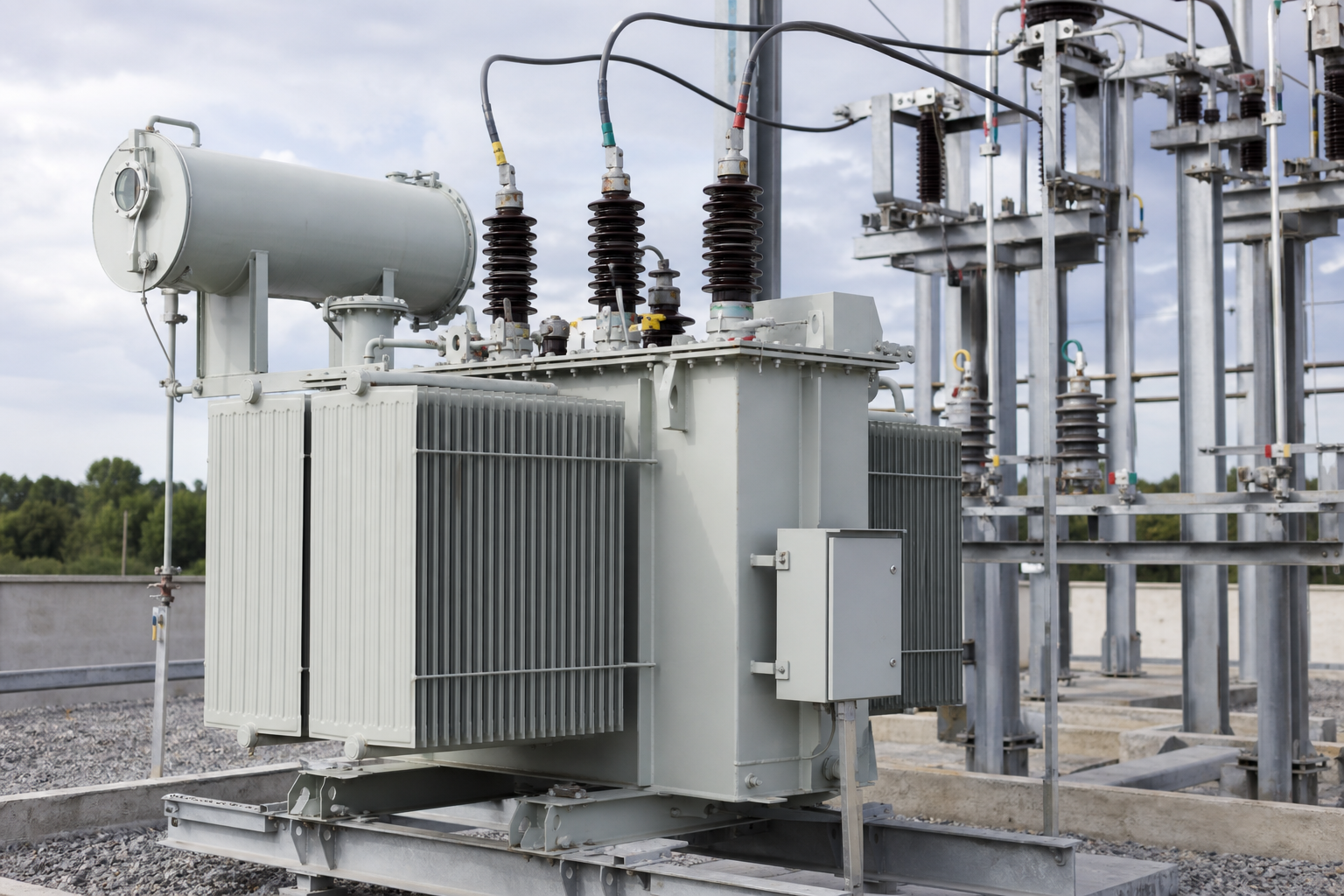
Separate the switching, transformer, stabilizer, enclosure, connected equipment, site conditions, and responsible engineering disciplines before selecting a configuration. For unbalance work the boundary question is where correction happens: redistributing circuits at the panel, resizing the transformer, or accepting unbalance with monitoring — each belongs to a different owner in the project.
Inputs to document
| Input | Why it matters |
|---|---|
| Equipment and interfaces | Sets layout, entries, clearances, power paths, signals, and service access. |
| Environment and duty | Guides material, insulation, heat, corrosion, moisture, and exposure review — unbalance adds to thermal duty, compounding with ambient. |
| Installation and maintenance | Controls mounting, isolation, access, labels, replacement, and service sequence. |
| Validation and records | Defines drawings, inspection, testing, interlocks, and supplier documentation. |
Do not transfer a competitor rating, current, switching, protection, or performance claim to the complete project without project-specific evidence.
Monitoring and protection inputs
Post-energization, monitor per-phase currents and neutral current (where applicable), and consider negative-sequence (device 46 function) protection where motors or the transformer itself warrant it. Temperature monitoring on the transformer — winding temperature indicators on oil units, thermal sensors in dry-type construction — converts hidden unbalance heating into actionable indication. Trend the data: rising unbalance on a stable installation is load drift, and drift deserves redistribution before it deserves equipment.
Standards and rating context
The transformer itself is designed and tested under the IEC 60076 series or the IEEE C57 family (C57.12.00/12.90 for oil units and their dry-type counterparts), which define rating bases assuming balanced conditions unless otherwise agreed — precisely why stated unbalance belongs in the specification. Installation follows the local code: IEC 60364 contexts govern neutral arrangements in IEC markets; NEC practice in North America addresses neutral conductors and transformer secondary rules. Where the installation serves harmonic-rich loads, note that triplen harmonics and zero-sequence currents compound the neutral duty and belong in the same sizing conversation — a k-factor or derating discussion with the manufacturer, supported by load data.
Frequently asked questions
How much unbalance is acceptable?
There is no single universal figure — the engineering approach is to assess unbalance against its effects: thermal margin in the transformer, voltage unbalance seen by downstream motors (where even a few percent matters), and neutral current against its rating. State the measured profile to the manufacturer and let the design decision follow the data.
Does unbalance derate the transformer kVA?
Effectively yes: the most-loaded phase limits usable capacity, and negative-sequence heating adds losses on top. Sizing to per-phase data with margin, rather than to the three-phase total, is the practical answer.
Can we rebalance an existing installation?
Often, and it is the cheapest fix: move single-phase circuits between phases at distribution panels until measured per-phase currents converge, then re-check over a full operating cycle.
What about voltage unbalance rather than load unbalance?
They are related but distinct — load unbalance inside your installation causes voltage unbalance downstream of it; supply-side voltage unbalance arrives through the utility. Measure both sides of the transformer to assign cause before choosing a fix.
Which monitoring points justify permanent instruments?
Installations with drifting single-phase loads, shared-neutral configurations, or sensitive motor loads. The follow-up question worth answering in the design review: who reads the trend data on a schedule, because unbalance damage is cumulative — monitoring only pays when someone watches it.
Do dry-type and oil-type units differ in unbalance tolerance?
The physics is the same; the differences are thermal margin and how heating becomes visible (winding sensors versus temperature indicators). Both need the same load data in the specification.
Procurement scenarios
For a plant buying a distribution transformer against a measured unbalanced profile, order with per-phase load data in the specification and request the manufacturer’s connection and margin recommendation in writing — the exchange costs days and prevents the most expensive mistake in this product class, a correctly-rated transformer thermally mismatched to its real load. For installations expecting load growth on one phase (EV charging, single-process expansions), buy the delta-wye connection with neutral sized for the future profile now; neutral upgrades later are rebuilds. For export projects, confirm the neutral arrangement expectations of the destination market’s installation code at order — four-wire secondary conventions differ between NEC and IEC traditions, and the transformer connection must match the market it lands in.
For units sized with this method, our distribution transformer page lists the formats, voltage ratios, and loss options we build to order — and the transformer kVA calculator gives the first-pass figure this analysis starts from.
 EN
EN