

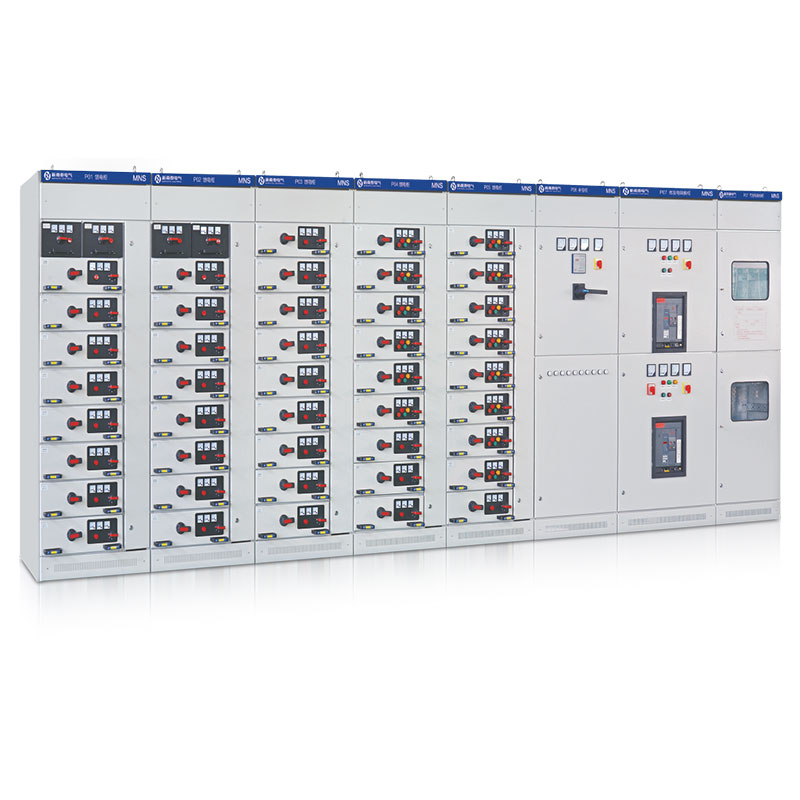


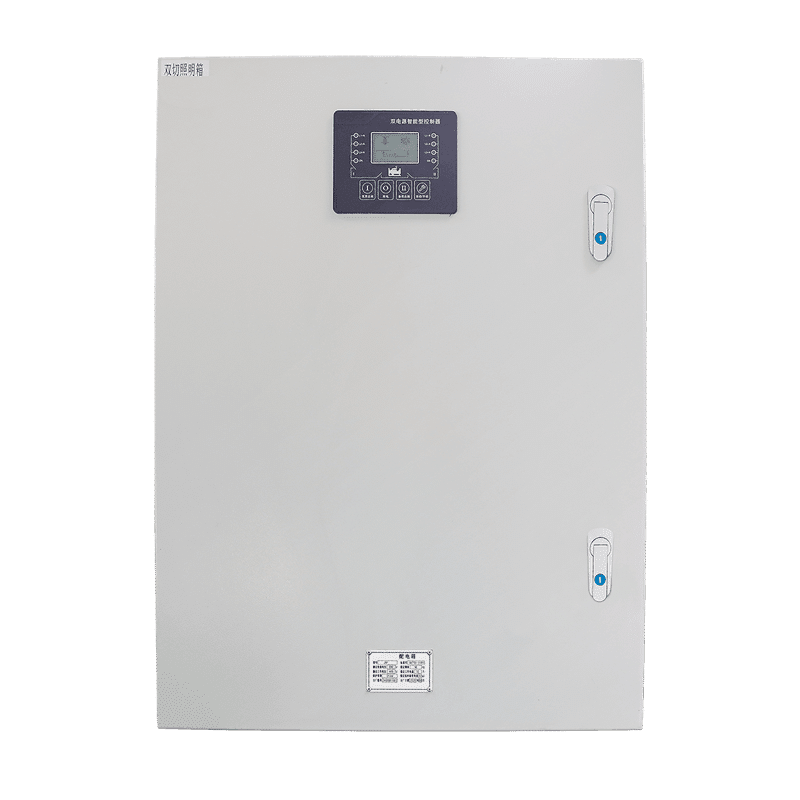




In North American industrial vocabulary, a control panel builder is a specific kind of company: a shop that takes your schematics — or engineers them with you — and physically builds the panel: laying out the backplane, mounting DIN rail and wire duct, landing every terminal, and putting the assembly through functional test before it ships. The build quality gap between a disciplined panel shop and a general wiring contractor is invisible in a photo and obvious within the first year of service: loose joints, misrouted signal wiring, unlabeled terminals, and VFDs that reset on every across-the-line motor start.
We build control panels at factory scale. This guide walks through what professional panel builders actually do differently, and how to qualify one before committing a build.
The anatomy of a professionally built panel
These are the physical, inspectable standards that separate panel-building as a discipline from wiring as a trade:
- Layout discipline. Power section (incoming, breakers, contactors, VFDs) physically segregated from the control section (PLC, relays, 24 V DC), with spacing per UL 508A or IEC 61439-2 creepage and clearance requirements. VFDs located in the lower half or in dedicated cooling zones so heat rises do not wash the electronics.
- Wire management. Wire duct fill kept below roughly 70% for future service access; wires bent into the duct with consistent radius; no conductors lying loose across components. Ferrules on every conductor end, and dual-marking (wire number plus terminal number) on multi-panel builds.
- Color and separation conventions. Typically: black for AC power, red for AC control, blue for DC control, white/blue-stripe for grounded DC, green/yellow reserved exclusively for the equipment grounding/bonding conductors. Power and analog signal wiring cross at right angles or run in separate ducts — VFD output cables treated with particular care for EMC.
- Bonding and grounding. A continuous, documented bonding network: door bonding straps (not paint-to-metal screw threads carrying fault current), backplane bonding, and a dedicated ground bus. On EMC-critical builds, EMC-compliant gland plates with 360° shield termination rather than pigtails.
- Torque discipline. Breaker, busbar, and terminal torque values applied with calibrated drivers and marked. Joint failures under fault conditions trace back to this detail more than any other.
- Labeling system. Every component matching the schematic designator, every terminal numbered, enclosure legend reproducing the door layout. The test of labeling: can a technician five years from now troubleshoot without calling you?
Qualifying a panel builder: the five checks
1. Certification. For US-bound work, a current UL 508A panel shop certification is the entry ticket — it subjects the shop to UL follow-up inspections and constrains construction to the UL standard. (For hazloc panels, the relevant marks are UL 698A or UL 1203 / ATEX-IECEx in Europe — a different and smaller pool of builders.) For IEC markets, ask how IEC 61439-2 design verification is handled for the assemblies they build.
2. The sample-panel review. Ask to see a recently shipped panel of comparable complexity — in person, or a live video with camera close-ups. Check the six anatomy items above. Twenty minutes of close-up video tells you more than a website ever will.
3. The test protocol. Professional builders test in a defined sequence: point-to-point continuity against drawings, insulation resistance (500 V DC megger on control circuits, recorded), control-power functional test with forced inputs, and — for VFD and motor panels — a rotation and parameter verification with the actual drive programmed to your application data. Ask who signs the test record and what you receive: a real, dated, serialized test sheet — or a rubber stamp.
4. Engineering capability. Can the shop generate or mark up schematics in EPLAN or AutoCAD Electrical, size components to your motor list, and resolve SCCR requirements per UL 508A Supplement SB? Or do they build strictly to whatever print arrives? Both models are legitimate, but the price and the risk profile differ, and misaligned expectations cause rework disputes.
5. Program handling. If the build includes PLC programming, agree explicitly on: who owns the source code, what gets delivered (commented project file, not just the compiled upload), and how parameters are backed up and archived. The number of OEMs that discover — years later — that nobody holds the program for panels still running in the field is remarkable.
The five qualification checks at a glance
| Qualification check | How to run it | Pass signal |
|---|---|---|
| Certification | UL Product iQ lookup with entity match | Active file; panel category matches your order |
| Sample-panel review | Twenty minutes of live-video close-ups | All six anatomy standards visible |
| Test protocol | Ask for a real serialized test sheet | Dated, signed, with measured values |
| Engineering capability | Ask the SCCR question (Supplement SB) | Method explained, not deflected |
| Program handling | Source-code ownership terms in writing | Commented project files delivered |
Commercial structure that works
- Scope definition: an exact component list with manufacturer part numbers, or a “functionally equivalent” clause with named acceptable brands. The latter is faster, the former is safer.
- Lead time: simple panels 2–3 weeks; engineered panels 4–8 weeks from drawing approval. Panel shops are scheduled by engineering hours and bench time, not floor space, so a shop that is “always available” may be telling you something.
- Staged payments tied to drawing approval, test completion, and shipment protect both parties on custom builds.
- For OEM volumes: negotiate the repeat-order pathway up front — archived drawings, retained program files, frozen BOM with controlled substitution rules. The economics of panel building reward repetition; an OEM that lets its builder re-engineer every order forfeits that.
Constraints define the shop you need. If your first order is only 50 panels for a US-market machine line working to a fixed budget, the qualification list shortens fast: a current UL 508A panel shop certification is non-negotiable (inspectors and insurers treat uncertified imports as field-engineering problems), and the budget is best spent on the layers a certificate does not cover — wiring workmanship on the sample panel, a real test protocol, and documentation you can reorder from in five years. At 50 units the NRE amortizes acceptably but not invisibly, so a builder who separates one-time engineering from build cost in the quote is doing you the courtesy of showing where the budget actually goes; one who hides it inside a padded unit price is not.
FAQ
What does a UL 508A panel shop certification actually cover?
It authorizes the shop to build and apply the UL mark to industrial control panels under UL’s follow-up services, with construction per the UL 508A standard. Verify the certificate is current and the panel category matches your order through UL Product iQ.
Why did my last panel builder quote double the catalog enclosure price?
Fabricated modifications — cutouts, gland plates, subpanels, custom paint — are machining operations, and the enclosure is often the most labor-intensive part of a small build. Compare like-for-like on the fabrication drawing, not on the catalog shell price.
Which fabrication costs are avoidable, and which are the price of correctness?
Avoidable: decorative finishes, oversize enclosures bought “for safety,” and duplicate cutouts for unspecified future hardware. Not avoidable: pre-machined gland plates to your schedule, correct subpanel sizing for component mass, and the door hardware your environment actually demands.
How does a 50-unit first order change the quote structure versus a one-off?
Fabrication setups, drawing packages, and the first-article test plan spread across the batch, so the per-unit premium falls sharply — provided the drawings are frozen after approval. Ask for the NRE line and the repeat-unit price separately; that transparency is itself a builder-quality signal.
Should VFD panels include bypass?
For critical loads where the process must run even with a failed drive, yes — a contactor-based bypass adds cost and interlock complexity but preserves operation. For non-critical loads it is dead capital. Decide per motor, not per panel.
What to send when you request a quote
Motor and load schedule, control narrative (or existing schematics), enclosure environment, applicable standard and market, SCCR/available fault current, terminal and gland requirements, and target date. Builders who ask follow-up engineering questions are doing free design review — that behavior is the single best predictor of a good build.
Related reading
- control panel wiring planning — the wiring discipline the sample-panel review inspects.
- electrical control panel guide — panel fundamentals for buyers new to the build process.
- custom electrical cabinet builds — our build service for engineered and OEM repeat panels.
Engineering note: ElectricalCabinet.net builds industrial control panels for OEM and project customers. This article is an evaluation framework from the manufacturing side; final designs, ratings, and code compliance for any project require qualified engineering review.
 EN
EN