

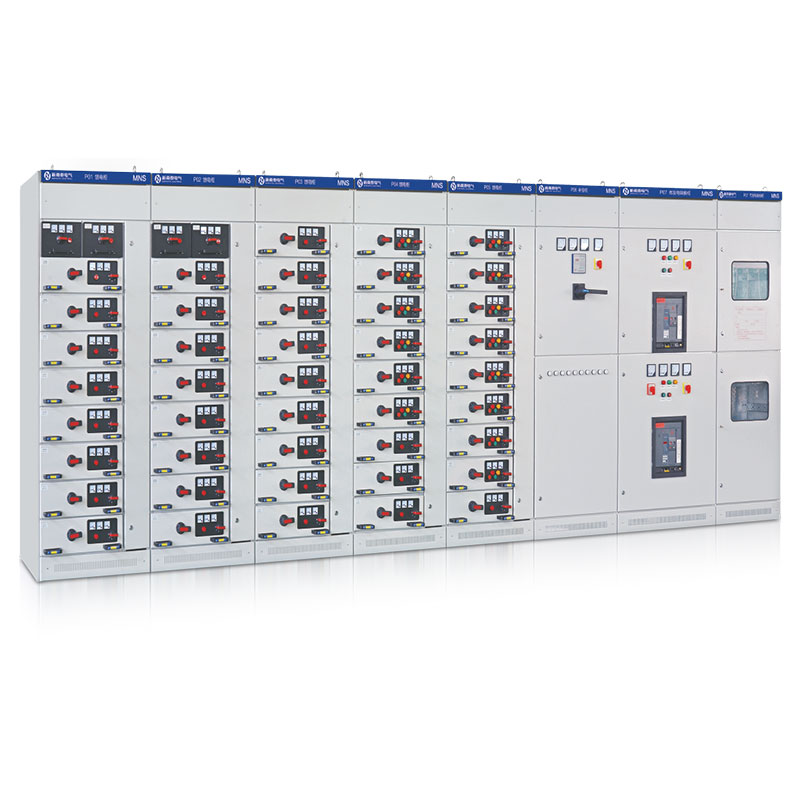


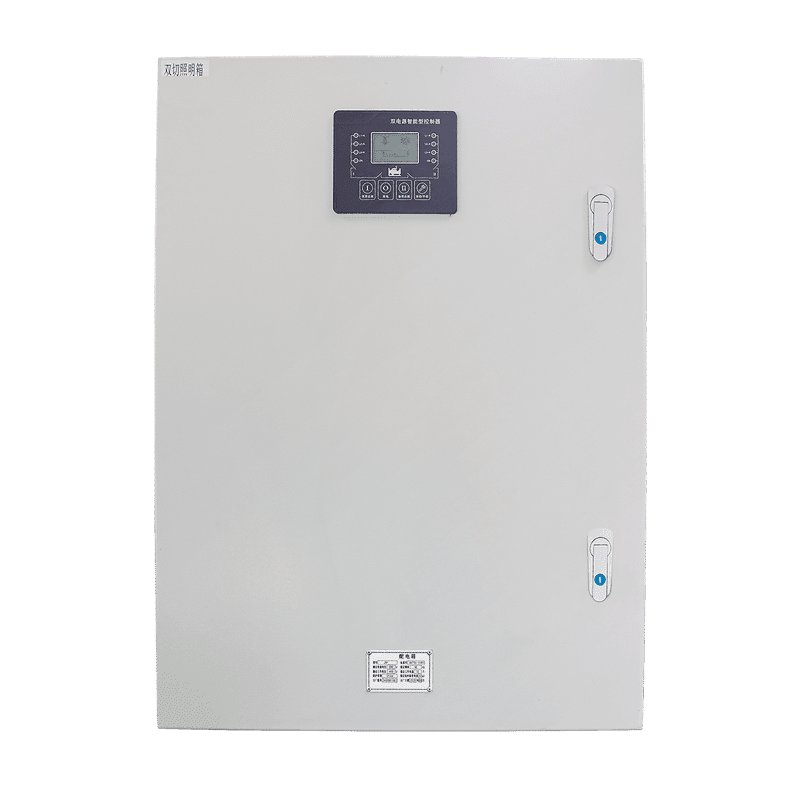


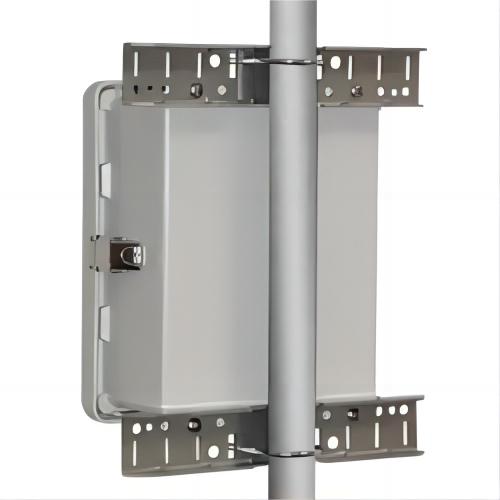


In the complicated electrical systems, the safe and efficient management of electrical power goes without saying. Be it residential, commercial, or even industrial applications, ensure protection against faults of your electrical circuits and permit isolation for safe maintenance. Basically, two very important components used in this process are circuit breakers and disconnect switches.
Any electrical maintenance, installation, or design professional must know these differences. First glance may indicate that these devices are similar, but the function, operational mechanism, and application differ. Circuit breakers and disconnects have different tasks related to power management and protection with their advantages and limitations.
These breakers essentially detect, then interrupt electric faults, which include overload and short circuits, thus avoiding damage to the circuits and the devices connected to the supply. Switching and protection functions are housed in one device, which quickly and automatically reacts on electrical faults. Their ability to reset after tripping makes them a versatile choice for many applications.
On the other hand, disconnect switches are basically manual devices for isolating electrical circuits from their power supplies. They provide a very vital role in safely carrying out maintenance, repairs, or even inspections by actually disconnecting a section from a circuit from its power source. There are many styles of disconnect switches; some have fuses to add the element of protection, but they do not automatically detect and/or interrupt faults.
Perhaps the more important consideration in choosing a breaker versus a disconnect is understanding the specific role each plays in your overall electrical system. This is one of the decisions that has direct implications for both safety and efficiency in your power distribution system. The following blog explains briefly the differences between breakers and disconnect switches, how they operate, and the applications. These components are very clear to understand, thus allowing you to make informed decisions that maintain and improve electrical installation reliability and safety.
Whether looking to upgrade the electrical panel in your home, overseeing complex electrical systems as a facilities manager, or being an electrician yourself working with the design and maintenance of the system, you will understand these critical components.

What is a Disconnect Switch?
Basically, a disconnect switch is an electric device allowing for the isolation of one section of an electrical circuit from its supply. Its function chiefly is to provide manual isolation of power during maintenance, inspection, or repair. The disconnect switches are binary devices; the two states are open and closed. They are designed to handle load currents and can be used to isolate individual circuits or sections of an electrical system.
A disconnect switch is also called an electrical disconnect, a disconnector, or a disconnector switch in IEC markets, and simply an isolator on many sites — which answers the question of what isolator means: the device’s whole job is isolating a circuit from its supply so it is safe to work on. IEC 60947-3 separates the categories precisely: a plain disconnector may only be operated off-load, while a switch disconnector (switch-disconnectors across a full lineup) is rated to break load current within its utilization category. North American vocabulary reaches for the same hardware under the names safety switch or service disconnect, and an older umbrella phrase, circuit interrupter switch, covers any device intended to open a circuit. Whatever the label — when a buyer asks what is an electrical disconnect, the answer is a ratings question — a disconnect switch electrical specification states rated voltage and current, fused or unfused, and whether it may be opened under load.
Disconnect Switch Types
The main types of disconnect switches differ by whether overcurrent protection is built in:
- Fused disconnect switches: This type incorporates a fuse inside the switch enclosure. The fuse offers overcurrent protection by opening the circuit upon detecting excess current. The fuse blows in case of excess current and will need replacement to reinstate the power.
- Non-fusible disconnect switches: These are switches without a fuse and their main usage is manual disconnection. On their own, they do not offer protection against overcurrents.
What is a Circuit Breaker?
Basically, the circuit breaker is a device that safeguards electrical circuits from damages caused due to overloading and short circuits. Unlike the switch, inherently a breaker has the feature by which it opens its contacts on its own; hence, continuous current flow is prohibited in case of overload or short circuit. A circuit breaker is simply a device that combines the functions of a switch and an overcurrent disconnect in one enclosure.
Circuit Breaker Types
- MCBs: These are used in low voltage circuits and form an integral part of the circuit protection system by automatically opening in case of overload or short circuits. This type of breaker is used in residential and commercial buildings to a much greater extent.
- MCCBs: MCCBs used in medium voltage circuits offer protection to the larger circuits and larger currents than MCBs.
- ACBs: Air Circuit Breakers—operate at high voltage conditions. Air is used as the medium that extinguishes the electrical arc occurring when a circuit is interrupted.
- VCBs: Vacuum Circuit Breakers. The arc is extinguished in a vacuum. VCB applications are deployed in high-voltage systems.
Key Differences Between Circuit Breakers and Disconnect Switches
Operation
- Breaker: The device automatically identifies a fault, be it overload or short-circuit, and breaks the circuit. It resets itself and resume power supply when the fault is removed, all without replacing any component.
- Disconnect Switch: A manually operated switch that isolates a portion of the circuit for servicing or repair. It does not detect faults automatically and will not open the circuit. If it is fitted with fuse, known as fused disconnect, it will still open the circuit in case of fault, but it will require replacement of fuse.
Arc Extinguishing
- Breaker: Fitted with an arc extinguishing mechanism that allows handling electrical arcs that develop during fault conditions. This enables it to safely interrupt high fault currents.
- Disconnect Switch: Does not have an arc extinguishing device; hence, it is not intended to break high current circuits under load. It is used mainly to isolate circuits at a time when no current flows in them.
Operation and control
- Breaker: Manually or automatically operated. It provides overcurrent protection, and it can be reset after tripping.
- Disconnect Switch: Manually operated; indication normally included that shows whether it is open or closed. Not self-protecting; use with caution to avoid operating under load conditions.
Maintenance and Replacement
- Breaker: It can be reset and is used for many other times again; hence it does not need component replacement after every use, hence making it more convenient when one needs to use frequently.
- Disconnect Switch: The fuse has to be replaced every time in fused disconnect switches. In the non-fusible disconnect switch, it does not require component replacement but is limited only to manual disconnection.
Which One is Best for Your Application?
Whether the question is framed as circuit breaker vs switch, breaker vs disconnect, or simply which device belongs at which point in the system, the choice would have to be based on the following factors:
- Type of protection required: The breakers are used where there is a need to provide automatic protection against overloads and short circuits, as they can give protection against all kinds of contingencies and are suitable for most applications.
- Frequency of Operation: Where manual operation and maintenance are frequent, the disconnect offer a reliable solution. However, in systems where the current loads may be of high magnitude or when automatic fault interruption is necessary, breakers are resorted to.
- Cost and Maintenance: While breakers are more expensive and costlier to install than the disconnect switches, they can be more economic in the long term as they are resettable. Fused disconnect switches may have additional costs associated with fuse replacement.

Frequently Asked Questions about Circuit Breaker vs. Disconnect Switch
Can a breaker replace a disconnect switch?
While a breaker has a similar function to a disconnect, it is not applied as an equivalent. Any added measure, such as installed breakers, is an automatic protection, assures a continuity of operation, and possesses a continuous operation rating. Disconnect switches are normally done for manual isolation and do not include an automatic protection.
Is there a necessity for the chief switch to be a circuit breaker?
A main switch need not be a breaker. A main switch only needs to carry the maximum load of the circuit without showing any failure. But having a circuit breaker as a main switch desirable to provide protection in case of failure.
What is the difference between a safety switch and a breaker?
A safety switch protects personnel from electrical hazards, while the breaker protects the wiring and electrical system from damage due to overloads or short circuits.
What is the difference between a fusible switch and a non-fusible switch?
A fusible switch has a fuse incorporated into the switch assembly and provides overcurrent protection. A non-fusible switch does not have overcurrent protection and has no fuse incorporated in the switch assembly.
2025–2026 Update: Standards, Safety Practice, and Selection
Since this article was published, three practical changes have affected how breakers and disconnect switches are specified in industrial and commercial projects: clearer application of IEC and UL standards in procurement documents, tighter lockout/tagout and arc-flash practice, and the spread of electrically operated and monitored switching devices.
Standards. Under the IEC 60947 low-voltage switchgear and controlgear series, circuit breakers are covered by IEC 60947-2, while switches, disconnectors, switch-disconnectors, and fuse-combination units are covered by IEC 60947-3 — a useful line to cite when a specification must state exactly which device category is being purchased. In North American practice, molded-case circuit breakers fall under UL 489, and fused or unfused disconnect switches under UL 98 (600 V and below). At medium voltage, both device families sit inside the IEC 62271 series. Matching the device to the standard named in the project documents prevents approval delays and mismatched inspection expectations.
Safety practice. Disconnect switches remain the anchor of lockout/tagout (LOTO) procedures: a manually operated, padlockable, visibly open device is what maintenance programs aligned with OSHA 29 CFR 1910.147 verify before work begins on a conductor. On the breaker side, many 2024–2026 panel builds add arc-flash mitigation features — maintenance setting selectors on electronic trip units, zone-selective interlocking between breakers, and remote racking or electrically operated mechanisms — so that routine switching happens outside the arc-flash boundary instead of in front of energized equipment.
Selection practice. Electronic trip units with adjustable long-time, short-time, and instantaneous settings, plus communication options (Modbus at LV, IEC 61850 gateways at MV), are now standard on larger breaker frames, which improves coordination studies and selective tripping. For direct-current loads such as battery systems, solar DC strings, and EV charging, dedicated DC-rated breakers must be selected: AC interruption ratings do not transfer to DC duty, because a DC arc does not cross a natural current zero and must be forced to extinction by the arc chute design. Disconnect switches for the same circuits must likewise carry a DC rating if the load is ever broken.
Which standards apply to circuit breakers and disconnect switches?
Low voltage: IEC 60947-2 (circuit breakers) and IEC 60947-3 (switches, disconnectors, switch-disconnectors, fuse-combination units) in IEC markets; UL 489 (breakers) and UL 98 (disconnect switches) in North America. Medium voltage falls under the IEC 62271 series. The device, its certification, and the project specification should name the same standard family.
Can a disconnect switch be opened under load?
Only if the device is rated as a switch-disconnector or load-break switch for that duty, and only within the utilization category stated on the nameplate. A plain isolator or off-load disconnector must be operated with the circuit de-energized; opening it under load can draw an sustained arc that the switch has no means to extinguish. When in doubt, break the load with the breaker first, then open the disconnect for visible isolation.
Do disconnect switches need padlocking provisions?
Yes when they serve as maintenance isolation points. Lockout/tagout rules expect the isolating device to accept personal padlocks in the open position and, ideally, to show a visible contact gap or a reliable open indication. Most industrial disconnectors ship with provisions for up to several padlocks on the operating handle; verify the count against crew size in your LOTO procedure.
Which device is more economical over the service life?
Breakers cost more to buy but reset after every operation, so repeated fault clearing or frequent switching favors them. Fused disconnects cost less initially but consume fuses after every fault, and matching spare fuse sets must be stocked. For feeders that switch rarely and fault rarely, the fused or plain disconnect remains the economical isolation device paired with upstream breaker protection.
What does a disconnect switch do, and what is its purpose?
A disconnect switch is used to open a visible, lockable gap between a circuit and its supply so that maintenance can be done safely: it carries load current when closed, does not clear faults by itself, and indicates — or physically reveals — whether the circuit is isolated. Its purpose is personnel safety during service, not protection; fault clearing belongs to the breaker or fuse upstream.
Safety switch vs disconnect: are they the same device?
In North American practice, largely yes: a safety switch is the UL 98-listed, externally operated disconnect switch (fusible or non-fusible) mounted at the machine or feeder, and the two names are used almost interchangeably. In some markets “safety switch” also refers to residual-current devices protecting people, so the standard named on the nameplate settles the question, not the label.
Should the service disconnect breaker be on or off during service?
Off — open, locked, and tagged. The service disconnect must be opened, padlocked in the off position, tagged with the worker’s identity, and the absence of voltage verified with a tested meter before anyone touches a conductor. Where the disconnect is a breaker rather than a visible-blade switch, lockout/tagout practice calls for added assurance, such as drawout racking or documented contact-open verification.
Circuit Breaker vs Disconnect Switch: Selection Table (2026)
| Dimension | Circuit Breaker | Disconnect Switch |
|---|---|---|
| Primary function | Automatic fault protection plus switching | Manual isolation for maintenance and visible open gap |
| Fault interruption | Interrupts overload and short-circuit currents automatically | None by itself; fused versions interrupt via fuse melting |
| Arc extinction | Arc chutes, vacuum, air, or gas blast depending on class | No arc chute; off-load operation unless rated as switch-disconnector |
| Operation | Manual and automatic (trip on fault), many with electrical operation | Manual handle, often padlockable for LOTO |
| After a fault | Reset and reclose; no consumable part | Fused type needs fuse replacement; non-fusible is unaffected |
| Governing standards | IEC 60947-2 / UL 489 (LV); IEC 62271 (MV) | IEC 60947-3 / UL 98 (LV); IEC 62271 (MV) |
| Typical position in system | Incoming, feeder, and motor protection | Local isolation ahead of motors, drives, and downstream equipment |
| Life-cycle cost character | Higher purchase price, low cost per operation | Lower purchase price; fused types carry fuse stocking and replacement costs |
Use the table as a first filter; the final choice must be checked against the single-line diagram, the coordination study, and the nameplate ratings of the actual devices offered.
Conclusion
These are two of the most important devices used in electrical systems: breakers and disconnect, both with their function contributing to safety and reliability. Knowing their difference will help in choosing which to use for your application. While breakers provide automatic protection with convenience, disconnects are manual for isolation during maintenance. Knowing the particular needs of your electrical system and taking advice from knowledgeable professionals can help in picking the proper component that ensures protection for your equipment while avoiding an unwarranted power outage.
Know more on how to choose the right electrical component for your requirement or quality switchgear solutions you can visit us. With the experience of years in excellence while trading in quality electrical products and services, we can be the best partner in advising and maintaining a dependable power distribution system.
 EN