

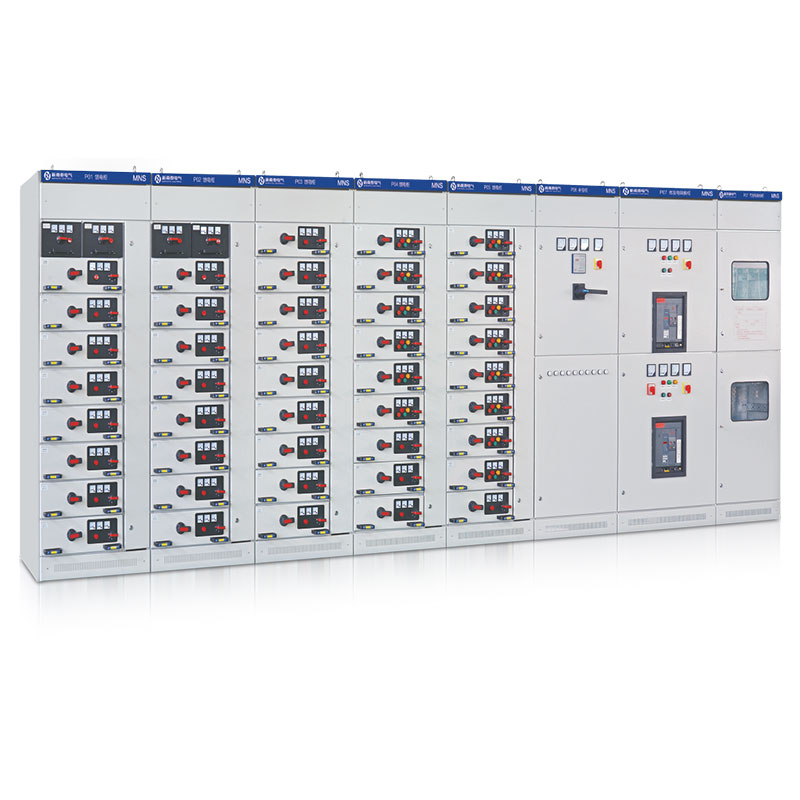


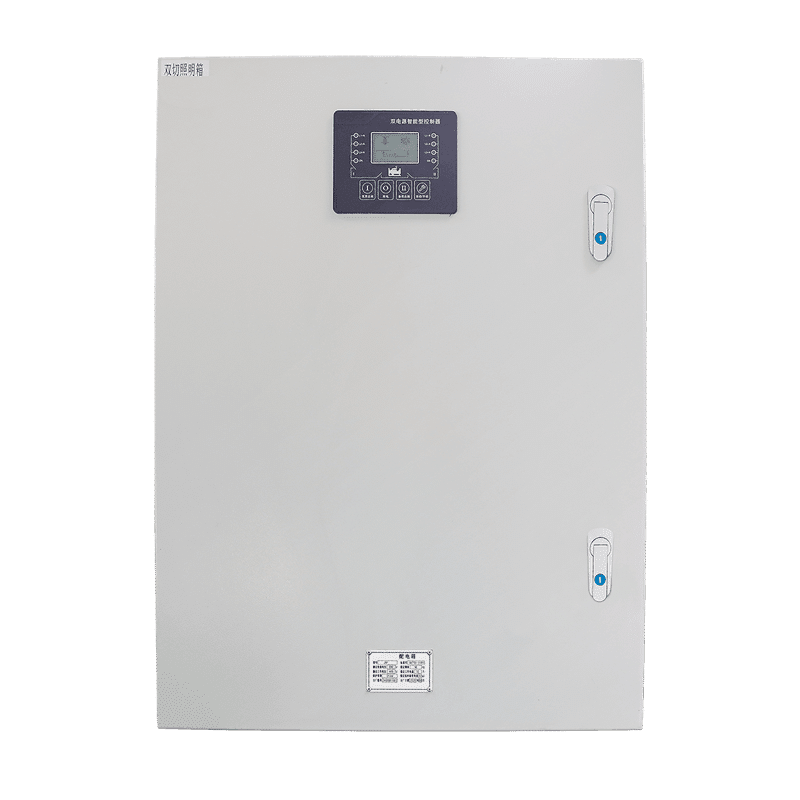


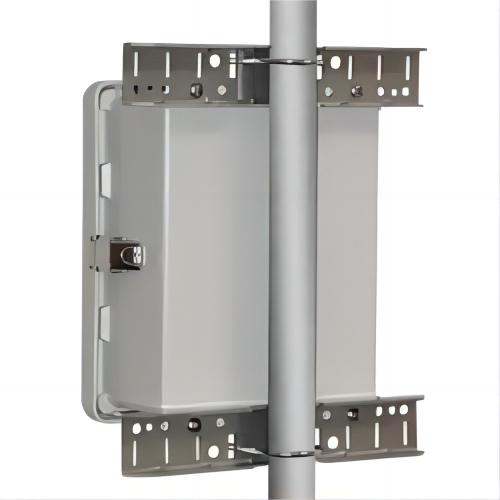


GGD Low Voltage Fixed Switch Cabinet
GGD type low-voltage fixed switchgear can be widely used in AC 50Hz rated voltage 400V power distribution systems of power plants, substations, factories and mining enterprises, etc., as the power supply for power, lighting and distribution equipment. For conversion, distribution and control purposes.
GGD is the fixed-type low voltage distribution cabinet of the Chinese national standard family — feeders, busbars, and protection devices installed in fixed compartments rather than withdrawable drawers. That construction makes it the economical default for power plants, substations, factories, and mining operations where a section can be taken offline for maintenance, and GGD line-ups are routinely completed with a GGJ compensation cabinet at the end of the row.
We assemble GGD cabinets to your single-line diagram, matching busbar rating, feeder count, and device brands to the project and your spares policy. More than 4,000 industrial projects have passed through our fabrication bays since 2010, and with CNC punching, bending, and welding in-house, frame geometry and cutouts stay consistent from the first cabinet in a row to the last.
Feature of GGD Low Voltage Fixed Switch Cabinet
The cabinet frame is partially welded and made of 8MF cold-formed steel. The cabinet features 20mm module mounting holes and has a high universality coefficient. The 1000 and 1200 wide cabinets feature an asymmetric double-door construction, whilst the 600 and 800-wide cabinets have a whole-door structure. The cabinet's rear has symmetrical twin doors.
The cabinet door's pivot-type moveable hinge is attached to the frame, making it simple to install and remove. Rubber plastic strips inserted in the door's folded edges protect the switch cabinet by preventing direct collisions.
The primary busbar is located in the cabinet's upper back. It is constructed of an AMJ1 type busbar clamp cast using high-strength unsaturated resin DMC and SMC materials, which have excellent mechanical and insulating properties.
Cable entrance techniques offer upper, lower, and rear options to accommodate diverse project requirements. Holes can also be drilled based on user requirements.
The cabinet door has a pivot-type hinge that connects to the frame for easy installation and disassembly. The folded sides of the door are infused with rubber plastic strips to avoid direct contact between the door and the cabinet, thereby increasing the switch cabinet's protection level.
The cabinet's heat dissipation slots at the upper and lower ends provide a natural air channel from bottom to top, addressing the heat dissipation issue in switch cabinets.
The instrument door with electrical components and cabinet installation elements create a grounding protection circuit with the cabinet frame, ensuring continuity.
The primary busbar is located in the cabinet's upper back. It is constructed of an AMJ1 type busbar clamp cast using high-strength unsaturated resin DMC and SMC materials, which have excellent mechanical and insulating properties. The cabinet's top cover may be removed to allow for on-site installation and modification of the main busbar.
The cabinet body is electrostatic powder spray-coated for high adherence. The installation elements within the cabinet are completely galvanised and passivated, enhancing the "three-proof" performance.
Cable entrance techniques offer upper, lower, and rear options to accommodate diverse project requirements. Holes can also be drilled based on user requirements.
Technical Parameters
| Model | Rated voltage (V) | Rated current (A) | Rated short circuit breaking current Icw (kA) | Rated short-time withstand current lpk (kA) | Rated peak withstand current lpk (kA) | |
|---|---|---|---|---|---|---|
| GGD1 | 400 | A | 1000 | 15 | 15 | 31 |
| B | 630 | |||||
| C | 400 | |||||
| GGD2 | 400 | A | 1600 | 30 | 30 | 63 |
| B | 1000 | |||||
| C | 800 | |||||
| GGD3 | 400 | A | 3150 | 80 | 80 | 176 |
Structure


Key Specifications & Options
The configuration below reflects the options we build to order for GGD low voltage fixed switch cabinets. Every parameter can be adjusted to match your drawings and site conditions — send us your requirements and our engineers will confirm what applies to your project.
| Parameter | Options / Typical Range |
|---|---|
| Assembly type | Fixed-compartment low voltage switchgear (GGD type) |
| Rated voltage | AC 50 Hz, 400 V class distribution systems |
| Main busbar current | Built to the load schedule; GGD-type boards commonly serve up to 3150 A |
| Short-circuit withstand | Busbar sizing and bracing verified to the fault level of your installation |
| Protection degree | IP30 typical for the assembled board |
| Cabinet envelope | 2200 mm typical height; widths and depths configured to feeder count and device sizes |
| Applicable standards | GB 7251 series for LV assemblies, corresponding to IEC 61439 |
| Typical applications | Plant main boards, substation LV sections, power and lighting distribution, GGJ line-ups |
Frequently Asked Questions
When should I choose GGD instead of withdrawable GCK, GCS, or MNS?
Choose fixed-type GGD when feeders can be isolated for maintenance without hurting operations — it costs less per feeder and its open, fixed wiring is straightforward to inspect. Choose a withdrawable family when individual circuits must be pulled and serviced without de-energizing the section, as in continuous process plants.
What does fixed-type construction mean for maintenance?
A feeder is maintained in place after its breaker is opened and isolated — the section or the affected circuit is taken offline. In exchange, there are no drawer contacts or withdrawal mechanisms to wear, align, or stock as spares, which many maintenance teams prefer for boards that switch seldom and run for years.
How does GB 7251 relate to IEC 61439?
GB 7251 is the Chinese national series for low voltage switchgear and controlgear assemblies and corresponds to the IEC 61439 series — design verification, strength, and temperature-rise requirements align between them. We design and document GGD assemblies to these standards and reference the IEC framework for export projects.
Can the feeder layout be customized to our drawings?
Yes — cabinet widths, compartment counts, device selections, and busbar arrangement are built to your single-line diagram. Send the diagram with ratings and preferred device brands, and we confirm the layout and busbar sizing in the quotation.
Related Guides
- Low-Voltage-Switchgear Guide: Functions, Types, and Selection Inputs — the LV switchgear family GGD belongs to
- Electrical Switchboard vs. Switchgear: What is the Difference? — how boards like GGD differ from switchgear in the strict sense
- Power Distribution Panel Guide: Components, Functions, and Selection Inputs — the components inside a distribution board
- GGJ Reactive Power Compensation Device — the compensation cabinet that completes a GGD line-up
 EN
EN