

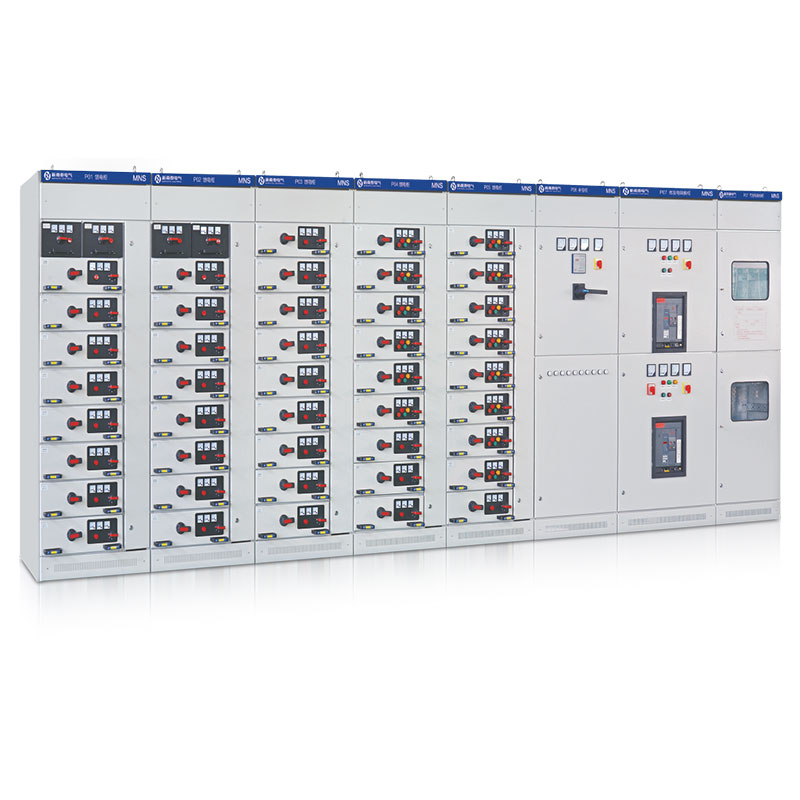


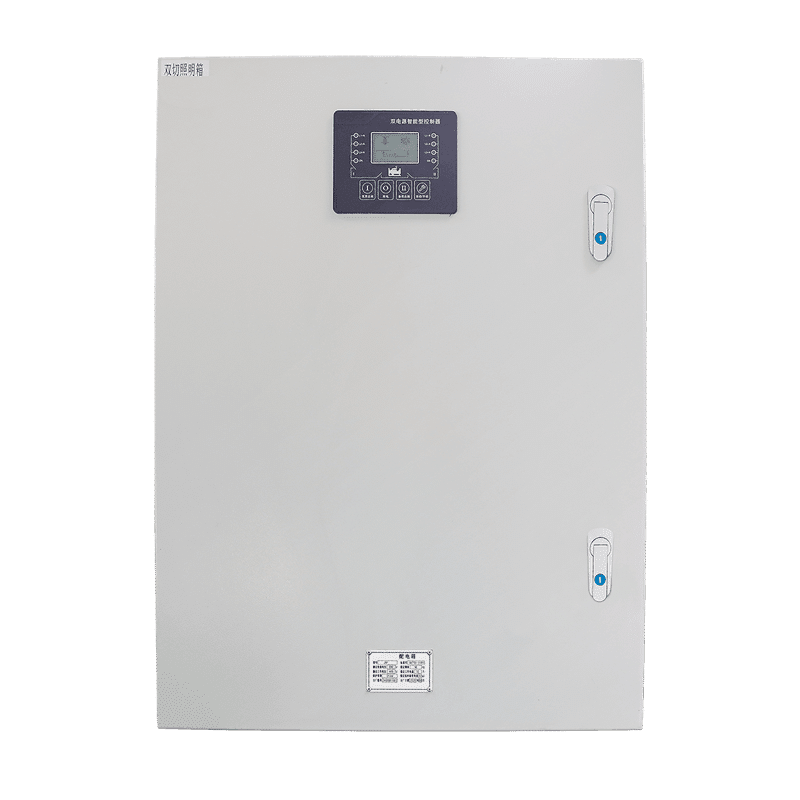


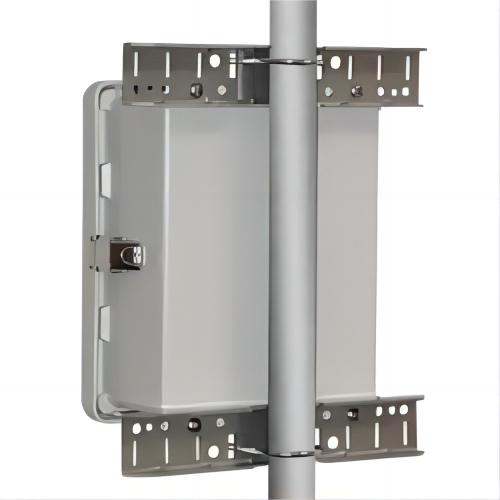


Leading Medium Voltage Switchgear Manufacturers
Key Features of Medium Voltage Switchgear
We are one of the most popular high and low voltage switchgear firms among electrical enterprises worldwide, with clients in more than 60 countries and increasing. There are several reasons why ElectricalCabinet is the best option for switchgear solutions:
- Designed for use at voltages up to 36kV, up to 2000A continuous current, and up to 40kA short circuit tolerance.
- The convenient, front-accessible design allows 3/36kV switchgear to be put against the wall.
- Available in a broad range of combinations, standard drawing packages, integrated trip units, and low clearance installation.
- Integrated trip unit choices eliminates the need for an external power supply and short circuit protection.
- Maintenance-free bus links Save time and money.
- Portable design allows for space savings of more than 50% and may be carried using a fork truck or pallet jack, avoiding the need for a crane.
- Draw-out compartments and arc flash modes improve safety.
- Includes insulated primary bus conductors and connectors.
Medium voltage switchgear distributes power from the substation into the plant — typically between 3.6 kV and 40.5 kV in industrial systems — switching feeders, transformers, and motors with circuit breakers, disconnectors, and protection relays in metal-clad or compact assemblies. Air-insulated (AIS), gas-insulated (GIS), and ring main unit constructions each fit different footprint, maintenance, and continuity requirements.
We supply MV switchgear assemblies engineered to the one-line diagram, with vacuum breaker technology, interlocking, and protection settings aligned to your network study. ElectricalCabinet has built electrical enclosures and control systems since 2010, delivering more than 4,000 projects for industrial clients. Our fabrication covers CNC punching, bending, and welding, with custom cutouts, sizes, and surface finishes built to your drawings. From single incoming panels to complete MV distribution rows, documentation and test evidence are delivered with every board.

High Quality, Reliable, and Long lasting Switchgear
Why Choose Us For Switchgear Electrical ?
We are one of the most popular high and low voltage switchgear firms among electrical enterprises worldwide, with clients in more than 60 countries and increasing. There are several reasons why ElectricalCabinet is the best option for switchgear solutions:

Advanced Manufacturing
As a worldwide switchgear firm, We have consistently invested in new, cutting-edge production facilities, allowing us to produce quality switchgear that fulfills the most severe local and international requirements.

Switchgear Options
We provide a wide selection of switchgear products, including low, medium, and high voltage switchgear. We also provide a large range of components across all switchgear categories, including circuit breakers, fuses, and a variety of switches.

In-house Design Team
We have our own design and engineering team that can customize goods to satisfy a variety of market and industrial requirements. Furthermore, we are always inventing and improving our products to provide the finest switchgear solutions.

After Sale Service
Our partnership with you extends beyond the sale. As one of the world’s most reputable electrical switchgear manufacturers, we offer after-sales services to assist you and ensure a successful project.
ISO Certificate
We hold ISO certification, which is a globally recognized quality management system. This accreditation confirms our dedication to creating high-quality goods that satisfy our clients’ exact specifications.

Quick Delivery
We have a lot of switchgear components for rapid delivery. We also have a team of experienced logistics professionals who can handle the shipping of our switchgear to different destinations in the world.
Medium Voltage Switchgear FAQs
1.What are some common applications of low-voltage switchgears?Electrical distribution systems need low-voltage switchgear. Electrical equipment is controlled, protected, and isolated using them. Common low voltage switchgear uses:
- Industrial Facilities: Low voltage switchgears operate machines and safeguard electrical circuits from overloads and short circuits in factories and refineries.
- Commercial Buildings: Low voltage switchgears provide power to lighting, HVAC, and other electrical equipment in offices, retail centres, and hospitals.
- Residential Complexes: They defend against faults and allow repair without affecting electricity supply in big residential buildings and complexes.
- Data Centers: Low voltage switchgears power servers and networking equipment in data centres, protecting them from electrical failures that might harm or lose data.
- Renewable Energy Systems: Solar and wind power projects employ low voltage switchgears to regulate and integrate renewable energy production into the electrical grid.
- Transportation Infrastructure: Airports, railway stations and ports employ low voltage switchgears to provide electricity to systems and equipment for dependability and safety.
- Utility and Power Generation: Power plants and substations distribute electricity and ensure electrical system safety with low voltage switchgear.
- Public Infrastructure: Street lights, traffic signals, and other public utilities use low voltage switchgears for safe and efficient power delivery.
These applications show how versatile and important low voltage switchgears are in maintaining dependable and safe electrical networks across industries.
2.What is the difference between high and low voltage switchgear?
Up to 1000V is the voltage rating for low voltage switchgear, while 36KV is the maximum. Low voltage switchgear is utilised in commercial, institutional, and industrial buildings, whereas high voltage is used in substations and other big electrical facilities.
3.When is Switchgear Used?
When a specific power need is established and has to be properly distributed and managed, switchgear is employed.
Switchgear wouldn’t be required in a residential property like a house since, unless the structure is really large, the power requirements are too low! A consumer unit, a miniature switchboard often restricted to a 100A @ 220V single phase supply, is a common element in residential structures. It makes a big difference that commercial or industrial switchgear may be rated up to 6300A @ 400V three phase!
4.What is your lead time for Medium voltage switchgear?
The amount of Medium voltage switches we have in stock and the wait time we have for them all change. We do, however, usually have a lot of goods in stock that can be shipped right away. Custom requests may take longer, depending on what they need. We promise, though, that it will be one of the shortest on the market.
5.Can I get custom Medium voltage switchgear?
Yes, we can design a custom Medium voltage switchgear system to meet your specific requirements. We have the capability to build systems in a variety of configurations, voltages, and sizes.
General Applications of Voltage Switchgear
The voltage switchgear can be used in many ways to control power. It is an important part of power transmission networks, substations, power plants, industry centers, and transportation systems. Protecting power systems in coal-fired or hydroelectric plants or ensuring a steady flow of electricity in factories, trains, or ports—the voltage Switchgear is an important part of distributing electricity safely and efficiently.

Transportation Infrastructure

Data Centers

Marine Applications

Renewable Energy Systems

Industrial Plants

Electricity Grids
Key Specifications & Options
The configuration below reflects the options we build to order for medium voltage (MV) switchgear. Every parameter can be adjusted to match your drawings and site conditions — send us your requirements and our engineers will confirm what applies to your project.
| Parameter | Options / Typical Range |
|---|---|
| Voltage range | Industrial MV systems typically 3.6–40.5 kV |
| Construction types | Air-insulated (AIS), gas-insulated (GIS), and ring main unit (RMU) executions |
| Switching technology | Vacuum circuit breakers standard in modern drawout and fixed panels |
| Applicable standards | IEC 62271 series for HV/MV switchgear referenced in design |
| Panel functions | Incoming, outgoing, transformer feeder, metering, and bus-riser panels |
| Interlocking | Mechanical and electrical interlocks against mal-operation |
| Protection | Relay protection settings coordinated to your network study |
| Typical applications | Plant substations, distribution rows, transformer feeders, large MV motors |
Frequently Asked Questions
AIS or GIS for my substation?
Air-insulated switchgear is serviceable, proven, and economical where space allows; gas-insulated gear shrinks footprint and suits harsh or compact sites. Our AIS-vs-GIS guide walks the maintenance, space, and cost trade-offs.
Why vacuum circuit breakers?
Vacuum interruption needs no arc-quenching gas inventory, survives many more operations between services, and requires minimal maintenance — the modern default for MV duty in both AIS and GIS constructions.
What is a ring main unit and do I need one?
An RMU is a compact MV unit for loop networks — two ring feeders plus a transformer tee-off. If your site takes supply from a ring network or needs a compact transformer protection point, an RMU is usually the right answer; radial plants use conventional panels instead.
Can you match our existing MV panels?
Yes — busbar ratings, panel dimensions, and protection philosophy can align with your installed base where extension is planned. Share photos, nameplate data, and the single-line diagram and we confirm compatibility.
Related Guides
- Air-Insulated Switchgear Guide: Definition, Components, and Selection Inputs — the AIS construction explained in depth
- AIS vs GIS: How to Choose Between Air-Insulated and Gas-Insulated Switchgear — the AIS/GIS decision framework
- Ring Main Unit vs Switchgear: What Is The Difference? — where RMUs fit versus conventional switchgear
- Switchgear Maintenance Planning: Scope, Records, and Responsibility Boundaries — planning maintenance scope before the gear is installed
 EN
EN