







Low Voltage Distribution Cabinet Manufacturer
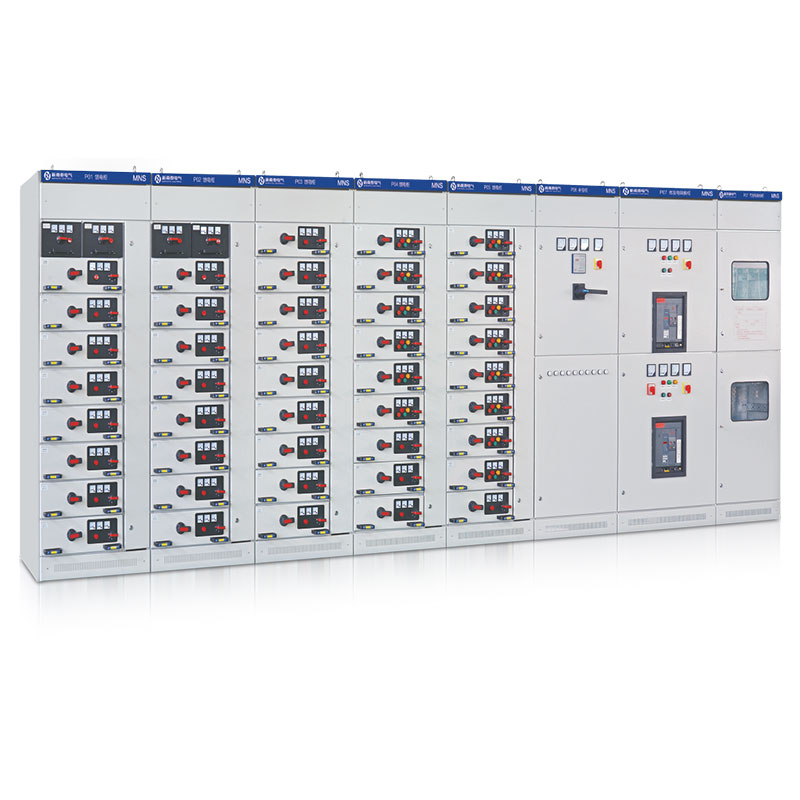
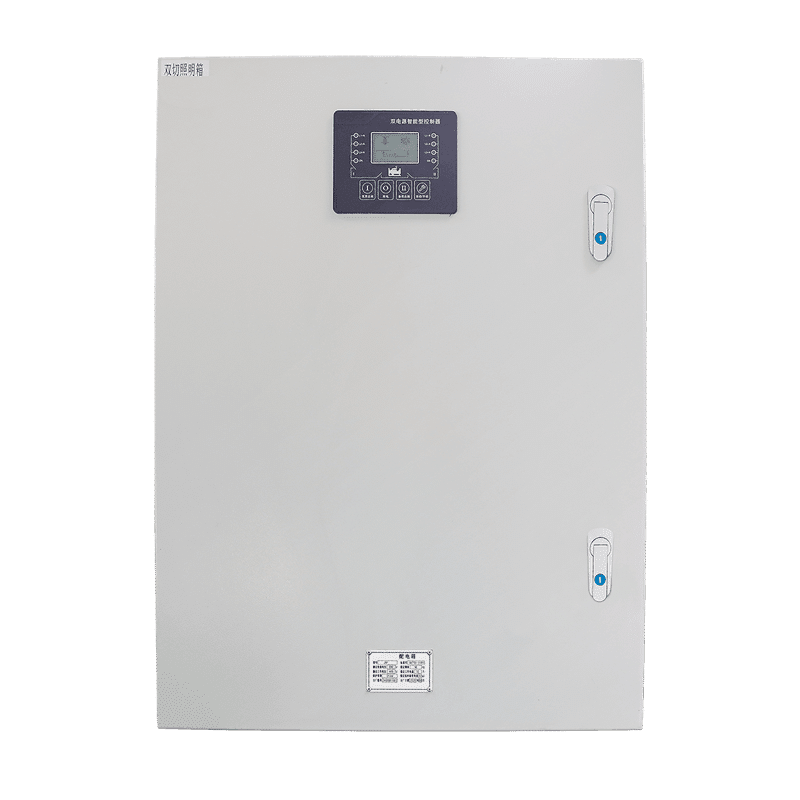
Low voltage distribution cabinets take power from the transformer secondary and divide it safely across the loads of a plant or building — incoming breaker or switch, busbars, outgoing feeders, metering, and protection engineered into one tested assembly. Fixed-type boards (GGD style) and withdrawable-type boards (GCS/GCK/MNS style) each serve different maintenance and continuity needs.
We design and assemble low voltage distribution cabinets to your single-line diagram, with busbar sizing, short-circuit withstand, and discrimination planned as an assembly rather than a box of parts. ElectricalCabinet has built electrical enclosures and control systems since 2010, delivering more than 4,000 projects for industrial clients. Our fabrication covers CNC punching, bending, and welding, with custom cutouts, sizes, and surface finishes built to your drawings. Standard-compliant documentation and test evidence are delivered with the board, from single feeders to complete substation low-voltage line-ups.
Low Voltage Distribution Cabinet Products

Military Explosion-Proof Control Box

Mobile Socket Box

Explosion-Proof Control Box

Multi-Circuit Control Cabinet

316 Stainless Steel Fan Control Cabinet

Dimmable Glass Control Cabinet

Landscape Light Lighting Control Cabinet

Civil Air Defense Master Control Box

Eps Emergency Power Control Cabinet

Transformer Distribution Cabinet

Fan Control Cabinet

Charging Pile Power Distribution Cabinet
Water Supply Equipment Control Cabinet Process
Electrical Planning and Designing
The initial stage of developing an electrical cabinet demands a careful examination of the product specs and client needs.
Component Layout And Design
This process entails carefully positioning each component to balance performance, security, and simplicity of use.
Installation and Wiring
Wiring work must follow best practices and safety practices,Correct installation and wiring procedures are critical for assuring the safety and efficiency of equipment operation.
Testing and Quality Control
Electrical cabinets' design and performance are validated by a number of tests to verify that all components behave as intended and meet safety requirements in real operation.
Documentation and Maintenance Guide
A detailed operation and maintenance manual is provided for the long-term use and maintenance of the electrical cabinet, including troubleshooting guides and routine maintenance schedules.
General Applications of Low Voltage Distribution Cabinet


Key Aspects Of Low Voltage Distribution Cabinet Manufacturing
- Structure Design: Builds sturdy enclosures to contain low voltage distribution equipment. Emphasizes safety, accessibility, and optimum space usage.
- Electrical System Design: Plan the configuration of busbars, circuit breakers, and distribution boards. Ensures accurate load distribution and protection coordination.
- Thermal Management: Creates ventilation and cooling systems to regulate the heat produced by electrical components. It is critical to maintain acceptable operating temperatures.
- Arc-Flash Protection: Incorporates elements to reduce the likelihood and severity of possible arc flash events. Features compartmentalization and arc-resistant designs.
- Main Circuit Breakers: Provides primary protection and isolation to the whole distribution system. Selected according to system capacity and fault current levels.
- Busbars: Conducts and distributes electrical power throughout the cabinet. Designed to accommodate a maximum current load with little voltage loss.
- Distribution Circuit Breakers: Protects individual or groups of circuits. There are a variety of sizes and varieties to meet different load needs.
- Metering devices: Monitors power usage, voltage, and other electrical characteristics. Smart meters may be used for sophisticated energy management.
- Surge Protection Devices: Protects against voltage spikes and transients. Protects critical equipment linked to the distribution network.
- Cabinet enclosures: Typically, protective coatings are applied to sheet steel. Considers characteristics like as strength, durability, and fire resistance.
- Busbar Materials: Copper or aluminum are frequently used, with conductivity and cost being the determining factors. Special coatings may be used to improve performance.
- Insulation Materials: Uses high-quality insulators to isolate live components. Important for preserving electrical clearances and avoiding short circuits.
- Precision Metal Fabrication: CNC machines are used to accurately cut, punch, and bend metal items. Ensures a perfect fit of components and structural integrity.
- Busbar Fabrication: Conductive bars are cut, bent, and drilled. Specialized activities such as joint preparation and insulation application may be included.
- Assembly and Wiring: Skilled technicians are required to properly install components and wiring. Maintains stringent standards to guarantee safety and dependability.
- Electrical Testing: Performs insulation resistance testing, continuity checks, and functional verifications. Ensures that all circuits and protection devices function properly.
- Mechanical inspections: Verifies structural integrity, component mounting, and craftsmanship quality. This includes checks for proper labeling and safety signs.
- Type Testing: Standardized testing are conducted on representative samples to ensure design conformity. Includes short-circuit resist and temperature increase testing.
- Electricity Standards: Complies with IEC, ANSI, or regional low voltage equipment standards. Insulation levels, clearances, and protection degrees are among the topics covered.
- Safety certifications: Obtains certifications from reputable organizations (such as UL and CE). Shows conformity with safety and performance criteria.
- Energy Efficiency Standards: Adheres to energy efficiency rules as relevant. There may be needs for low-loss components.
- Modular Design: Provides flexibility for alternative setups and future expansions. Allows for easy modification and upgrade of distribution systems.
- Integration With Building Systems Offers interfaces for building management systems. enables sophisticated energy monitoring and control.
- Special Requirements: Adapts designs to specific contexts (for example, severe industrial circumstances or healthcare facilities). Special coatings or other protection elements may be included.

Another Electrical Control Panels
Water Supply Equipment Control Cabinet
Water Supply Equipment Control Cabinet Manufacturer Get A Quote Home Water Supply Equipment Control Cabinet Products Box Type Frequency Conversion
Fire Fan Control Cabinet
Fire Fan Control Cabinet Manufacturer Get A Quote Home Fire Fan Control Cabinet Products Single Speed Dual Power Supply Fire
Fire Electrical Control Cabinet
Fire Electrical Control Cabinet Manufacturer Get A Quote Fire Electrical Control Cabinet Products One Control Four Fire Inspection Control Cabinet
PLC Control Cabinet
PLC Control Cabinet Manufacturer Get A Quote A PLC control cabinet is the nerve center of an automated line —
Frequency Converter Electrical Cabinet
Frequency Converter Electrical Cabinet manufacturer Get A Quote A frequency converter electrical cabinet — VFD panel — houses variable frequency
Key Specifications & Options
The configuration below reflects the options we build to order for low voltage distribution cabinets. Every parameter can be adjusted to match your drawings and site conditions — send us your requirements and our engineers will confirm what applies to your project.
| Parameter | Options / Typical Range |
|---|---|
| Assembly types | Fixed-type (GGD style) and withdrawable-type (GCK/GCS/MNS style) constructions |
| Rated current | Feeders and main busbars built to your load schedule — GGD-style boards commonly serve up to 3150 A |
| Rated frequency | 50/60 Hz systems |
| Applicable standards | IEC 61439 series (LV switchgear and controlgear assemblies) referenced in design |
| Busbar system | Copper busbars sized for load and short-circuit withstand |
| Protection devices | Air circuit breakers, molded case breakers, and fusegear per single-line diagram |
| Enclosure options | Steel and stainless bodies; IP31–IP54 interior/section ratings typical |
| Typical applications | Plant main boards, MCC sections, building distribution, substation LV line-ups |
Frequently Asked Questions
Fixed or withdrawable — which LV distribution type should I choose?
Fixed-type boards (GGD style) are economical and suit installations where feeders can be isolated for maintenance. Withdrawable drawers (GCK/GCS/MNS style) allow motor feeders to be pulled and swapped without de-energizing the section — the standard choice where continuity is critical.
What standards apply to a low voltage distribution cabinet?
The IEC 61439 series governs LV assemblies — verification of strength, temperature rise, and short-circuit withstand. We reference these standards in design and supply the verification documentation with the board.
Can you build to our existing switchgear brand and spares policy?
Yes — breaker brands are specified to your maintenance policy so spare parts and withdrawable modules stay interchangeable with your existing fleet. Send your preferred-device list and we design around it.
What do you need to quote a distribution board?
A single-line diagram with ratings, the load schedule, and enclosure/ingress preferences. From these we confirm busbar sizing, breaker selection, and cabinet configuration in the quotation.
Related Guides
- Understanding the Differences Between High, Medium, and Low Voltage Switchgear — voltage classes and where LV distribution fits
- Power Distribution Panel Guide: Components, Functions, and Selection Inputs — component-level guide to distribution panels
- Switchgear vs Switchboard: Differences, Applications, and Selection Inputs — switchgear and switchboard boundaries explained
- Electrical Switchgear Safety and Life Expectancy: Essential Practices and Maintenance — safety and service-life practices for installed boards
 EN
EN