

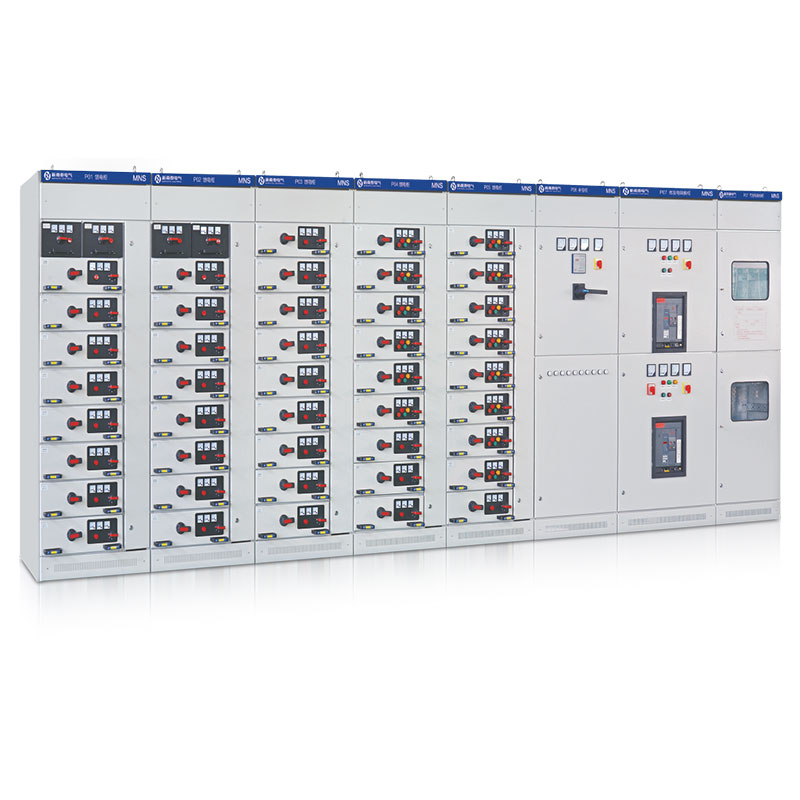


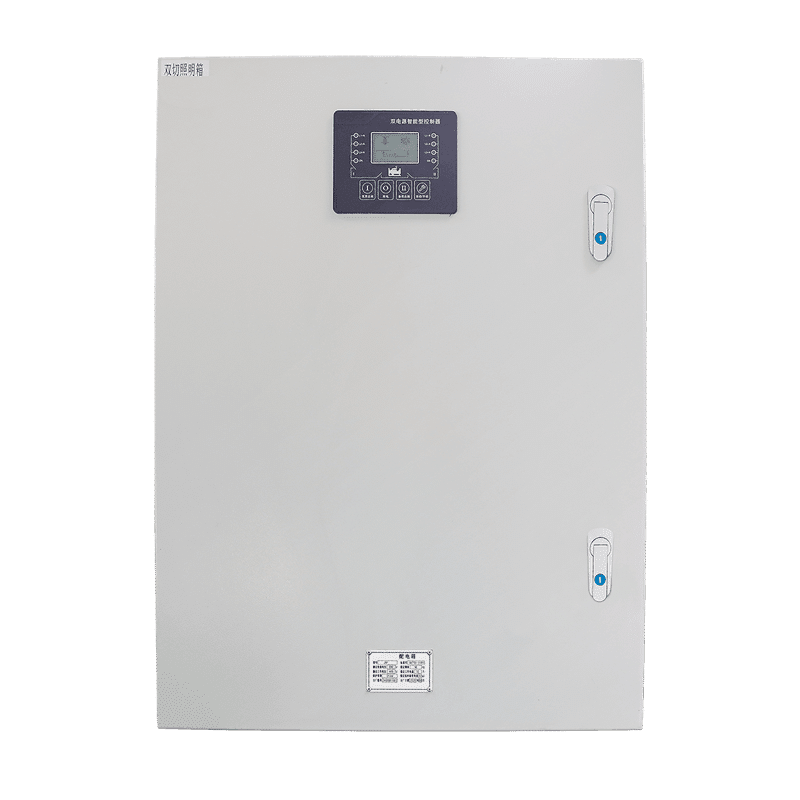


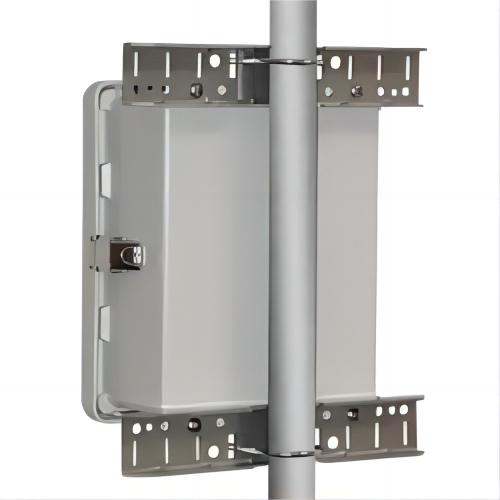


Within the electrical power systems sector, two of the most critical types of switchgear will have to be metal enclosed and metal clad switchgear. Think of these two as the siblings of the same family—similar in many aspects yet different in structure, with their own special abilities.
Metal-enclosed switchgear is comparable to the broader, generic category of ‘rectangle’ in geometry. Metal clad switchgear is, therefore, the type within that rectangle, a square. Maybe this is what makes the rationale behind people understanding their real relationship clearer: although they generally have shared characteristics, most especially in their foundation, they still are very much different in terms of design and operational characteristics.
Examining these variations is very important for engineers and specialists who are working in complicated electric systems. The differences between the two types of switchgear, metal enclosed and metal clad, involve aspects like fault currents, safety measures that need to be considered in case of a fault and maintenance consequences. These small things differentiate the types of switch gears which should be used for different needs based on operation circumstances and environmental conditions.
In this analysis, we explore these differences by looking at certain features and taking into account other things that inform adequate decisions when it comes to choosing the appropriate switchgear for various uses. If you are creating a fresh power system or modernizing an old one, knowing these diffs allows you to make choices that match exactly your technical specifications and operational aims.

What is Metal Enclosed Switchgear?
Imagine a robust, metal box designed to protect each of the critical components in an electrical power distribution system. That is, in essence, what metal enclosed switchgear is. The International Electrotechnical Commission, better known as IEC, defines this type or category of switchgear as, “A metal-enclosed switchgear shall be understood as meaning an enclosure formed by a metal shell, and comprising one or more parts interconnected by metal links and incorporating components for power distribution and switching.”. It serves to protect such components from dust, moisture, and mechanical damage and guarantees the safety of people by avoiding accidental contact with live parts.
Key Features of Metal Enclosed Switchgear
It is intended for a medium-voltage use and is a cheaper alternative for electric energy distribution. A metal enclosed switchgear generally consists of:
- Interruttori automatici
- Disconnector switches
- Busbars
- Control, monitoring, and protection devices
These items are put in a grounded steel container. All inside parts remain confined by metal except for small venting holes or observation windows. The grounding of the outside casing makes this arrangement safer overall.
Types of Metal Enclosed Switchgear
There are three main subcategories within metal enclosed switchgear:
- Low Voltage Power Circuit Breakers (IEEE C37.20.1)
- Metal Enclosed Interrupters (IEEE C37.20.3)
Metal enclosed interrupters (MEIs) are essentially simplified versions of metal clad switchgear, with less compartmentalization and fewer internal barriers. This design makes them more cost-effective.
Why Choose Metal Enclosed Switchgear?
etal enclosed switchgear offers several advantages:
- Constant Current Ratings: Typically 600-1200A
- Short Time Ratings: 25-50kA without fuses
- Limited Switching Operations: 150-1000 mechanical operations
- Typical Fuse Protection: Provides fault protection
- Lower Operational Expense: Approximately $25K-$30K per switch
- Ease of Maintenance: Simple design allows for quick and easy maintenance
- Fast Shipping: Availability often depends on stock, so contact manufacturers for details
Interrupter switches in metal enclosed switchgear are commonly used for load switching and come with fuse protection for faults. This type of switchgear is a proven solution for substations and other electrical power systems.

What is Metal Clad Switchgear?
Well, metal clad switchgear is the sophisticated sibling of a metal-enclosed switchgear. Although both are metal enclosed, the metal clad switchgear simply steps up the safety and reliability of the former. Every component in this again is individually enclosed within its own metal compartment. This brings in additional protection and gives easier access for maintenance purposes. Think of it like a collection of safe deposit boxes within a secure vault—each box can be accessed independently without disturbing the others.
Key Features of Metal Clad Apparecchiature di comando
The medium voltage metal clad switchgear will have the following main differences, typically from 2.4 kV to 38 kV:
- Compartmentalization: Every component, whether bus-bars or circuit breakers, is independently mounted in its own metal enclosure. This means that no accidental contact can be made with the internal live parts and also allows focused maintenance.
- Grounding and Insulation: All parts are individually grounded and insulated to provide an additional layer of safety.
- Accessibilità: As components are individually accessible or removable without affecting the system as a whole, this makes maintenance less intrusive and less chaotic.
It has an internal arc classification of AFLR under IEC 62271-200. Also, metal clad switchgear has a partition class of PM and an LSC-2B class for the loss of service continuity.
Why Choose Metal Clad Switchgear?
- There are a number of advantages that metal-clad switchgear has, making it one of the most favored in many applications. Enhanced safety due to its compartmentalized design means that the operator can access only the parts required without being exposed to live elements, thus reducing the risk of injury. Automatic shutters and grounded barriers enhance the safety measures.
- Reliability: Due to the fact that all the components are isolated, a failure in one part of the system will not affect the others; the system keeps running.
- Customization: Since metal-clad switchgear is custom-made, it can be easily adapted for different system requirements.
- Maintainability: This might actually take longer for maintenance due to compartmentalization, but indeed allows for targeted work in a very fine-grained manner, without the need to shut down the whole system.
Real-World Applications and Benefits of Metal Clad Switchgear
It is much suited for applications where safety, reliability, and customization are of high magnitude. This includes:
- Sottostazioni: The metal-clad switchgear offers excellent protection and easily allows access for maintenance.
- Impianti industriali: Ensuring high availability and safety in the production area – for demanding applications with high electrical loads.
- Edifici commerciali: From retaining power distribution with minimal disruption during maintenance to.

Metal-Clad vs. Metal-Enclosed Switchgear: Understanding the Differences
Choosing the right switchgear for your electrical system is crucial, and understanding the differences between metal-clad and metal-enclosed switchgear can help you make an informed decision. Here’s a closer look at what sets these two types of switchgear apart.
Enclosure Configuration
Metal-Clad Switchgear:
It simply means that, in metal-clad switchgear, each of the circuit breakers, busbars, and other elements are compartmentalized, each inside a metal enclosure. This thus brings improved safety by minimizing the chance of accidental contact with live parts.
Metal-Enclosed Switchgear:
On the other hand, metal-enclosed switchgear houses all the elements inside one metal enclosure. This provides compactness and easier approachability to the system, still lacking in isolation between its elements, just like the metal-clad switchgear.
Tensione nominale
Metal-Clad Switchgear:
Usually utilized in regional high voltage uses (2.4 kV to 38 kV), this kind of switchgear is specifically meant for environments that require heavier electric loads.
Metal-Enclosed Switchgear:
Constructed for low power applications (at most 1 kV), this kind of switchgear is appropriate for systems having small load capacity and insignificant fault currents.
Compartmentalization and Accessibility
Metal-Clad Switchgear:
Also, the compartmentalization of metal-clad switchgear allows operators to access different elements without affecting the whole. This allows for more focused maintenance to be performed with less hassle and greater safety, since each compartment may be worked on independently.
Switchgear, metal-enclosed:
While metal-enclosed switchgear has its ease of access to all its components after opening the panel, it does not have the compartmentalization that the metal-clad switchgear does. This may, therefore, require more care in handling when maintenance has to be carried out to avoid contact with live parts.
Caratteristiche di sicurezza
Metal-Clad Switchgear:
Metal-clad switchgear has advanced safety features. In an compartmentalized system, the operators are protected not only from live parts but also the failure of part of the system will have no effect on other parts. The risks are minimized, and a system’s reliability is improved.
Metal-Enclosed Switchgear:
Also, metal-enclosed switchgear protects against accidental contact with its live parts, as the components are entirely enclosed by a single metal enclosure. This type does not have compartments at all, hence its safety features are quite inferior to metal clad ones.
Service Continuity
Metal Clad Switchgear:
The LSC2B class of metal clad switchgear permits circuit breaker maintenance without the need to disconnect associated cable connections, thereby offering continuity in operation and safety.
Metal-Enclosed Switchgear:
Most metal-enclosed switchgear has an LSC2A rating, meaning some compartments may be energized while others are opened for access, provided proper grounding precautions are taken.
Available Fault Current and Load Ratings
Metal Clad Switchgear:
For systems with higher fault currents, metal clad switchgear provides for the use of circuit breakers that offer improved coordination and protection.
Metal-Enclosed Switchgear:
Metal-enclosed switchgear uses fuses and fixed switches for the protection of transformers and associated equipment; it is more appropriate in systems having relatively modest loads and fault currents.
Applications and Environments
Metal Clad Switchgear:
Designed for the worst environments, metal clad switchgear combines needed features of power plants, utility substations, and general industrial facilities that deal with very large electrical loads, and often exceptionally bad weather or where dust, moisture, or corrosive agents may be present.
Metal-Enclosed Switchgear:
Metal-enclosed switchgear is especially suitable for lower voltage, simpler systems found in commercial buildings and small industrial applications. Basically, it is very cost-effective protection for transformers and other like components of smaller settings.
Additional Considerations
- Operational Life: Rating on metal clad switchgear is up to 10,000 operations, while the rating on metal-enclosed switchgear is normally a lot lower and usually less than 1,000 operations.
- Switching Mechanisms: Metal clad switchgear uses high-speed switching devices; generally, metal-enclosed switchgear makes use of slower fuse-based protection.
Conclusione
While metal clad and metal-enclosed switchgear have particular strengths in specific applications, the primary advantages for the former include safety, reliability, and customization associated with medium-voltage systems; it is therefore the best solution for demanding environments. On the other hand, metal-enclosed switchgear gives a compact and cost-effective solution to low-voltage applications that offer easier access and maintenance. By understanding these differences, you will be able to choose appropriate switchgear for the specific requirements of your electrical system. For more help and information contattateci.
Updated Selection Guidance
This section is a supplemental review draft. Consolidate overlapping passages before replacing the production URL.
Metal-enclosed and metal-clad switchgear are related construction terms, but they should not be treated as interchangeable in a specification. The difference concerns how the assembly is constructed and compartmentalized; the correct choice still depends on the system function, protection, access, environment, applicable standard, and exact product documentation.
This guide provides a comparison framework. It does not assign a universal rating or certification to every product using either term.
What the terms describe
Metal-enclosed switchgear generally refers to an assembly with a metal enclosure around the relevant electrical equipment. Metal-clad switchgear is a more specific construction concept that may involve additional compartmentalization and separation of functional sections, depending on the applicable product standard and design.
The practical meaning must be confirmed in the manufacturer’s technical documents. A marketing label alone is not enough to establish the exact internal arrangement, accessibility, protection, or compliance scope.
Comparison dimensions
| Question | Metal-enclosed | Metal-clad |
|---|---|---|
| Construction focus | Metal enclosure around the assembly | More defined compartmentalization and separation concept, subject to the applicable standard and design |
| Internal arrangement | Depends on the product and lineup | Depends on the product, standard, and specified compartment functions |
| Access and maintenance | Must be confirmed from the proposed design | Must be confirmed from the proposed design and operating procedure |
| Protection and switching | Determined by the selected devices and system | Determined by the selected devices and system |
| Selection evidence | Product drawings, standards, and data sheets | Product drawings, standards, and data sheets |
The table is a selection aid, not a certification statement. The exact product construction and applicable standard must be checked before a procurement decision.
What should not be inferred
Do not infer any of the following from “metal-clad” or “metal-enclosed” alone:
– voltage or current range; – short-circuit or withstand capability; – arc-resistant performance; – accessibility or maintenance procedure; – indoor or outdoor suitability; – UL, IEC, ANSI, or other certification; or – a specific circuit-breaker, bus, or protection arrangement.
Those claims belong in the technical specification and need supporting documents for the exact configuration.
Inputs for a useful comparison
Define the system and feeder arrangement, incoming supply, bus sections, circuit breakers, protection, metering, cable terminations, access direction, operating method, and future expansion. Add the site environment, maintenance boundaries, and document requirements.
If the project is comparing AIS and GIS as well, keep that decision separate. AIS/GIS concerns an insulation and enclosure approach, while metal-clad/metal-enclosed concerns construction and compartmentalization. One label does not replace the other.
The Medium Voltage Switchgear Guide provides the broader category context. The AIS vs GIS comparison covers a different selection question.
Questions for the supplier
Ask the supplier to identify:
- the applicable product standard and edition;
- the exact construction and compartment arrangement;
- the switching, isolation, and earthing devices;
- the protection, metering, and control interfaces;
- the access and maintenance assumptions;
- the verified ratings and documentation; and
- exclusions related to engineering, installation, testing, or commissioning.
This produces a documented comparison instead of treating a product label as a complete design decision.
Browse this topic: Switchgears technical hub
 IT
IT  EN
EN  EN_ZA
EN_ZA  AR
AR  EN_GB
EN_GB  DE
DE  ES
ES  FR
FR  JA
JA  ZH
ZH  TR
TR  RU
RU  EN_CA
EN_CA  EN_AU
EN_AU  NL
NL  PT
PT  FA
FA