







Start with the equipment inside
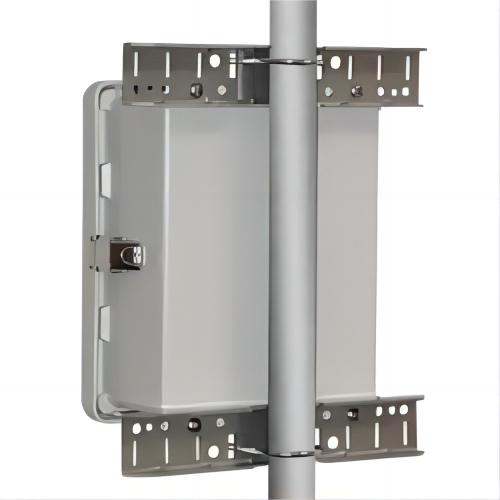
A telecom enclosure protects and organizes power, network, radio, fiber, or monitoring equipment. Selection should begin with the equipment list, heat dissipation, cable routing, access, and installation environment. A generic outdoor cabinet description cannot prove compatibility with every telecom device or network deployment.
Define the installation
Record whether the enclosure is indoors, outdoors, rooftop, roadside, plant-mounted, pole-mounted, or installed in another exposed location. Note temperature range, solar exposure, rain, dust, salt, condensation, vandalism risk, and maintenance access. These inputs affect material, sealing, ventilation, cooling, locks, mounting, and cable-entry choices.
| Input | Questions to confirm |
|---|---|
| Equipment | What racks, shelves, power supplies, batteries, radios, or fiber devices are installed? |
| Heat load | What heat must be removed, and under which ambient conditions? |
| Power | What incoming power, DC distribution, backup, or grounding arrangement is required? |
| Cable entry | From which sides do fiber, data, antenna, and power cables enter? |
| Environment | What moisture, dust, salt, temperature, and solar exposure apply? |
| Access | Who maintains the cabinet, and what door, lock, and working space are needed? |
| Interfaces | Which power, grounding, network, and monitoring responsibilities are included? |
Enclosure construction and protection
Choose material, finish, door arrangement, hardware, seals, mounting, and cable glands for the site conditions. Confirm the required enclosure protection for the complete configured assembly, including vents, filters, cooling equipment, cable entries, and field modifications. Do not infer a NEMA or IP result from a product title or photograph.
Heat and condensation
Telecom equipment may operate continuously and produce heat even when the cabinet is lightly loaded. Passive ventilation, filtered fans, heat exchangers, air conditioning, insulation, heaters, or pressure-equalization devices may be considered depending on the ambient environment and heat load. The solution should be based on a thermal calculation and condensation risk review, not on cabinet dimensions alone.
If outdoor air is humid, dusty, salty, or contaminated, an open ventilation strategy may transfer the environment into the cabinet. Record filter maintenance, drain paths, gasket inspection, and cooling alarms in the maintenance plan.
Power, grounding, and cable interfaces
Define AC or DC input, disconnecting means, power distribution, battery or backup boundaries, surge protection, grounding, bonding, and cable separation. Identify fiber and copper entry routes, bend-radius requirements, shielding, and who supplies network or radio equipment. The enclosure supplier should not assume responsibility for the telecom service, configuration, or cybersecurity platform unless explicitly included.
Quotation checklist
Provide equipment dimensions and heat data, power requirements, cable-entry drawing, mounting location, environmental conditions, required access and locks, material/finish preference, enclosure protection target, cooling or heating expectations, monitoring points, documentation, and installation responsibilities.
Scope boundary
This article does not promise carrier approval, 5G site certification, radio performance, cybersecurity, battery autonomy, or a specific NEMA/IP rating without project and model evidence. It identifies the information needed to select a telecom enclosure responsibly.
ElectricalCabinet.net can use these inputs to route a telecom enclosure enquiry to the appropriate outdoor cabinet, enclosure, power, cooling, and control-panel capability.
 FR
FR  EN
EN  EN_ZA
EN_ZA  AR
AR  EN_GB
EN_GB  DE
DE  ES
ES  IT
IT  JA
JA  ZH
ZH  TR
TR  RU
RU  EN_CA
EN_CA  EN_AU
EN_AU  NL
NL  PT
PT  FA
FA