

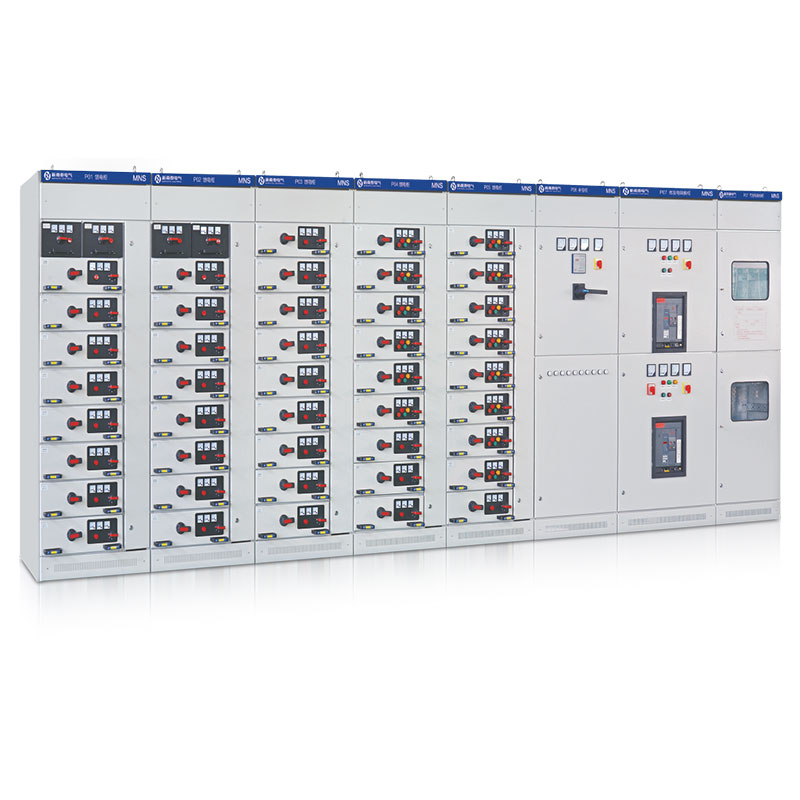


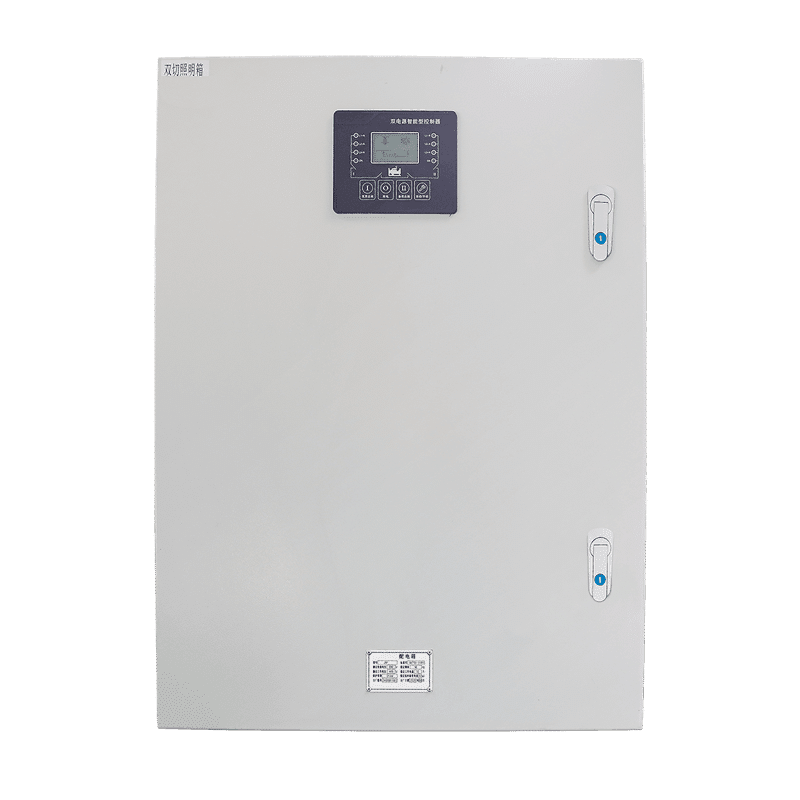


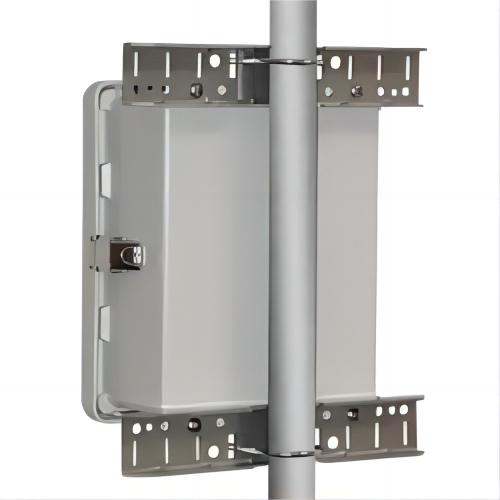


Enclosure Temperature Rise Calculator
Estimate the steady-state temperature rise inside an electrical enclosure from its internal heat load, surface area and a natural-convection coefficient. A planning-grade check — type tests remain the authority.
Natural convection over a vertical enclosure surface typically falls between 5 and 9 W/m²·K; the default of 6 W/m²·K is a common planning value. Values near 10 assume favorable free airflow around all sides. This simplified steady-state estimate (ΔT ≈ P/(h·A)) does not replace the temperature-rise type tests of IEC 61439 or IEC 62271-200 — design decisions should rely on the manufacturer's certified test report.
How the Calculation Works
The calculator uses the simplest usable heat-balance model for a sealed enclosure: at steady state, the heat generated inside equals the heat leaving through the walls, which gives a single-line estimate of the rise above ambient:
ΔT (K) ≈ P / (h × A)
where P is the total internal heat dissipation in watts (sum of drive, contactor, reactor and busbar losses), A is the effective heat-dissipating surface in m², and h is an overall heat transfer coefficient in W/m²·K. For natural convection over vertical surfaces, h typically falls between 5 and 9 W/m²·K — the default of 6 sits mid-range and suits a cabinet mounted with reasonable clearance; values near 10 already assume favorable free airflow on all sides.
The model assumes the heat is spread evenly, the whole surface is effective, ambient air circulates freely, and radiation is folded into h. It ignores solar gain, gasket leakage and conduction into the mounting structure. As a rule of thumb, once the estimate passes roughly 15–20 K, a sealed enclosure usually needs forced ventilation, a heat exchanger or air conditioning.
This is an estimate, not a substitute for testing. Temperature-rise verification of switchgear and controlgear assemblies is a type test under IEC 61439 (low-voltage) and IEC 62271-200 (medium-voltage); design and acceptance decisions should rely on the manufacturer’s certified test report, with this calculator used for early sizing and sanity checks.
When This Estimate Is Useful
Budgeting the thermal margin of a VFD or soft-starter cabinet: drive losses of roughly 2–4% of rating, copper losses in busbars and reactors, and contactor coil dissipation add up quickly in a compact enclosure — this check shows whether the bare cabinet can passively reject that heat.
Choosing the cooling strategy: a sealed IP55/IP65 or NEMA 4X build cannot take filtered vents, so the decision between natural dissipation, an air-to-air heat exchanger and enclosure air conditioning hinges on exactly this ΔT estimate.
Sanity-checking a layout before detail engineering: moving a cabinet from a shaded switchroom to a hot process area, or shrinking the enclosure size, changes A and the allowable rise — re-running the numbers takes seconds and catches the problem while it is still cheap to fix.
Часто задаваемые вопросы
What heat transfer coefficient should I use?
5–9 W/m²·K covers natural convection on vertical enclosure surfaces; 6 is a common planning default. Use the lower end for cramped installations or surfaces facing a wall, and remember that forced-air cooling changes the physics entirely — this calculator models the passive case only.
How do I estimate the internal heat load P?
Add the dissipation of everything inside: drives and power supplies (typically 2–4% of their rating at full load), I²R losses in busbars and conductors, reactor and transformer losses, and contactor relay coil consumption. Component datasheets list these figures; for a first pass, drives plus busbars usually dominate.
My result is above 20 K — what are the options?
In rough order of cost: a fan-and-filter kit (if the IP/NEMA rating allows openings), an air-to-air heat exchanger for sealed enclosures, and enclosure air conditioning where the ambient is hot or the rating must stay fully sealed. Upsizing the enclosure adds surface area A and also pulls the estimate down.
Does this replace the IEC temperature-rise test?
No. It is a simplified single-node model for early sizing. Temperature-rise verification per IEC 61439 / IEC 62271-200 is a laboratory type test on the actual assembly with representative current — order and accept against that report, not against this estimate.
Related Guides
- Enclosure Temperature Rise Calculation — the full method article behind this calculator, with worked examples.
- NEMA 4X Enclosures — sealed corrosion-resistant builds where cooling options are constrained.
- Электрический корпус IP66 — washdown-duty sealed enclosures for high-moisture environments.
- Free-Standing Electrical Enclosure — floor-mounted cabinets with the largest dissipating surface.
 RU
RU  EN
EN  EN_ZA
EN_ZA  AR
AR  EN_GB
EN_GB  DE
DE  ES
ES  FR
FR  IT
IT  JA
JA  ZH
ZH  TR
TR  EN_CA
EN_CA  EN_AU
EN_AU  NL
NL  PT
PT  FA
FA