







Pole Mounted Transformer

Pole Mounted Transformer
A pole mounted transformer hangs on the overhead line it serves, stepping distribution voltage down for rural customers, farms, workshops, pumping stations and remote installations where an underground pad is not justified. Single-phase units feed individual services; three-phase units cover small industrial and commercial loads — all built for years of unattended outdoor duty.
We manufacture pole mounted transformers with corrosion-protected tanks, standard mounting brackets, and fuse and surge-arrester provisions engineered to your utility’s practice. The factory behind this site has produced electrical equipment since 2010 across 4,000+ projects, and routine testing applies to every winding that leaves the plant.
Key Specifications & Options
The configuration below reflects the options we build to order for pole mounted transformers. Every parameter can be adjusted to match your drawings and site conditions — send us your requirements and our engineers will confirm what applies to your project.
| Parameter | Options / Typical Range |
|---|---|
| Rated power | Single-phase 10–100 kVA typical; three-phase units up to about 300 kVA |
| Primary voltage | Up to 36 kV distribution class; HV bushings matched to the line design |
| Secondary voltage | 220–480 V class, single- or three-phase service |
| 建筑 | Oil-immersed tank; hermetically sealed or conservator type |
| Cooling | ONAN |
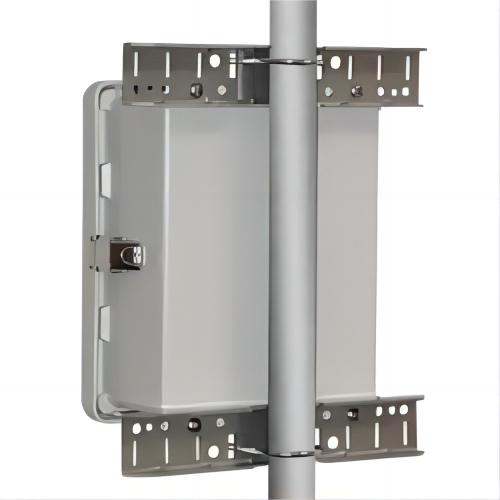
| Mounting | Bolt-on brackets and lifting lugs for direct pole fixing |
| Protection provisions | Fuse cutout and surge arrester coordination per utility practice |
| Environment options | Tropical treatment and coastal corrosion protection packages |
常见问题
Single-phase or three-phase pole mount — which do I need?
Individual services — a house, a farm, a small pump — run economically on a single-phase unit. Motors above a few kilowatts, multi-tenant supplies and any balanced three-phase load need a three-phase unit. Send the service list and we will recommend the split, including any single-phase-to-three-phase alternatives worth considering.
How are pole mounted transformers protected against lightning?
The standard package coordinates an external surge arrester at the HV bushing with the internal insulation coordination of the winding, so induced surges on the overhead line are clipped before they reach the coil. Arrester rating and placement follow your utility’s practice — include the practice documents with your inquiry and we build to them.
What does hermetically sealed mean, and do I need it?
A hermetically sealed tank is welded shut with the oil sealed for life — no conservator, no breather, no moisture ingress, which suits unattended rural sites. Conservator types keep an oil reserve and suit heavier loading or hot climates with room for expansion. We quote either; the duty profile decides.
Can you supply nameplate data in our format?
Yes — beyond the standard IEC nameplate we can lay out data to your utility template, including impedance, no-load loss and winding material records needed for asset registration. Share the template and it travels with the production file.
Related Guides
- Grounding Transformer Working Principle: Application and Selection Insights — when a grounding transformer belongs in the network your pole mounts feed
- Distribution Transformers for Three-Phase Unbalanced Loads — keeping phase loading balanced across single-phase services
- Pad Mounted Transformer — the ground-level alternative where underground supply exists
- Distribution Transformer — the full format and rating matrix
 ZH
ZH  EN
EN  EN_ZA
EN_ZA  AR
AR  EN_GB
EN_GB  DE
DE  ES
ES  FR
FR  IT
IT  JA
JA  TR
TR  RU
RU  EN_CA
EN_CA  EN_AU
EN_AU  NL
NL  PT
PT  FA
FA