Switchgears

Top 10 Switchgear Companies in the world

Metal Enclosed vs. Metal Clad Switchgear

Searches for the top 10 switchgear companies in the world return confident lists, but every ranking quietly encodes the ranker’s criteria — revenue, geographic reach, voltage class, or simply opinion. What can be stated as fact is which companies operate global switchgear portfolios, from medium-voltage distribution gear to extra-high-voltage GIS, and what each is demonstrably known for. This guide presents those companies grouped by strength, explains why no honest ranking assigns positions without stating its yardstick, and then turns to the part that actually matters to a project: how to evaluate and select a switchgear manufacturer for your requirements — the framework that ends, for many projects, with an engineered-to-order builder rather than a global brand. Use it to define scope, compare options, and prepare evidence; final ratings, protection settings, safety controls, and compliance decisions require qualified project review.

Companies with global switchgear portfolios — the factual orientation

The names below, in no particular order, hold documented global positions across switchgear voltage classes:

CompanyDemonstrable switchgear position
ABBLong-standing medium-voltage portfolio (UniGear air-insulated lineups; SF6-free PrimeGear development) through its electrification business, with the power-grid GIS heritage continued by Hitachi Energy
Hitachi EnergyGlobal leader in high- and extra-high-voltage GIS and grid equipment, operating the former ABB Power Grids portfolio
Siemens (Smart Infrastructure) and Siemens EnergyBroad MV range including gas-insulated 8DJH and NXPLUS families and SF6-free “blue” GIS developments, with Siemens Energy serving transmission-class equipment
Schneider ElectricDominant MV distribution presence — RM6 and SM6 ring main and switchgear lines and the SF6-free Premset platform
EatonWide MV portfolio including Xiria gas-insulated switchgear and metal-clad platforms, strong North American base
GE VernovaGrid-equipment business (carrying the GE Grid Solutions heritage) serving HV switchgear and substation portfolios
Mitsubishi ElectricMajor HV and EHV GIS manufacturer with a long utility track record
ToshibaEstablished GIS and transmission equipment maker, strong in Asian utility markets
Hyosung Heavy Industries / Hyundai ElectricKorean manufacturers with growing global positions in MV and HV switchgear and transformers
CHINT and the Chinese OEM baseVery large-volume MV switchgear and LV assembly manufacturing serving global distribution markets

Two structural facts follow. First, the industry is consolidating around SF6-free MV platforms because regulation — the EU F-Gas Regulation (EU) 2024/573 phasing out SF6 in new MV switchgear from 2026 (≤24 kV) and 2028 (24–52 kV) with defined exemptions — now shapes product roadmaps directly. Second, none of these companies is automatically the right answer for a given project: an industrial MV lineup is engineered to order, and beyond roughly 24 kV or utility-scale GIS the global names dominate while standard MV distribution is served globally by hundreds of capable manufacturers building to IEC 62271-200 or IEEE C37.20.2 frameworks.

Why rankings cannot make your decision

A switchgear purchase decision resolves against voltage class, standards market (IEC versus ANSI/IEEE traditions), duty and fault level, environment, service footprint, and documentation quality — dimensions on which the global brands and the engineered-to-order sector trade places depending on the project. A tier-one brand brings global service and standardized platforms; a specialist builder brings engineering access, customization, and often better lead times. The list above orients; the framework below decides.

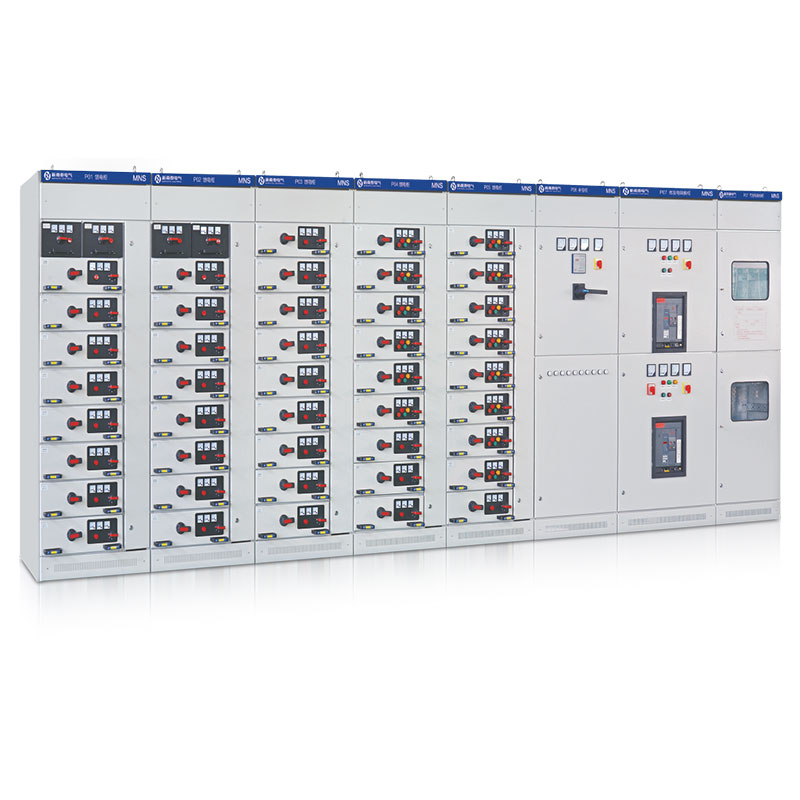
Row of installed switchgear cubicles in a factory electrical room
Installed switchgear lineup in an industrial electrical room, the product layer global suppliers compete on.

Define the equipment boundary

Record the voltage class, current or load, fault assumptions, operating modes, switching or control duty, installation location, environmental exposure, access requirements, cable entry, grounding, interfaces, spare capacity, and maintenance responsibility. Separate the equipment supplied by the manufacturer from field devices, protection, communications, installation, commissioning, and owner scope.

Inputs to document before selection

InputPlanning question
Electrical dutyWhat source, load, feeder, motor, transformer, bus, or control sequence must the assembly support?
EnvironmentAre water, dust, corrosion, heat, UV, vibration, condensation, washdown, or hazardous-area conditions present?
Layout and interfacesWhat are the dimensions, clearances, heat sources, terminals, I/O, networks, cable bend radii, access paths, and service zones?
Evidence and handoverWhich drawings, BOM, labels, settings, inspection records, test reports, manuals, and declarations are required?
Low and medium voltage switchgear rows inside a substation electrical room
A switchgear lineup inside a distribution substation room, the core asset behind any supplier ranking.

How to compare supplier information

Compare like-for-like scope, not marketing labels. Check the stated standard and edition — IEC 62271-200 with type-test reports at your exact rating points in IEC markets, or IEEE C37.20.2 with ANSI rating traditions in North America — plus the product boundary, test conditions, material or enclosure construction, installation assumptions, service access, replacement parts, documentation, and responsibility for final verification. A competitor page can reveal common questions and terminology, but it cannot prove another supplier’s rating, certification, performance, lead time, or project suitability. For gas-insulated equipment specifically, ask which insulating gas the quoted design uses and how the SF6 regulatory trajectory affects your market — the answer now differentiates product generations across every manufacturer listed above.

Verification checklist

  • Confirm the intended search and engineering scope.
  • Match ratings and environmental claims to primary documents.
  • Review heat dissipation, sealing, grounding, cable entry, access, and spare capacity.
  • Define inspection, factory testing, site testing, commissioning, and acceptance records.
  • Record open assumptions and assign an owner before procurement.

Engineering note: this article is an information framework, not a substitute for design calculations, code review, a risk assessment, or qualified installation and commissioning.

Frequently asked questions

Which company is actually number one in switchgear?

There is no single legitimate answer — rankings by revenue differ from rankings by installed base, by voltage class, or by region, and the leaders shuffle with each yardstick. Treat any numbered list without stated criteria as marketing.

Do the big brands build the switchgear they sell?

They design and certify the platforms, manufacturing globally across factories. For engineered-to-order lineups, the practical differences between suppliers concentrate in engineering responsiveness, documentation, and delivery — which is why the evaluation framework outweighs the brand list for most project purchases.

Is Chinese-manufactured switchgear acceptable for international projects?

When type-tested to IEC 62271-200 with verifiable reports and supported by the manufacturer’s documentation and service commitments, yes — a large share of global MV equipment now originates there, including from the volume manufacturers noted above. The verification burden sits with the buyer, as it does with any supplier.

What is the SF6 question I should ask every supplier?

Which gas the quoted design uses, its GWP, and the regulatory status in the destination market — SF6 phase-outs are staged from 2026 in the EU, and choosing a platform already affects compliance timelines for new installations.

Should a utility-grade brand be specified for an industrial plant?

Only if its offering fits industrial duty economics; industrial MV is a different market with different service expectations. The follow-up question that decides it for most plants: who will answer the engineering phone during your project and in year five — and with what documentation in hand.

How do I shortlist without a ranking?

By requirements: voltage class and standard framework first, then environment, duty, and the evidence checklist above. Most projects end with a shortlist of two to three manufacturers — global or specialist — separated by engineering quality rather than fame.

Procurement scenarios

For a project evaluating global brands and engineered-to-order builders side by side, run both through the same evidence checklist — type-test coverage at your ratings, boundary completeness, documentation samples from past projects — and score against your requirements rather than reputation; the exercise routinely reveals that the deciding dimensions are delivery and engineering access, not logo. For markets transitioning under SF6 regulation, ask every shortlisted supplier for its SF6-free roadmap and the certification status of the specific platform quoted, and weight continuity: a platform being phased out has a different spares future than one being introduced. For repeat MV distribution projects, qualify one design with a witnessed first-article test and order subsequent lineups against that baseline — whether the builder is a global name or not, the qualified test record is what makes repeat orders routine.

ElectricalCabinet.net manufactures medium voltage switchgear and transformer solutions in exactly this engineered-to-order class — the switchgear fundamentals overview and our gas insulated switchgear guide cover the technical ground, and every inquiry is routed to the engineering scope your project requires.